

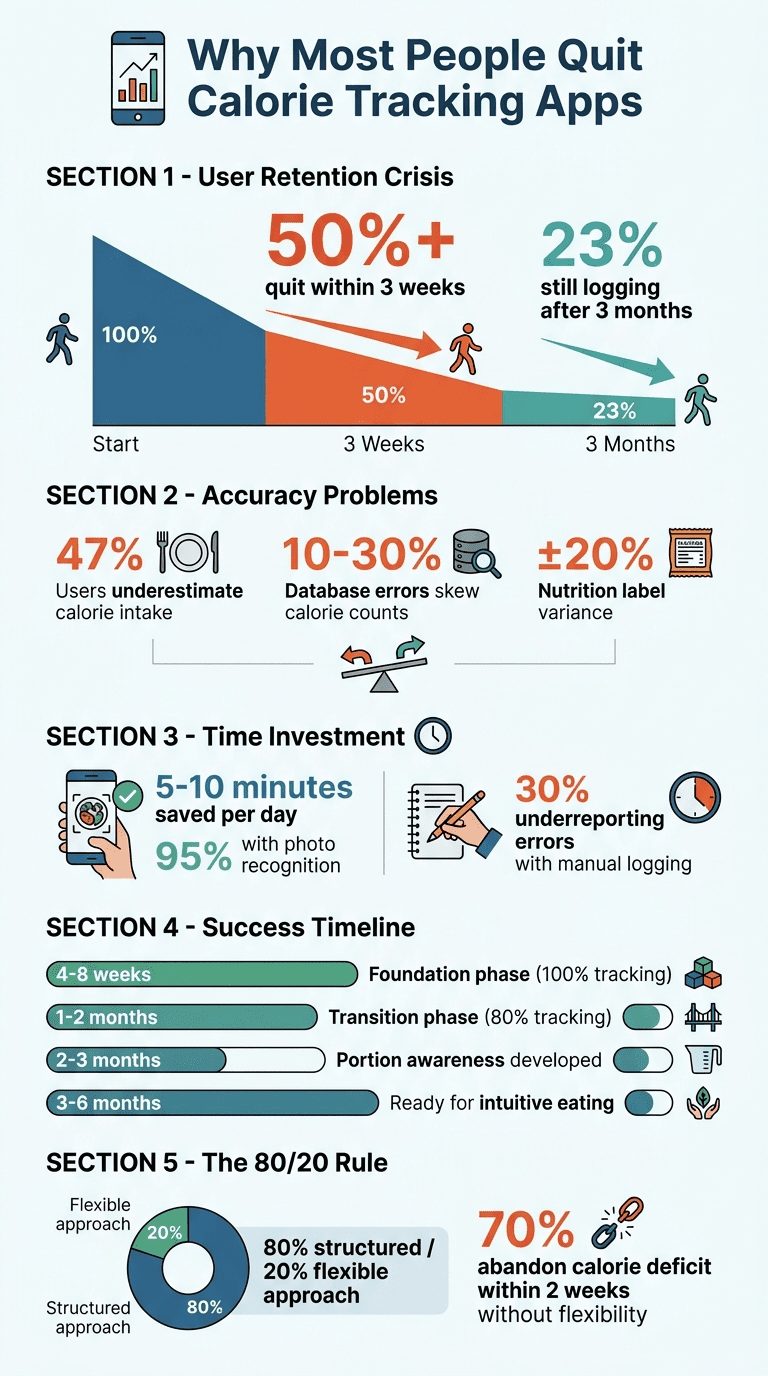
You’re not alone if you’ve downloaded a calorie tracking app only to abandon it weeks later. Over half of users quit within three weeks, with just 23% sticking to consistent logging after three months. The issue isn’t your discipline, it’s often the apps themselves. Manual food entries, inaccurate databases, and overwhelming interfaces make tracking feel like a chore. Add guilt-inducing feedback and the ‘all or nothing’ mindset, and it’s easy to see why so many give up.
The solution? Use smarter tools and strategies. Apps like Welling simplify tracking with AI food trackers that use photo and text-based logging, making it faster and less frustrating. Pair this with realistic goals, flexible calorie ranges, and mindful eating habits to build a sustainable approach. Over time, you can reduce tracking frequency and rely on your instincts instead of an app. The goal is to make tracking work for you - not the other way around.
Calorie Tracking App User Retention Statistics and Success Rates
Calorie Tracking Tips and Mistakes
Why People Quit Calorie Tracking Apps
Calorie tracking apps often lose users because of design flaws that create unnecessary hurdles. These challenges can make the experience frustrating and unsustainable. Let’s break down the major issues users face.
Common Problems with Calorie Counting Apps
One major complaint is how tedious it is to manually input foods. Searching for something as simple as “grilled chicken” can bring up hundreds of conflicting options, leaving users overwhelmed by what experts call decision fatigue[2]. What should be a quick task turns into a frustrating chore.
Another problem is the inaccuracy of food databases. Take MyFitnessPal, for instance - it boasts a massive database of over 14 million items. But many of those entries are unverified or just plain wrong. This can lead to significant errors in calorie tracking. Studies show users might underestimate their calorie intake by up to 47%[3], while database errors can skew numbers by 10–30%[2].
Homemade meals bring their own set of challenges. Logging a simple stir-fry means entering every ingredient - oil, veggies, protein, sauces - individually. Compare that to scanning a frozen dinner’s barcode, which takes just a second. As one industry expert points out, some apps seem to “penalize users who prepare meals from scratch”[1]. These technical frustrations are only part of the story; the emotional toll can be just as significant.
The Mental and Emotional Costs of Tracking
Tracking calories isn’t just a technical process - it can take a real mental and emotional toll. Many apps act more like a harsh judge than a supportive coach. Miss a target or go over your calorie limit, and the app might flag it with red warnings. This kind of feedback often emphasizes failure rather than progress, leaving users feeling guilty or ashamed[4].
This guilt can lead to an all-or-nothing mindset. Skip logging one meal or have a high-calorie day, and it’s easy to feel like the entire effort is pointless[4]. As MyBiteIQ explains:
“The app becomes associated with guilt rather than self-awareness”[4].
Then there’s the social awkwardness. Imagine trying to log every bite at a restaurant or family gathering, especially when the app doesn’t have the exact meal in its database. These moments can feel discouraging and make tracking seem futile.
Acknowledging these challenges is the first step toward finding the best calorie tracking app that addresses both the technical and emotional struggles of calorie tracking.
Picking the Right App: Why Welling Works Better
A good calorie tracking app can turn a frustrating task into a habit you can stick with. Let’s look at how Welling changes the game when it comes to calorie tracking.
What Makes Welling Different
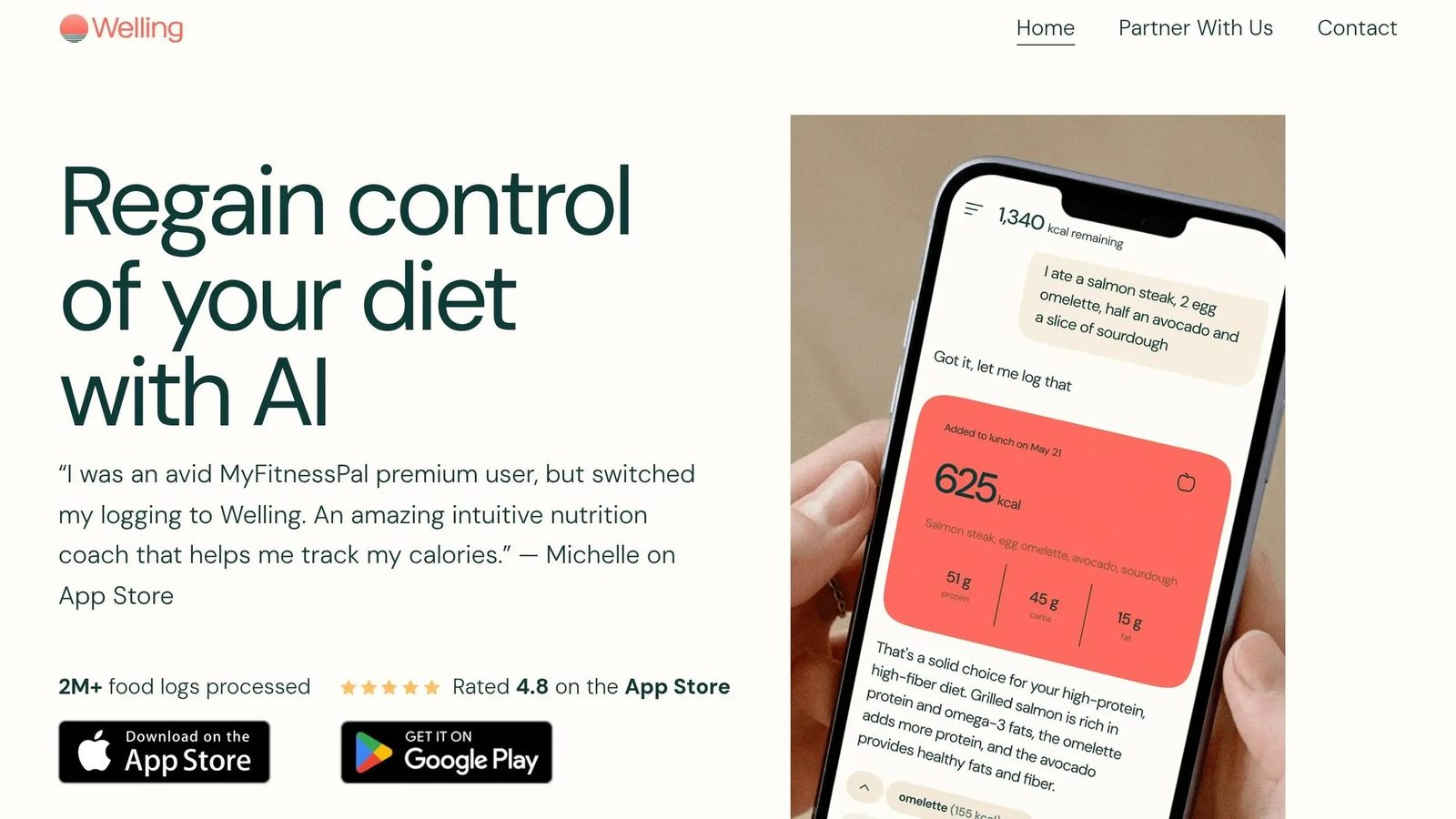
Welling takes the hassle out of calorie tracking by eliminating the need for manual entry. Instead, you can log meals in seconds - just snap a photo or describe your meal in a quick text. For instance, type “I had a chicken salad with avocado”, and the app’s AI breaks it down into ingredients and estimates portion sizes automatically [5][7].
This approach tackles one of the biggest reasons people quit tracking: logging fatigue. Welling’s AI even handles complex meals, like homemade stir-fries or restaurant dishes, by analyzing mixed ingredients in photos or asking follow-up questions about portion sizes [5]. With over 2 million food logs processed and a 4.8/5 rating on the App Store, Welling prioritizes ease and accuracy [7].
The app also offers personalized AI coaching, giving real-time feedback on your macros and nutrition. It adjusts your targets based on your goals, whether you’re aiming for weight loss or muscle gain [7]. As Mickey Kittinuttakul from Welling puts it:
“The most accurate calorie tracking app is not always the most scientific. It’s the one users can log in consistently without friction.” [5]
This focus on making tracking simple and consistent helps support better daily nutrition habits and keeps users engaged over the long term. Welling also stands out with its global food database, which includes a wide variety of international and Asian dishes - options that many other apps overlook [5][7].
Next, let’s see how Welling stacks up against MyFitnessPal.
Welling vs. MyFitnessPal: A Direct Comparison
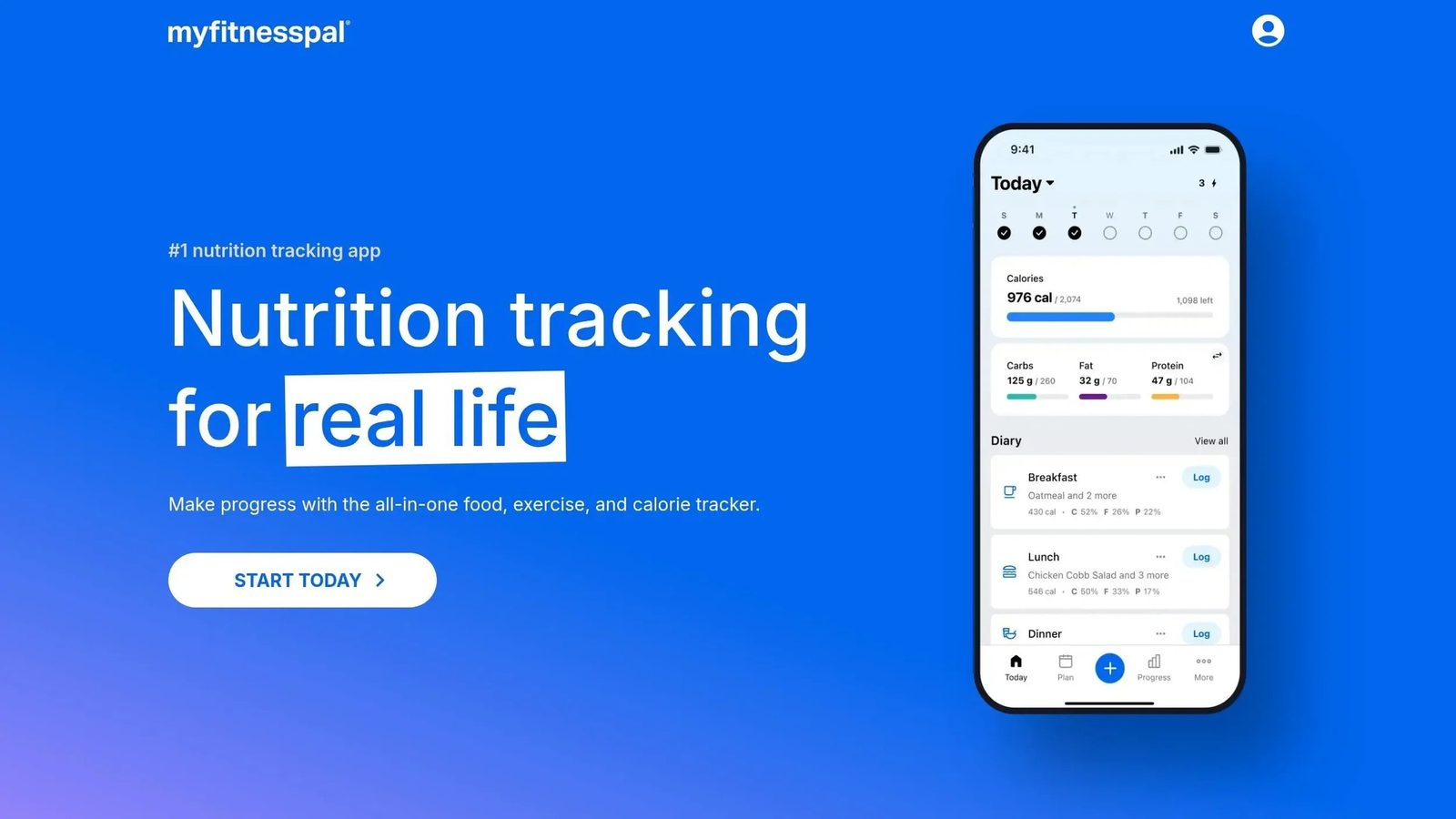
If you’re looking for a more efficient AI calorie tracker, here’s how Welling compares to MyFitnessPal
| Feature | Welling | MyFitnessPal |
|---|---|---|
| Logging Method | Photo and chat-based | Manual input |
| AI Personalization | Advanced, real-time guidance | Limited |
| User Interface | Intuitive and simple | Complex for beginners |
| Motivation | Weekly insights and coaching | Basic tracking |
Welling’s photo-based logging can save you 5–10 minutes a day compared to MyFitnessPal’s manual input. Plus, its photo recognition boasts 95% accuracy in identifying ingredients and portions, while manual logging in MyFitnessPal often leads to underreporting errors of around 30% [5].
One user, Michelle, shared her story:
“I was an avid MyFitnessPal premium user, but switched my logging to Welling. An amazing intuitive nutrition coach that helps me track my calories.” [7]
For those just starting out, Welling’s conversational interface makes it easy to use without the confusion of navigating complicated menus or databases. It’s designed to make tracking feel effortless, not like another task on your to-do list.
Setting Goals You Can Actually Reach
Most people don’t quit calorie tracking because of faulty apps; they quit because their goals are too extreme. Unrealistic calorie cuts and perfectionism often lead to burnout. In fact, research shows that around 70% of people abandon a calorie deficit within the first two weeks[9]. The key is to set goals that fit your lifestyle instead of working against it.
Understanding Your Current Eating Habits
Before diving into calorie goals, take a step back and examine your current eating patterns. Spend a week simply observing what you eat. Log your meals for seven days without trying to restrict or hit specific targets. As the CalorieCue Team explains:
“The first week is NOT about restricting food or hitting a perfect calorie target. It’s about learning what you’re actually eating.” [11]
This observation phase often reveals unexpected trends. For example, you might not realize that each tablespoon of cooking oil adds 120 calories, or that your go-to flavored latte sneaks in 200+ calories [22,26]. Studies confirm that people tend to underestimate their calorie intake [3], so creating an accurate baseline is essential. Tools like Welling’s photo feature make this easier by letting you snap pictures of your meals instead of manually logging everything, reducing errors from underreporting.
Look for patterns during this phase. Are your weekends much higher in calories than weekdays? Is most of your protein intake concentrated at dinner? These insights give you a solid starting point, replacing guesswork with real data. Using tools like Welling’s photo logging can help you capture meals efficiently and build a reliable baseline.
Working with Flexible Calorie Targets
Once you’ve established your baseline, it’s time to set adaptable calorie goals. Instead of locking yourself into a fixed number (like 1,800 calories), aim for a range (e.g., 1,700–1,900). This approach allows for natural fluctuations in hunger, activity levels, and hormones, helping you avoid the “all-or-nothing” mindset [8].
Start by calculating your Total Daily Energy Expenditure (TDEE) to find your maintenance calories and create a sustainable calorie deficit based on your goals:
Subtract 300–500 calories for gradual weight loss.
Add 250–500 calories for muscle gain.
Avoid drastic cuts of more than 1,000 calories, which can lead to energy crashes and binge eating [4,22].
Focus on weekly averages instead of stressing over daily perfection. One indulgent meal won’t derail your progress [4,23].
| Goal Type | Calorie Adjustment | Focus Area |
|---|---|---|
| Weight Loss | TDEE minus 300–500 | Satiety and protein intake [4,22] |
| Maintenance | TDEE (Maintenance) | Portion awareness [4,23] |
| Muscle Gain | TDEE plus 250–500 | Macro balance and training [3] |
Apply the 80/20 rule: aim to track 80% of the time while giving yourself flexibility for social events or weekends [23,25]. Welling’s AI coaching can adjust your calorie range based on your progress, so you’re not stuck with a static target that doesn’t reflect how your body is responding [9]. And keep in mind that nutrition labels can vary by up to 20%, so focus on consistency rather than obsessing over every detail [22,23].
How to Track Less Over Time
Calorie tracking works best as a short-term learning tool [3]. Most people develop a strong sense of portion sizes after about 2–3 months of consistent tracking [3]. From there, you can gradually shift to relying on your internal cues rather than logging every single meal.
Reducing Your Tracking Frequency
Instead of aiming for perfection, try the 80% rule. Focus on logging your three main meals or at least two eating occasions daily. Research shows that tracking at least two meals is a strong predictor of weight loss success at six months [1]. After 4–8 weeks of regular tracking, you’ll likely feel confident enough to start scaling back.
Next, move to “check-in” weeks where you track everything for one week each month. This helps you stay on track without the need for daily effort [1][3]. Another option is to only log meals where you’re unsure of portions or tend to overeat. Both approaches keep you accountable while reducing the time spent on tracking.
| Phase | Duration | Tracking Frequency | Primary Focus |
|---|---|---|---|
| Foundation | 4–8 Weeks | 100% of meals/snacks | Learning calorie density & portion sizes |
| Transition | 1–2 Months | 80% (Main meals only) | Identifying patterns & reducing friction |
| Maintenance | Ongoing | 1 week per month | “Check-in” to prevent habit drift |
| Intuitive | Permanent | Occasional/None | Relying on hunger/fullness cues & mindful eating |
When scaling back, focus on weekly averages instead of daily totals [3][4]. This approach gives you more flexibility for social events or weekends. Keep in mind that only 23% of users stick with manual tracking for more than three months [4], so planning your transition early can make the process smoother. Shifting to mindful eating practices can also help you manage your nutrition without relying on constant logging.
Focusing on Mindful Eating Instead of Numbers
Replace numbers with observations. Instead of logging calories, try hunger–fullness journaling. Write down your hunger level (on a scale from 1 to 10) before eating, what you ate, and how satisfied you felt afterward [6]. Rachelle LaCroix Mallik, RD, explains:
“Rather than tracking every calorie or macronutrient, write down your hunger level before you eat, what you ate, and your fullness and satisfaction levels when you’re done.” [6]
Once you’re ready to ditch the food scale, use the hand method for estimating portions. For example:
Palm: One serving of protein (150–200 calories)
Fist: One serving of carbohydrates (150–200 calories)
Thumb: One serving of fats (100–120 calories)
Two fists: One serving of vegetables (50 calories) [3]
Although this method isn’t as precise as weighing (with a margin of error around ±25–40%), it’s simple and practical, making it great for maintenance. This shift reduces the mental load of tracking while reinforcing balanced eating habits.
For extra support, try small adjustments in your environment. Cover nutrition labels on packaged foods with opaque tape [6]. When dining out, decide on the type of meal you want - like a protein-packed salad or a pasta dish - before opening the menu. This way, you won’t get swayed by calorie counts. These small changes help you focus on building balanced meals with protein, healthy fats, and fiber, rather than obsessing over exact numbers [12].
Building Habits That Last Beyond Apps
The real purpose of tracking your eating habits isn’t to stay glued to an app forever - it’s to help you understand your patterns so you can eventually stop logging every bite [8]. After 3 to 6 months of consistent tracking, most people gain enough familiarity with portion sizes and nutritional basics to maintain their weight without relying on apps [8][1]. The trick is to replace the structure apps provide with habits that fit seamlessly into your daily life. This shift from app dependency to intuitive habits is the key to long-term success with nutrition. For those navigating specific life stages, understanding menopause and weight loss can help tailor these habits to changing metabolic needs.
Creating a Structured Meal Plan
Instead of obsessing over every meal entry, try using visual tools that simplify meal planning. One great option is the Harvard Plate Method: fill half your plate with vegetables and fruits, one-quarter with whole grains, and the remaining quarter with a healthy protein source [13]. This straightforward approach removes the need for constant tracking while encouraging balanced meals. For quick portion estimates, techniques like the hand portion method can also come in handy.
Another crucial element? Focus on meal rhythm rather than exact numbers. Eating at regular intervals throughout the day helps your body naturally regulate hunger hormones [14][15]. Research even suggests that eating your last meal closer to bedtime (around 2.5 hours) can increase hunger and lead to weight gain, compared to eating earlier in the evening [15]. By sticking to a consistent eating schedule, your body learns to adapt, reducing the need for meticulous calorie monitoring. With a well-structured plan in place, it’s easier to shift your focus from numbers to overall progress.
Tracking Progress Without Counting Calories
Success isn’t just about the number on the scale. Instead, pay attention to Non-Scale Victories (NSVs) - like feeling more energetic, sleeping better, improving your mood, or getting stronger [10][8]. Notice how your clothes fit, track changes in your waist size, or celebrate being able to climb stairs without getting winded. These milestones often show improvements that a scale simply can’t measure.
“You can count calories all you want… but it’s probably going to hurt more than it helps [if it causes stress]”,
Dr. A. Janet Tomiyama, Director of the DiSH Lab at UCLA [10].
If you’re looking for other ways to track progress, try focusing on healthy habits. For instance, aim to hit your daily step count, eat at regular times, or include more plant-based foods in your meals [14][15]. Did you know about 90% of adults in the Western world don’t meet the recommended daily fiber intake of 30g [15]? Setting goals like adding legumes, nuts, or seeds to your meals can be far more productive than obsessing over calorie counts. As you celebrate these wins, remember that a positive mindset is just as important as any measurable progress.
Being Kind to Yourself for Long-Term Success
The 80/20 rule can be a game-changer. Stick to your nutrition plan about 80% of the time and allow for flexibility during the other 20% - whether it’s a weekend, a vacation, or a special event [10][8]. This approach helps you avoid the all-or-nothing mindset that often leads to giving up entirely. And if you have a high-calorie day? Don’t try to “compensate” by restricting the next day. That can set off harmful cycles of restriction and bingeing [8].
Self-compassion is non-negotiable for long-term success. Irene Astaficheva, Certified Nutritionist and Co-founder of Eated, highlights a common struggle:
“Almost every client who tells me they’re scared to stop counting calories has been counting for more than a year. By that point, they know a lot about food - they just don’t trust that knowledge without the number confirming it. The goal of stopping is to start trusting what you already know.” [13]
Learning to trust your instincts takes time, but it’s the only way to build habits that outlast any app. Focus on making progress instead of aiming for perfection, and remember that setbacks are just part of the journey - not a reason to quit.
Conclusion: Staying on Track with Your Nutrition Goals
Stick with calorie tracking by making it easier, setting flexible goals, and creating habits that last. Research shows that most people give up on traditional tracking methods[4] not because they lack determination, but because the process can feel too time-consuming and draining. Tools like Welling, which use AI photo tracking, reduce logging time from several minutes per meal to just seconds[1]. This makes it much easier to stay consistent, even on busy days.
Consistency matters more than perfect accuracy[3]. Try the 80% rule - track most of your meals while allowing room for life’s unpredictability. Instead of aiming for daily perfection, focus on weekly averages. This approach shifts tracking from being a rigid task to a helpful learning tool. It teaches you about portion sizes and calorie density, laying the foundation to eventually rely on your body’s natural cues rather than an app.
The goal isn’t to track forever. After 4 to 8 weeks of consistent use, many people gain enough awareness of portions to transition to mindful eating[1]. Think of your app as training wheels - use it to develop balanced eating habits, then gradually track less often while maintaining what you’ve learned.
“The most accurate calories tracking app is not always the most scientific. It’s the one users can log in consistently without friction.”
Mickey Kittinuttakul, Writer, Welling.ai
Welling’s AI-powered tools show how smart technology can support your long-term nutrition goals. The key is to let tracking enhance your life, not control it. Whether you choose Welling’s approach or another method that suits you, the priority is finding a system you can stick with. Focus on progress, trust the habits you’ve built, and adjust your approach as your needs evolve.
FAQs
How accurate is photo-based calorie logging?
Photo-based calorie tracking tends to be fairly accurate, usually falling within a 10-20% margin of error for most foods. Simpler items, like fruits, typically have smaller discrepancies - around 10%. On the other hand, more complex or homemade dishes may carry a higher error rate, sometimes reaching 30-40%. While this method is convenient and often more practical than manually entering data, it’s a good idea to double-check calorie estimates for intricate meals to maintain accuracy.
What if I can’t log every meal every day?
Perfect tracking doesn’t have to be your goal to see success. Instead of stressing over daily precision, shift your focus to weekly averages to stay on track without feeling overwhelmed. Tools like AI photo tracking can make logging easier, even if you forget to record a few meals. Give yourself some flexibility and concentrate on your overall progress rather than obsessing over perfect daily records. This approach can help reduce stress and keep your motivation strong throughout your nutrition journey.
When should I stop tracking calories?
Tracking calories can be helpful, but it’s not for everyone. If the process feels overwhelming, takes too much time, or starts to negatively impact your mental health, it might be time to step back. Experts advise stopping if it begins to feel like a chore, adds stress to your daily life, or no longer serves your overall well-being.
If you want to continue tracking but with less hassle, tools like AI photo tracking can make the process easier and quicker. However, if tracking doesn’t align with your current goals, shifting your focus to mindful eating and creating habits that feel more sustainable might be a better path forward.
Reference
[1] https://www.moveno.co/en/blog/why-people-quit-calorie-tracking
[2] https://eatscan.ai/blog/calorie-tracking-app-not-working-hidden-flaws/
[3] https://caloriecue.app/blog/how-to-track-calories
[4] https://mybiteiq.com/blog/why-people-quit-calorie-tracking
[5-7] welling.ai
[8] https://www.self.com/story/how-to-stop-counting-calories
[9] https://www.nutrola.app/en/blog/8-best-calorie-tracking-apps-for-weight-loss-2026
[10] https://www.hootfitness.com/blog/how-to-track-calories-without-losing-your-mind
[11] https://caloriecue.app/blog/what-to-do-after-downloading-calorie-tracker
[12] https://dietitianhannah.com/blog/how-to-switch-from-counting-macros-to-intuitive-eating
[13] https://eated.io/blog/how-to-stop-counting-calories-(and-what-to-do-instead)
[14] https://seehowyoueat.com/food-tracker-without-calories/
[15] https://theguthealthdoctor.com/science-backed-alternatives-to-calorie-counting