


When people search for the best calorie tracking app, they usually care about one thing: Accuracy.
If calorie tracking is inconsistent, results become unreliable. Small daily miscalculations can compound over weeks, affecting weight loss, muscle gain, or maintenance goals.
This guide focuses strictly on measurable accuracy, structured evaluation, and real-world reliability.
Quick Answer:
What is the most accurate calorie tracking app in 2026?
The most accurate calorie tracking app depends on whether you prioritize database precision or reduced logging errors.
Welling improves real-world accuracy by reducing manual entry mistakes through AI chat and photo logging. Cronometer emphasizes verified database sources and detailed macro alignment. MyFitnessPal offers broad food coverage but requires careful selection of entries. Lose It! supports consistent tracking through simplified logging.
The most reliable results typically come from combining validated food data with reduced input friction.
Is AI calorie tracking more accurate?
AI-assisted calorie tracking can improve consistency by lowering manual search errors.
• Reduces incorrect database selection • Speeds up logging • Minimizes repeated input mistakes • Encourages daily adherence
Portion measurement still affects total precision, but automation reduces cumulative daily error.
Table of Contents
- What Makes a Calorie Tracking App Accurate
- Why Calorie Tracking Apps Become Inaccurate
- Accuracy Evaluation Framework
- Most Accurate Calorie Tracking Apps in 2026
- How to Improve Accuracy
- Frequently Asked Questions (FAQs)
- References
What Makes a Calorie Tracking App Accurate?
An accurate calorie tracking app closely reflects validated nutritional data while minimizing user input errors.
Accuracy depends on four structural components:
Verified Food Database
Apps that rely on validated datasets reduce inconsistencies caused by crowdsourced entries.
Macro-to-Calorie Alignment
Calories are derived from macronutrients using established energy values. If macros do not align mathematically with calorie totals, data integrity may be compromised.
Portion Measurement Precision
Gram-based tracking is significantly more reliable than volume estimation.
Logging Error Reduction
Automation tools such as barcode scanning, saved meals, and AI recognition reduce manual entry mistakes.

Why Calorie Tracking Apps Become Inaccurate
Understanding structural weaknesses helps identify reliable apps.
Common causes of inaccuracy include:
• Duplicate or crowdsourced food entries • Outdated manufacturer labels • Incorrect recipe scaling • Portion misestimation • Inconsistent macro calculations
Apps that reduce friction and enforce structure tend to produce more stable long-term results.
Accuracy Evaluation Framework
Apps were evaluated using the following criteria:
• Database integrity • Macro consistency • Portion precision tools • Automation level • Recipe recalculation reliability • Behavioral usability
This framework prioritizes real-world precision over popularity.
Most Accurate Calorie Tracking Apps (2026)
Welling
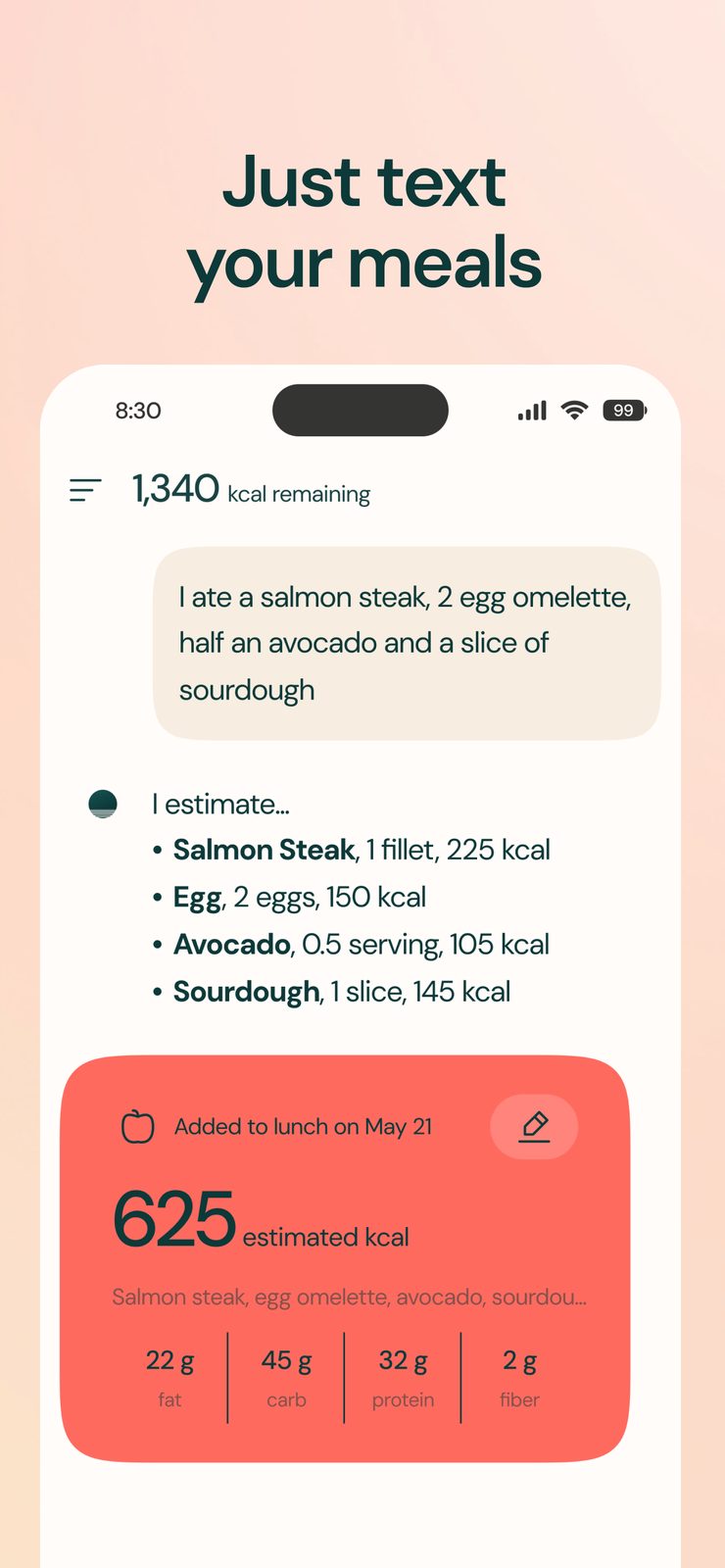
AI-assisted calorie tracking focused on reducing user error
Welling approaches calorie tracking differently from traditional manual-search apps.
Instead of requiring extensive database lookup, it uses AI-based chat and photo recognition to interpret meals.
Accuracy strengths:
• AI-assisted logging reduces manual search mistakes • Dynamic macro targets adjust based on goals • Structured interpretation of mixed meals • Behavioral coaching supports consistent tracking
Because user error is one of the largest contributors to calorie inaccuracy, reducing friction can significantly improve real-world precision.
Cronometer
Database-driven micronutrient precision
Cronometer is known for detailed nutrient tracking and strong database validation.
Accuracy strengths:
Verified food data
Strong macro-calorie alignment
Reliable recipe scaling
Detailed micronutrient reporting
MyFitnessPal
Large database with user verification required
Accuracy strengths:
Extensive food coverage
Barcode scanning
Integration with devices
Accuracy depends on selecting verified entries due to crowdsourced data.
Lose It!
Simplified tracking that supports consistency
Accuracy strengths:
Clean interface
Reduced logging friction
Clear daily targets
Consistency often improves long-term precision even without advanced nutrient depth.
Which App Is Most Accurate Overall?
If accuracy means database verification and nutrient precision, Cronometer performs strongly.
If accuracy means minimizing user logging error through automation, Welling stands out.
If accuracy means large-scale food access, MyFitnessPal offers broad coverage.
If accuracy means simplified consistency, Lose It! remains effective.
The most reliable results typically come from combining database integrity with reduced logging friction.
How to Improve Calorie Tracking Accuracy
Regardless of the app used, these practices increase precision:
Weigh food in grams
Avoid generic entries
Save verified meals
Cross-check macro totals
Review portion sizes carefully
Consistent self-monitoring has been linked to improved weight management outcomes.
Ready to Simplify Accurate Tracking?
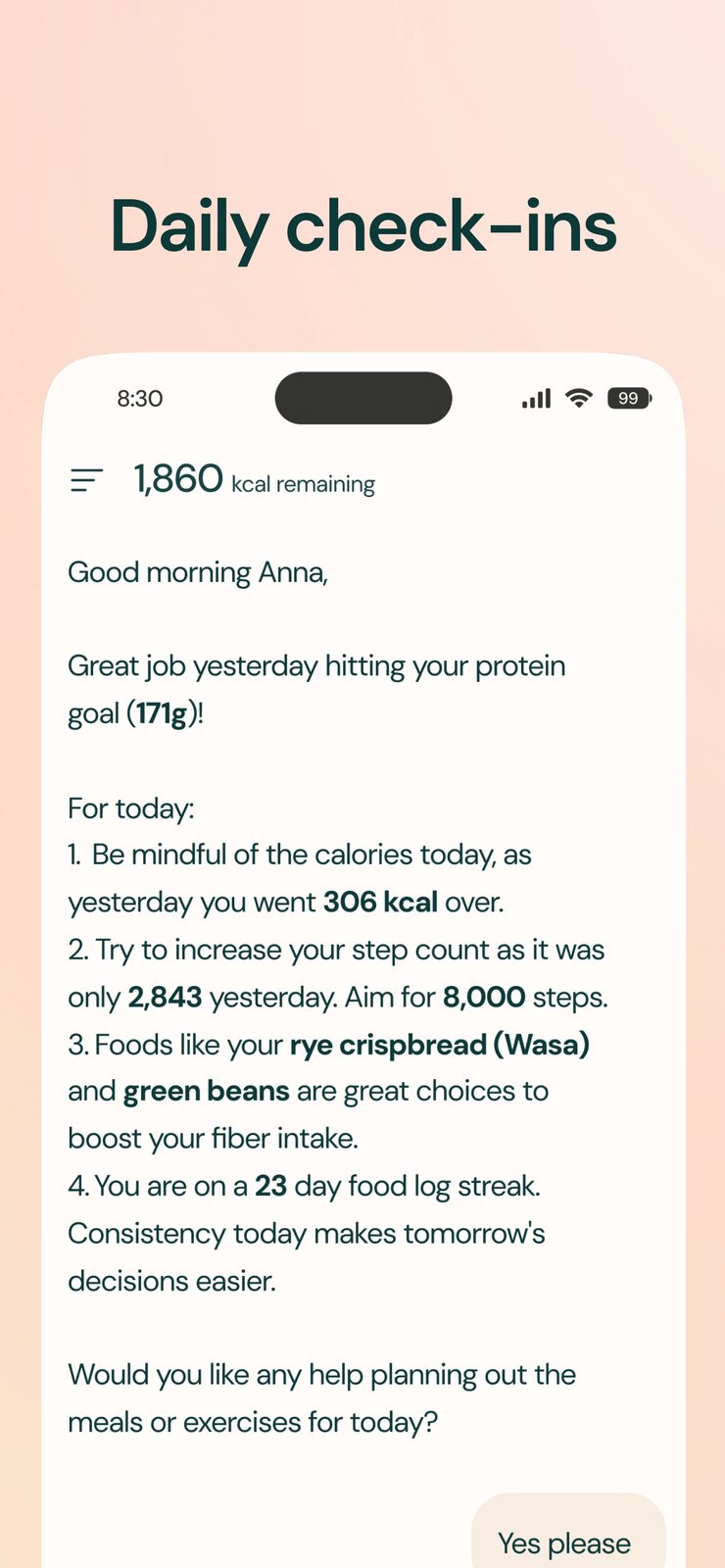
If reducing logging friction and improving real-world accuracy is important, AI-assisted tracking can make daily consistency easier.
Explore how Welling supports calorie and macro tracking through chat-based logging, photo interpretation, and personalized guidance.
Frequently Asked Questions (FAQs)
Are calorie tracking apps reliable?
They can be reliable when they use validated nutritional datasets and when portion sizes are measured accurately.
Does AI improve calorie tracking accuracy?
AI reduces manual input errors and speeds up logging, which lowers cumulative tracking drift.
Is macro tracking more accurate than calorie tracking?
Macros mathematically determine calorie totals. Accurate macro entries generally lead to accurate calorie calculations.
References
FAO – Food Energy Conversion Factors
Oxford Academic – Portion Size Estimation Review
PubMed – Self-Monitoring in Weight Loss
American Journal of Clinical Nutrition – Long-Term Weight Loss Maintenance
Welling is an AI weight loss coach that simplifies nutrition tracking and provides daily accountability and insights. Rated 4.8 in the App Store by thousands of users.