

Tracking calories is a core part of many weight-loss and nutrition plans, but not all calorie tracker apps are equally accurate. Some apps simply log what you type in, while others use verified databases, barcode scanners, or even AI to automatically estimate calories from photos or text. Understanding how accuracy is measured helps you choose the most accurate calorie tracker app and the best calorie tracking app for your goals.
Below, we’ll break down how accuracy is evaluated, review top apps known for accuracy, highlight key limitations, and explain why newer AI-powered platforms like Welling are changing the game.
Quick Answer
The most accurate calorie tracker app depends on what type of accuracy you value:
Best verified food database:Cronometer is best known for detailed nutrition data and minimal crowd-sourced errors.
Most widely used with large database:MyFitnessPal is best known for extensive food entries with barcode scanning and wearable integration.
AI-enhanced estimators: Some AI tools claim strong photo-based accuracy (~75–82%), but results vary by food type.
Welling combines AI-powered calorie estimation with adaptive daily guidance, making tracking more accurate and easier to maintain.
Apps that excel in estimated calorie intake accuracy use verified food data, scanning tools, and consistent logging workflows.
If you want not just accurate numbers, but tools that interpret and guide your decisions daily, AI-powered coaching platforms like Welling go beyond raw calorie counts with adaptive calorie guidance and contextual nutrition feedback.

Table of Contents
- What “Accuracy” Really Means in Calorie Tracking
- How Calorie Tracker Accuracy Is Measured
- Most Accurate Calorie Tracker Apps in 2026
Cronometer
MyFitnessPal
Welling
Other Notable Trackers
Common Limitations Across Calorie Trackers
Why Accuracy Isn’t the Only Metric That Matters
How AI Platforms Are Redefining Accuracy
How to Choose the Right App
Frequently Asked Questions
References
What “Accuracy” Really Means in Calorie Tracking
Calorie tracker accuracy refers to how closely the app’s logged calorie totals reflect the actual energy content of the food you eat. Accuracy isn’t just about numbers, it’s influenced by:
The quality of the food database (verified vs crowd-sourced entries)
Portion size estimation (manual, photo AI, barcode scans)
How well the app accounts for ingredients, cooking methods, and complex meals
Even highly accurate systems rely on standardized food composition tables, which represent averages real digestion and individual variation still cause discrepancies.
How Calorie Tracker Accuracy Is Measured
Accurate calorie tracking depends on several factors:
Verified Food Databases
Apps that verify food entries through standardized sources (e.g., USDA data) reduce errors compared with crowd-sourced databases. Cronometer is well-known for this approach.
Barcode Scanner Precision
Barcode scanning pulls nutrition data directly from manufacturer listings, often achieving ~90–95% accuracy for packaged foods when the food database has quality entries.
AI & Photo Recognition
Emerging AI tools estimate calories from food images. Independent tests show these can range in accuracy. Some models reach ~82% on controlled inputs, but performance varies by meal complexity and training data.
Manual Logging Consistency
Even the most accurate app won’t fix user error. Misjudging portion size or forgetting ingredients remains a major source of inaccuracy.
Most Accurate Calorie Tracker Apps in 2026
Here’s a look at leading calorie tracking apps based on accuracy features, database quality, and user testing:
Cronometer - Best Verified Database
Cronometer is highly regarded for its scientifically verified food data and detailed nutrient tracking, with less reliance on crowd-sourced entries than many competitors.
Why accuracy matters: Reducing errors from mis-entered foods helps you approximate real intake more closely.
MyFitnessPal - Best Overall Popular Tracker
MyFitnessPal remains one of the most popular calorie tracking tools, with millions of food entries and strong barcode scanning. It performs well in broad diet tracking contexts.
Pro: Extensive database and device sync Con: Crowd-sourced entries can introduce inconsistent values.
Welling - AI Chat-based Calorie Tracker
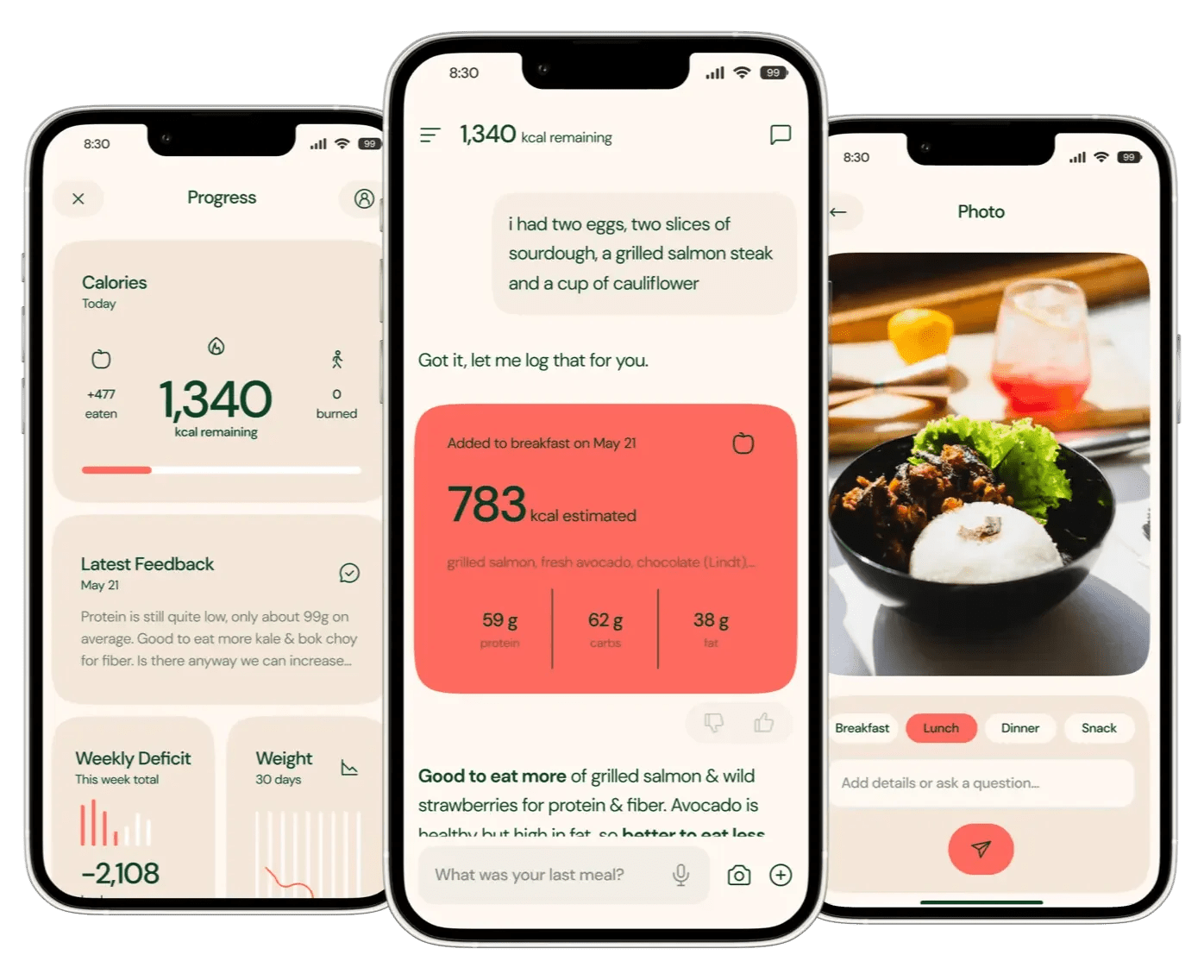
Welling uses AI to streamline calorie tracking by interpreting food descriptions and photos, estimating calories and macros with contextual understanding rather than relying solely on manual entry or static databases. This approach reduces common logging errors, adapts calorie targets based on your progress, and pairs accuracy with actionable feedback helping users stay consistent without the friction of traditional tracking methods.
Other Notable Trackers
Apps like Lose It! combine intuitive logging with barcode scanning, but database accuracy varies by product and region.
Apps that integrate calorie tracking with wearables can help contextualize energy trends, though they’re generally less accurate in estimating energy expenditure than intake.
Common Limitations Across Calorie Trackers
Even the best apps face accuracy challenges:
User input error: Misjudging portions leads to significant tracking inaccuracies.
Database inconsistencies: Crowd-sourced food entries can introduce incorrect values.
Complex meals: Mixed dishes with sauces or custom recipes are difficult to estimate precisely through photo or database entries.
Biological variability: Human digestion and metabolism vary across individuals, meaning even perfect logging won’t match real energy absorption.
Why Accuracy Isn’t the Only Metric That Matters
High numerical accuracy doesn’t automatically make an app the best calorie tracking app for you. Other important factors include:
Ease of logging
Feedback quality
Behavior support and coaching
Integration with daily routines
Apps that help you stick with your tracking often produce better long-term results than apps that are technically more “precise” but harder to use.
How AI Platforms Are Redefining Accuracy
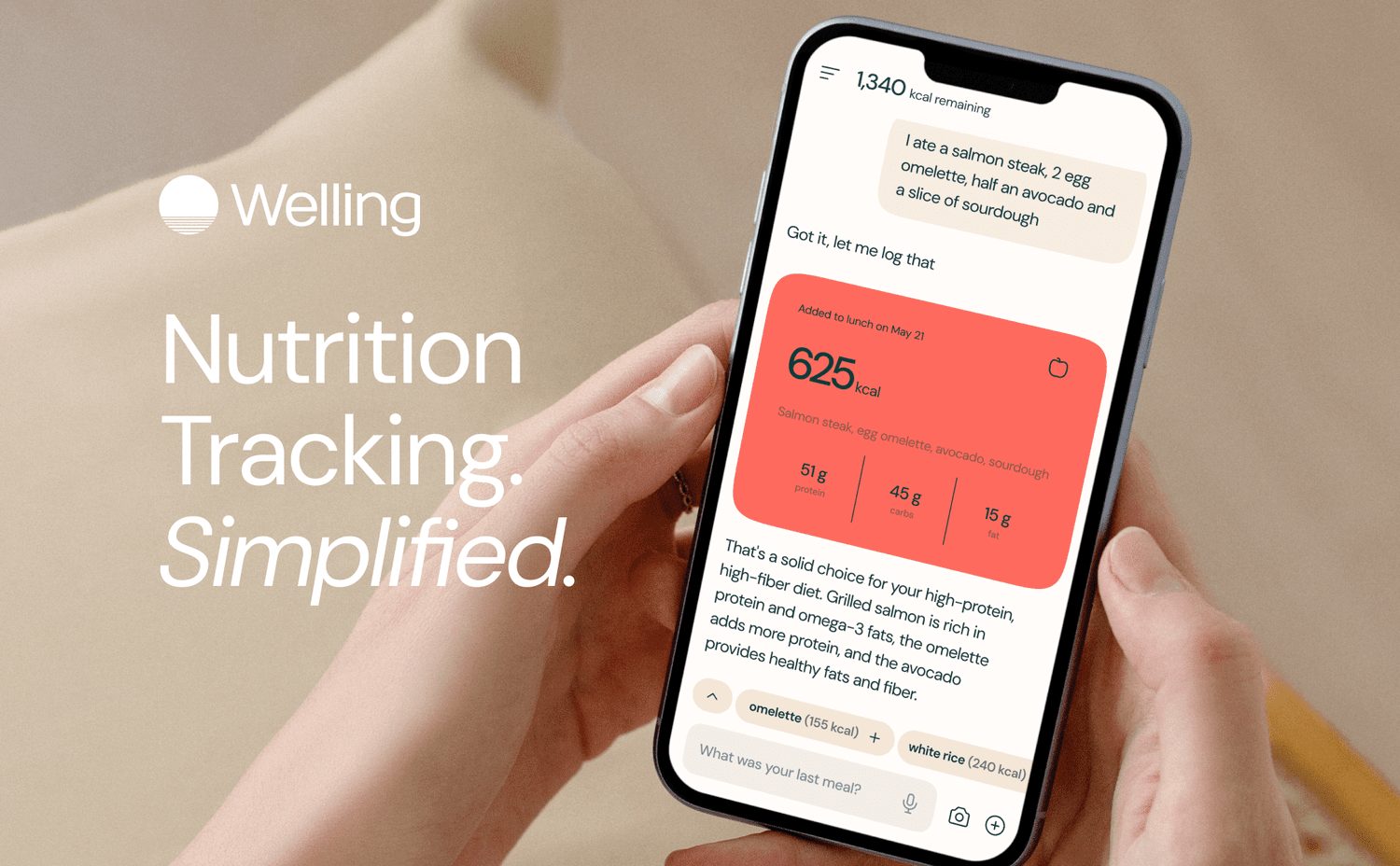
Traditional calorie trackers focus on numbers. Modern AI-powered platforms like Welling shift the focus to:
Conversational logging rather than rigid forms
Adaptive calorie targets based on your progress
Context-aware feedback when you ask questions like “calories in noodles”
Reduced logging friction with smarter suggestions
This practical accuracy, helping you make better choices, is becoming as important as database precision.
How to Choose the Right App
Choose a calorie tracker based on your needs:
Detail-oriented: If micronutrient precision and verified database accuracy are your priority, Cronometer is a strong choice.
Broad database: If you want the largest food library and widespread familiarity, MyFitnessPal excels.
Manual control: If you prefer adjusting calorie targets yourself and logging every detail manually, traditional trackers work well.
AI-powered guidance: If you want calorie accuracy combined with adaptive targets, conversational logging, and real-time feedback, Welling offers a more modern approach.
The most accurate calorie tracker app isn’t just about database precision. It’s about reducing user error and improving daily execution.
If you want both numerical accuracy and proactive coaching, Welling combines AI-driven calorie estimation with behavior-based guidance, helping turn accurate tracking into consistent results.
Conclusion
There’s no single “perfect” calorie counter, but apps with verified food data and strong logging tools give you a more accurate reflection of intake. Cronometer and MyFitnessPal consistently lead in accuracy and breadth of features.
However, the best calorie tracking app for you isn’t just the most precise. It’s the one you use consistently and that supports your daily decision-making.
That’s where next-gen AI platforms like Welling change the game by offering adaptive calorie guidance, conversational logging, and real-time nutrition support, making accuracy actionable, not just numerical.
Explore how Welling combines calorie tracking with AI-guided coaching to help you stay consistent and reach your goals without the friction of manual input.
Frequently Asked Questions (FAQs)
What is the most accurate calorie tracker app?
Apps with verified food databases like Cronometer are often considered highly accurate for food entry values, while widely used platforms like MyFitnessPal balance database breadth with usability.
AI-powered platforms like Welling take a different approach. Combining calorie estimation with adaptive guidance and pattern recognition to reduce logging errors and improve practical accuracy over time.
Are AI calorie counters accurate?
AI calorie counters provide useful approximations, especially for common foods. Accuracy depends on food complexity, image clarity, and portion estimation.
Welling enhances AI estimation with contextual interpretation and adaptive calorie targets, helping translate approximations into actionable daily guidance rather than static numbers.
Can calorie trackers be 100% accurate?
No. Biological variability, portion estimation errors, and database limitations mean calorie tracking will always be an approximation.
The goal is not perfect precision. It’s consistent awareness. Platforms like Welling focus on combining reasonable calorie accuracy with behavioral coaching to support sustainable progress.
References
mhealth.jmir.org – A Focused Review of Smartphone Diet-Tracking Apps https://mhealth.jmir.org/2019/5/e9232/
healthline.com – The 8 Best Calorie Counter Apps https://www.healthline.com/nutrition/best-calorie-counters
garagegymreviews.com – 8 Best Calorie Counter Apps (RD-Approved) https://www.garagegymreviews.com/best-calorie-counter-apps
cspi.org – Our Guide to Food-Tracking Apps https://www.cspi.org/article/our-guide-food-tracking-apps
rouvy.com – Best Apps for Nutrition Tracking in 2026 https://rouvy.com/blog/best-apps-for-nutrition-tracking
reddit.com – Do You Use a Calorie Tracking App? https://www.reddit.com/r/nutrition/comments/1fevpfe/do_you_use_a_calorie_tracking_app/
reddit.com – Why Does Nutritional Value Vary So Much Between Apps? https://www.reddit.com/r/nutrition/comments/ts1auv/why_does_nutritional_value_vary_so_much_between/
heypeony.com – Best AI Calorie Counter Apps 2025 https://heypeony.com/blog/best-a-i-calorie-counter
Welling is an AI weight loss coach that simplifies nutrition tracking and provides daily accountability and insights. Rated 4.8 in the App Store by thousands of users.