

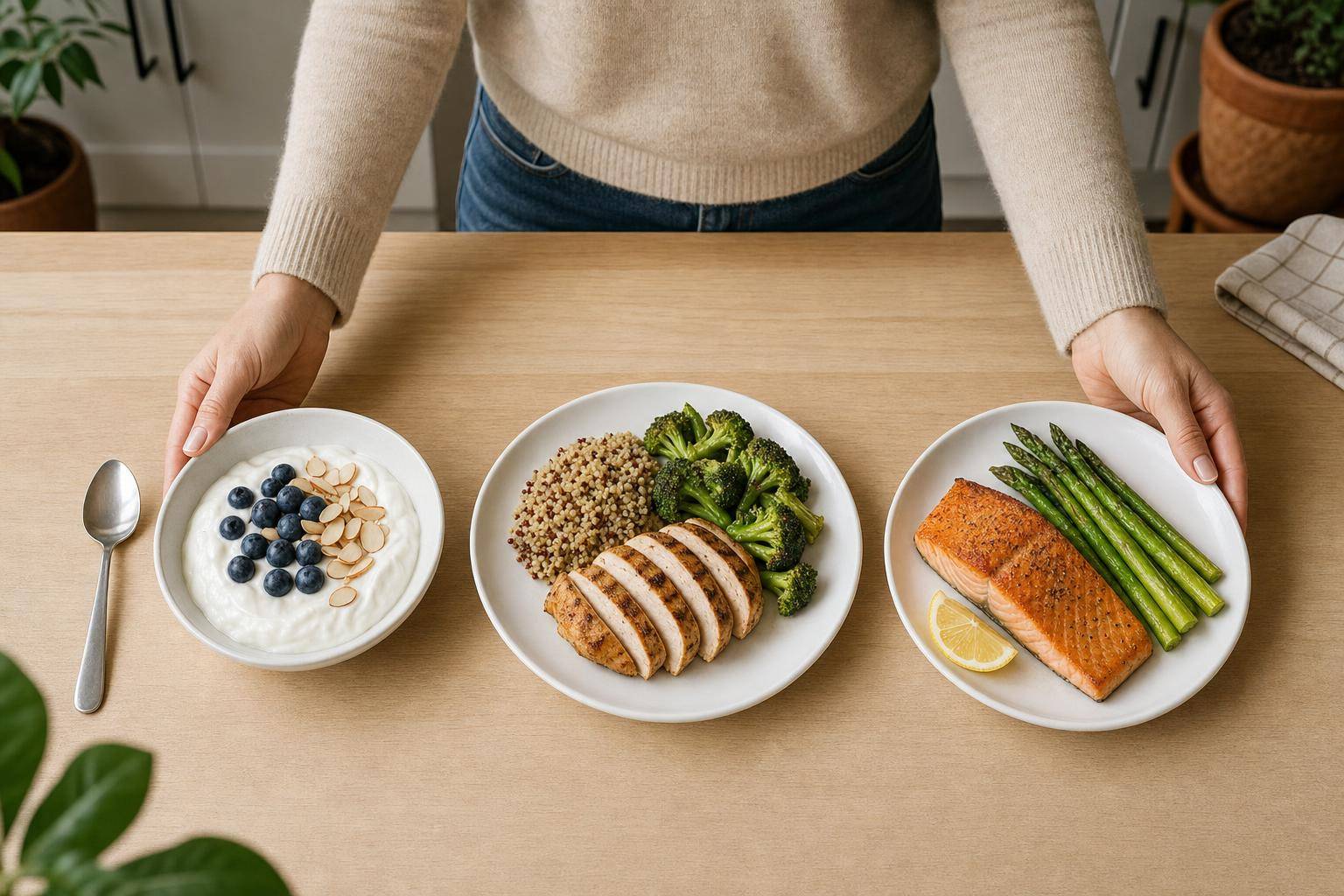
If you’re on Ozempic, Wegovy, Mounjaro, or Zepbound, protein should be one of the first numbers you set. When appetite drops, total food intake often falls by 16% to 39%, and part of the weight lost can come from lean mass, not just fat.
I’d keep it simple:
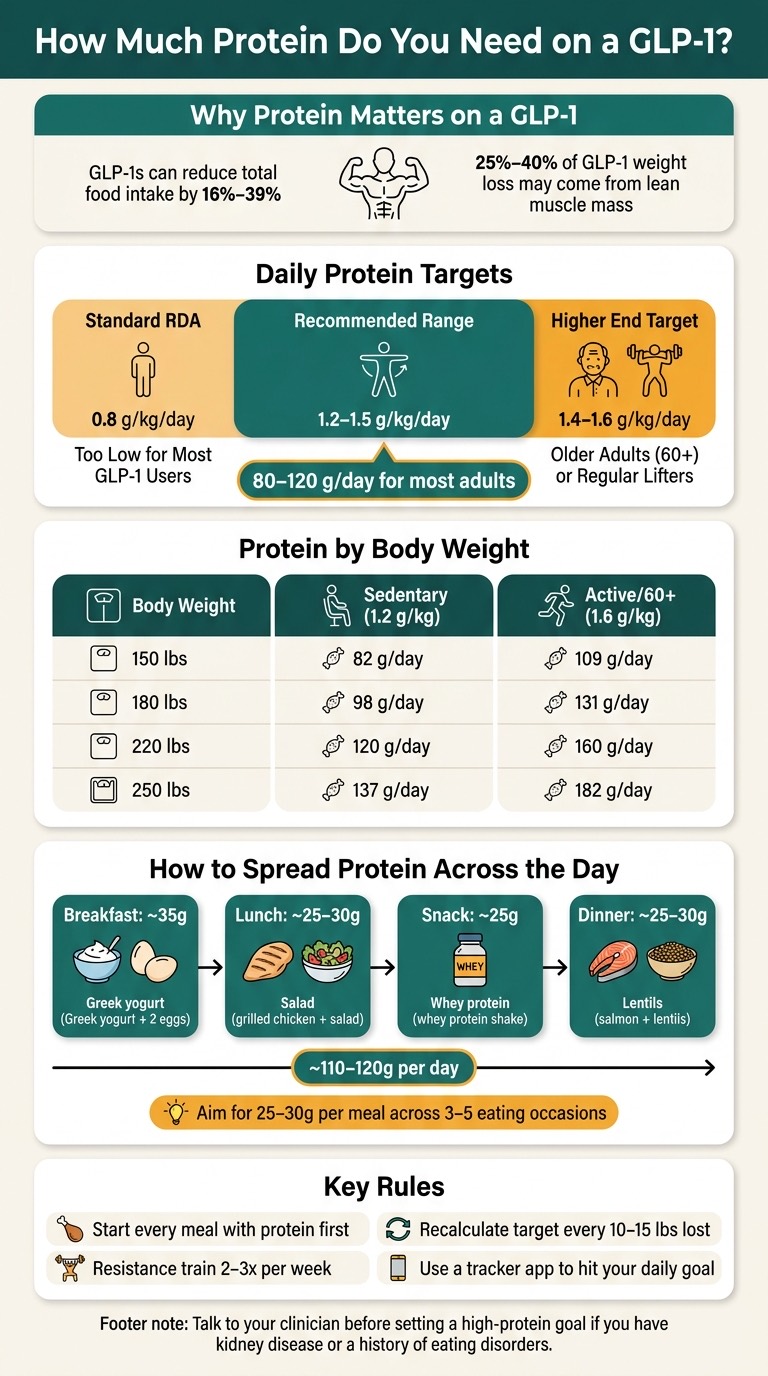
- Most adults on a GLP-1 do best at 1.2 to 1.6 g/kg/day
- That works out to about 80 to 120 g per day for many people
- If you’re 60+ or lift weights often, aim closer to the high end
- Split it across 3 to 5 meals or snacks
- Try to get 25 to 30 g per meal
- Recheck your target after every 10 to 15 lb lost
Here’s the short version: the old 0.8 g/kg RDA is often too low during GLP-1 weight loss. If you eat too little protein while calories are down, you may lose more muscle, feel weaker, and have a harder time keeping strength and function.
I’d also keep two things in mind:
- Start meals with protein first, because fullness can hit fast
- Pair higher protein intake with resistance training 2 to 3 times per week
If kidney disease, a past eating disorder, or fast weight loss is part of the picture, talk with your clinician before setting a higher target.
This article breaks down the math, shows simple meal patterns, lists low-volume high-protein foods, and compares tracking tools like Welling, MyFitnessPal, Lose It!, and Cronometer so you can pick a daily goal and stick with it.
Table of Contents
- High Protein on GLP-1? Here’s the Strategy
- Quick Comparison
- Why protein matters more when you’re on a GLP-1
- How to calculate your daily protein target on a GLP-1
- How to eat enough protein when your appetite is low
- Tools that make protein tracking easier, including Welling
- Conclusion: Choosing the right protein target on a GLP-1
- FAQs
- Sources and References
High Protein on GLP-1? Here’s the Strategy
Quick Comparison
| Topic | Main Takeaway |
|---|---|
| Protein target | 1.2 to 1.6 g/kg/day for most GLP-1 users |
| Basic range | 80 to 120 g/day for many adults |
| Older adults / lifters | Often need the high end of the range |
| Meal split | 25 to 30 g per meal, across 3 to 5 eating times |
| Why it matters | GLP-1 weight loss can include 25% to 40% lean mass |
| Best food approach | Pick high-protein, low-volume foods when appetite is low |
| Tracking help | Use an app to track food intake if logging makes your target easier to hit |
Why protein matters more when you’re on a GLP-1
When appetite drops, protein is often the first thing to slip. That’s a problem because protein is the macronutrient most closely tied to keeping lean mass in place. It’s also the most filling macronutrient, so it can help you stay full longer even when you’re eating less.
As Maggie Hudspeth, RDN, notes, it’s easy to come up short on protein when appetite is low. And that can affect muscle preservation, recovery, immune function, and satiety.
Higher protein intakes are safe for most adults with healthy kidneys. But if you have chronic kidney disease or another condition that affects how your body handles protein, you need guidance from a clinician [2][7].
How GLP-1 weight loss can affect muscle mass
Not all weight loss works the same way. In a calorie deficit, the body can pull energy from lean tissue too, especially if protein intake is low or resistance training isn’t part of the plan.
Clinical data show that GLP-1 weight loss includes lean mass. In SURMOUNT-1, about 25% to 26% of tirzepatide weight loss was lean mass, and semaglutide analyses found lean body mass fell by nearly 10% [1][2]. That’s enough muscle loss to affect strength and day-to-day function.
Less muscle means less strength, less stability, and more trouble with long-term mobility.
Skeletal muscle also does most of the work of clearing glucose from the blood. So keeping it matters for insulin sensitivity and long-term metabolic health [4].
The practical move is simple: set a protein target that’s high enough to help protect lean mass, then spread that protein across the day.
What happens when protein intake stays too low
When protein stays too low for too long, the effects can stack up fast: slower recovery, lower strength, fatigue, and a higher risk of frailty.
This gets even more important with age. After 60, the body becomes less efficient at using protein, a pattern called anabolic resistance. That means older adults need more protein per meal to get the same muscle-preserving effect [3][2]. That per-meal target will come up again in the calculation section ahead.
Miss the mark often enough, and the risk of reduced mobility and loss of independence goes up too.
On a GLP-1, your daily protein target isn’t just another nutrition number. It’s one of the main guardrails for holding on to muscle while the scale moves down.
How to calculate your daily protein target on a GLP-1
If you want to hang on to muscle while losing weight on a GLP-1, body weight is the place to start.
The standard RDA of 0.8 g/kg/day is meant to prevent deficiency in sedentary adults. It does not usually go far enough during GLP-1 weight loss. During active weight loss, most experts suggest 1.2 to 1.5 g/kg/day. If you’re older or you lift weights on a regular basis, 1.4 to 1.6 g/kg/day is often a better goal.[1][2][6][8]
The math is simple. Convert pounds to kilograms by dividing by 2.2, then multiply by your protein goal.
A 180 lb adult weighs about 82 kg. At 1.2 g/kg, that comes out to about 98 g of protein per day. At 1.6 g/kg, it’s about 131 g per day. That’s a big gap, and it can matter when you’re trying to lose fat without giving up muscle.
You’ll also want to update your target as your weight changes. A good rule is to recalculate after every 10 to 15 lb lost, since your daily gram goal will change too.[6]
Protein ranges by body size, age, and activity level
Protein needs vary. Age, body size, and training all change the target. Older adults, for example, often need 40 to 50 g per meal.[6][8]
| Weight (lbs) | Weight (kg) | Sedentary (1.2 g/kg) | Moderately active (1.4 g/kg) | 60+ or lifter (1.6 g/kg) |
|---|---|---|---|---|
| 150 lbs | 68 kg | 82 g/day | 95 g/day | 109 g/day |
| 180 lbs | 82 kg | 98 g/day | 115 g/day | 131 g/day |
| 220 lbs | 100 kg | 120 g/day | 140 g/day | 160 g/day |
| 250 lbs | 114 kg | 137 g/day | 160 g/day | 182 g/day |
How to spread protein across meals throughout the day
Once you know your daily number, the next step is to spread it out. That’s a big deal on a GLP-1, because low appetite can make one huge protein-heavy meal a nonstarter.
A better approach is to divide protein across 3 to 5 eating windows. Aim for 25 to 30 g per meal, then add a 10 to 20 g snack if you need help getting the rest in.[1][2][6]
It also helps to eat on a schedule instead of waiting for hunger. On GLP-1s, hunger cues can get pretty quiet. Start each meal with protein before moving to vegetables or starches, so early fullness doesn’t knock you off track.[2][3][4]
Comparison table: common ways to set a protein goal
| Approach | Daily Target | Who It Fits | Pros | Tradeoffs |
|---|---|---|---|---|
| General RDA | 0.8 g/kg | Sedentary adults at maintenance | Easy to hit with low appetite | High risk of muscle loss in a deficit |
| GLP-1 Standard | 1.2–1.5 g/kg | Most adults on Wegovy or Zepbound | Preserves muscle; supports metabolism | Requires intentional meal planning |
| High-Protein / Active | 1.6–2.0 g/kg | Older adults (60+); regular lifters | Maximizes muscle retention and strength | Can be hard to eat with high satiety |
| Flat Target | 80–120 g/day | Those who find the math overwhelming | Simple to track without calculations | Less personalized to your actual body size |
If doing the math makes your eyes glaze over, a flat goal of 80 to 120 g/day can work. But it only helps if you can hit it on a steady basis.
How to eat enough protein when your appetite is low
Low appetite and nausea can make it tough to hit your protein target on a GLP-1. That matters because eating too little protein can increase the risk of muscle loss. The goal is simple: get more protein into fewer bites.
One of the biggest shifts you can make is choosing foods with high protein per bite. These foods give you a lot of protein without asking you to eat a big portion. Think cottage cheese (about 28g per cup), canned tuna (about 30g per 5 oz can), and shrimp (about 24g per 4 oz) [2][10]. If you feel full after a few bites, those bites need to do more work. Pick protein-dense foods that feel easy enough to eat on a regular basis.
When nausea is high, cold and soft foods often go down better than hot or greasy meals. Chilled Greek yogurt, deli turkey slices, and a protein shake mixed thin with water are good backup options. If shakes are part of your plan, sip them slowly over 15 to 30 minutes instead of drinking them fast. It also helps to avoid large amounts of water right before or during meals, since that takes up stomach room you need for food [2][4][7].
High-protein foods that pack more protein into smaller portions
Focus on foods that give you a solid amount of protein without much volume. Chicken breast, cottage cheese, Greek yogurt, canned tuna, shrimp, and whey protein isolate all fit well here. If you eat plant-based, extra-firm tofu is a good pick. One thing to watch: don’t use collagen powder as your main protein source because it is not a complete protein [2][5].
Sample meal patterns to reach about 100 to 120 g of protein per day
A better rhythm is to spread protein across the day instead of trying to load it all into dinner. Here’s one way that can look:
| Meal | Example | Protein |
|---|---|---|
| Breakfast | 1 cup Greek yogurt + 2 scrambled eggs | ~35g |
| Lunch | 4 oz grilled chicken or turkey deli meat + small salad | ~25–30g |
| Snack | 1 scoop whey protein mixed with water | ~25g |
| Dinner | 4 oz baked salmon or white fish + ½ cup lentils | ~25–30g |
| Total | ~110–120g |
Try putting 30% to 40% of your daily protein into your first meal. For many GLP-1 users, appetite is strongest earlier in the day [6]. That one move can take a lot of pressure off lunch, dinner, and snacks later on.
Comparison table: high-protein food options for GLP-1 users
These are some of the easiest foods to lean on when volume is the issue.
| Food | Serving Size | Protein | Calories | Best For |
|---|---|---|---|---|
| Greek Yogurt (Nonfat) | 1 cup | 20–23g | 100–120 | Cold, smooth, easy on nausea [2][6] |
| Cottage Cheese (Low-fat) | 1 cup | 25–28g | 160–180 | Soft texture, slow-digesting casein [2][6] |
| Hard-Boiled Eggs | 2 large | 12g | 140 | Zero prep, easy grab-and-go [2][6] |
| Chicken Breast (Grilled) | 4 oz | 26–31g | 160–180 | Lean; shred or dice for easier eating [2][6] |
| Turkey Deli Slices | 4 oz | 20–22g | 100–120 | Cold, bland, zero prep [2][6] |
| Canned Tuna (in water) | 1 can (5 oz) | 30g | 120 | Compact; mix with yogurt instead of mayo [2] |
| Salmon (Baked) | 4 oz | 17–25g | 180–200 | Omega-3s; generally well-tolerated [2][6] |
| Shrimp (Cooked) | 4 oz | 24g | 100–112 | Light, mild, very low volume [2][6] |
| Tofu (Extra Firm) | ½ block | 20–21g | 180 | Plant-based; absorbs flavors well [2][6] |
| Whey Protein Isolate | 1 scoop | 25–30g | 110–130 | Mix thin with water; sip slowly [2][6] |
| High-protein milk | 1 cup | 13g | 80 | Add to coffee or drink straight [2] |
It can also help to prep a few protein staples ahead of time. Shredded rotisserie chicken, portioned cottage cheese cups, and hard-boiled eggs give you easy options when eating feels like a chore [2][5]. And when food portions start to blur together, a tracker can make the whole thing feel more doable.
Tools that make protein tracking easier, including Welling
If you already know your protein target, the next step is simple: make it easy to hit every day.
That matters even more when meals are smaller. On low-appetite days, protein goals can slip fast if tracking takes too much work. A tracker helps close that gap, but only if it’s quick enough that you’ll use it.
How to use Welling to set and hit a daily protein target
Welling is an AI-powered calorie tracking app that lets you log meals by photo, chat, or voice. You can snap a photo, type a message, or speak your meal to get a fast protein estimate.
During the day, Welling also sends protein reminders that show how many grams you still need. It can suggest snacks or meals that fit your remaining calorie budget, which makes on-the-fly choices a lot easier.
You can also ask Welling to calculate a daily protein target based on your weight, age, and activity level. That saves you from doing the math by hand.
That kind of speed matters most when appetite is low and you need a quick log, not a deep nutrition audit.
When Welling may be simpler than MyFitnessPal, Lose It!, or Cronometer
The main difference comes down to manual effort.
MyFitnessPal and Cronometer are better if you want detailed nutrient tracking. Lose It! also supports higher protein targets for rapid weight loss [9].
Welling leans the other way. It cuts down on manual logging, which can make a big difference on low-appetite days. And honestly, the simplest tracker is usually the one people keep using.
The point isn’t more data. It’s making faster protein calls at meals and snacks.
Here’s a quick side-by-side look.
Comparison table: Welling vs other protein-tracking apps
| Feature | Welling | MyFitnessPal | Lose It! | Cronometer |
|---|---|---|---|---|
| Best for | AI logging and coaching | Detailed nutrient databases | Traditional tracking with a GLP-1 strategy | Detailed nutrient databases |
| Logging method | Photo, chat, voice (AI) | Manual search & barcode | Manual search & barcode | Manual search & barcode |
| Protein support | Remaining-protein prompts and protein estimates | General tracking | Low-appetite protein settings | Detailed macro views |
| Ease of use when appetite is low | High | Moderate | Moderate | Moderate |
Welling is ranked #1 in the 2026 AI Calorie Tracker Index and has a 4.8-star App Store rating, with 95.6% food identification accuracy across 15,000 test meals. For GLP-1 users who want to hit protein goals with less manual logging, Welling puts the focus on speed and coaching. For many users, that makes it a practical pick.
Conclusion: Choosing the right protein target on a GLP-1
For most people on a GLP-1, a good protein target is 1.2–1.6 g/kg/day. The 0.8 g/kg RDA is enough to prevent deficiency, but for most GLP-1 users, it falls short. In day-to-day terms, that comes out to about 80–120 grams per day for many adults. If you’re over 60, lift weights often, or you’re dropping weight fast, aim for the high end of that range [1][2][6].
After you pick your target, make it easy to follow. Update it after every 10–15 lb lost so it still fits your current body weight [6]. Since GLP-1s can blunt hunger, it helps to split protein across 3–5 eating occasions instead of trying to cram the whole day’s intake into one meal [3][6].
Unsupported weight loss drives muscle loss, not GLP-1 therapy itself.
Protein matters, but lifting gives your body a reason to hold on to muscle. Pair your intake with resistance training 2–3 times per week to help keep lean mass during weight loss [2][6][8].
If you have chronic kidney disease or a history of eating disorders, talk with a clinician before setting a high-protein goal. The same goes if you’re losing more than 2 lb per week [2][5][8][11]. Welling can help here with photo or chat logging, plus protein reminders for those low-appetite days.
FAQs
Should I use my current or goal weight for protein?
Experts don’t all handle this the same way.
Many clinicians use your current weight when setting protein, especially at the start of treatment, because the goal is to help protect muscle. For people with obesity, some use goal, ideal, or adjusted body weight instead so protein needs don’t get pushed too high.
Your protein target is a starting point, not a hard rule. If the math feels like a headache, a flat target of 80 to 120 grams per day can be a simpler way to go. Recalculate every 10 to 15 pounds lost, and personalize the plan with a professional.
What if I can’t hit my protein goal on a GLP-1?
Missing your protein target once in a while usually isn’t a big deal. What matters more is consistency. If you come up short for weeks, that can make it harder to hold on to muscle.
A simple way to handle it is to put protein first. If solid food feels rough, go with shakes, smoothies, or drinkable Greek yogurt. Those are often easier to get down. It also helps to spread protein across smaller meals and snacks instead of trying to force a lot into one sitting.
If you want to keep a close eye on your intake, track it with Welling or another macro app.
If you’re staying below 0.5 grams per pound for several weeks, or you’re dealing with severe nausea, weakness, or fast weight loss, contact your healthcare provider.
Do I need protein shakes to get enough protein?
No. Protein shakes can help, but you don’t need them if you’re already hitting your daily protein target with whole foods.
That said, they can make life easier on GLP-1s, especially when your appetite is low or solid food just feels like too much. If you go with a shake, look for 20 to 30 grams of protein and as little added sugar as possible.
Welling can help you track your protein from both shakes and whole foods.
Sources and References
-
Noom. How much protein to eat on a GLP-1: research and nutrition. https://www.noom.com/blog/weight-management/how-much-protein-to-eat-on-a-glp-1/
-
The RX Index. How to get enough protein on GLP-1 medications. https://therxindex.com/guides/how-to-get-enough-protein-on-glp-1/
-
GLP Playbook. Protein on GLP-1 medication: how much do you need? https://glpplaybook.com/protein-on-glp-1-medication/
-
SELF. Here’s exactly how much protein to eat if you’re on a GLP-1. https://www.self.com/story/how-much-protein-eat-glp-1-drug
-
Tactus Health. Protein target on GLP-1: how much you need. https://tactushealth.com/weight-loss/blog/protein-target-glp1/
-
PlexusDx. GLP-1 protein calculator: daily target and per-meal plan. https://plexusdx.com/blogs/learn/glp1-protein-calculator-plexusdx
-
Witchell, E. Protein requirements on GLP-1 medications. https://www.elianard.com/glp-1-nutrition/protein-requirements
-
Cascadia Medical Weight Loss. Protein on a GLP-1. https://cascadiamedicalweightloss.com/blog/protein-on-a-glp-1/
-
Lose It!. How much protein do I need on a GLP-1? https://www.loseit.com/articles/how-much-protein-do-i-need-on-a-glp-1/
-
Weight Loss Provider Guide. GLP-1 protein calculator: daily target and meal plan. https://weightlossproviderguide.com/glp1-protein-calculator
-
Fella Health. How much protein to eat on GLP-1: expert guidelines. https://www.fellahealth.com/guide/how-much-protein-to-eat-on-glp-1