
You started taking Ozempic, Wegovy, or Mounjaro and finally the constant hunger has stopped. Food thoughts don’t dominate your day anymore. The scale is moving in the right direction. But now you’re facing a different challenge: you’re barely hungry, eating feels like a chore, and you’re not sure if what you’re managing to eat is actually enough or the right things.
This is where most GLP-1 users struggle. The medication does its job suppressing appetite, but it doesn’t tell you what to eat or how to eat properly while on it. Without proper nutrition, you risk losing muscle mass along with fat, developing nutrient deficiencies, and setting yourself up for weight regain when you eventually stop the medication.
Table of Contents
- The nutrition problem nobody warns you about
- Protein becomes your top priority
- Build the rest of the plate: fibre, carbs and a little fat
- Drink enough to stay ahead of constipation
- The foods that work best on GLP-1s
- A simple day of meals when appetite is low
- Match texture and portion size to your symptoms
- What to avoid while on GLP-1 medication
- Know if you’re eating the right foods and getting enough protein and calories
- Preventing muscle loss while losing weight
- The eating schedule that works
- Planning for life after GLP-1s
- Frequently asked questions
- Sources and references
Watch: protein, fibre and hydration on a GLP-1
The nutrition problem nobody warns you about
GLP-1 medications work by making you feel full faster and stay full longer. This is powerful for weight loss but creates a serious problem: when you’re not hungry, you often don’t eat enough of what your body actually needs. Research shows that people on GLP-1s can lose up to 40% of their weight from muscle instead of fat if they’re not eating properly.
Your body needs protein to maintain muscle while losing weight. It needs vitamins and minerals to function properly. It needs enough calories to support basic metabolism. But when you can barely finish a few bites before feeling stuffed, getting adequate nutrition becomes genuinely difficult.
Many GLP-1 users report eating less than 1,000 calories per day without realizing it, which triggers muscle loss, fatigue, hair thinning, and metabolic slowdown. The medication makes this easy to do because you simply don’t feel hungry enough to eat more. This is why tracking what you actually eat becomes more important than ever.
Protein becomes your top priority
When appetite is suppressed, most people naturally gravitate toward whatever sounds tolerable, which is often carbs or very light foods. But protein should be your first priority at every single meal because your body needs it to preserve muscle mass while losing weight.
Aim for 25-30 grams of protein per meal, even if that means eating protein first and stopping before you get to other foods. Across the whole day that works out to roughly 1.2 to 1.6 g per kg of body weight, which is the range most clinicians use during GLP-1 weight loss; how to calculate your own protein target goes through the maths. This isn’t optional. Without adequate protein, you’ll lose significant muscle mass, which makes maintaining weight loss much harder later and affects your metabolism, strength, and overall health.
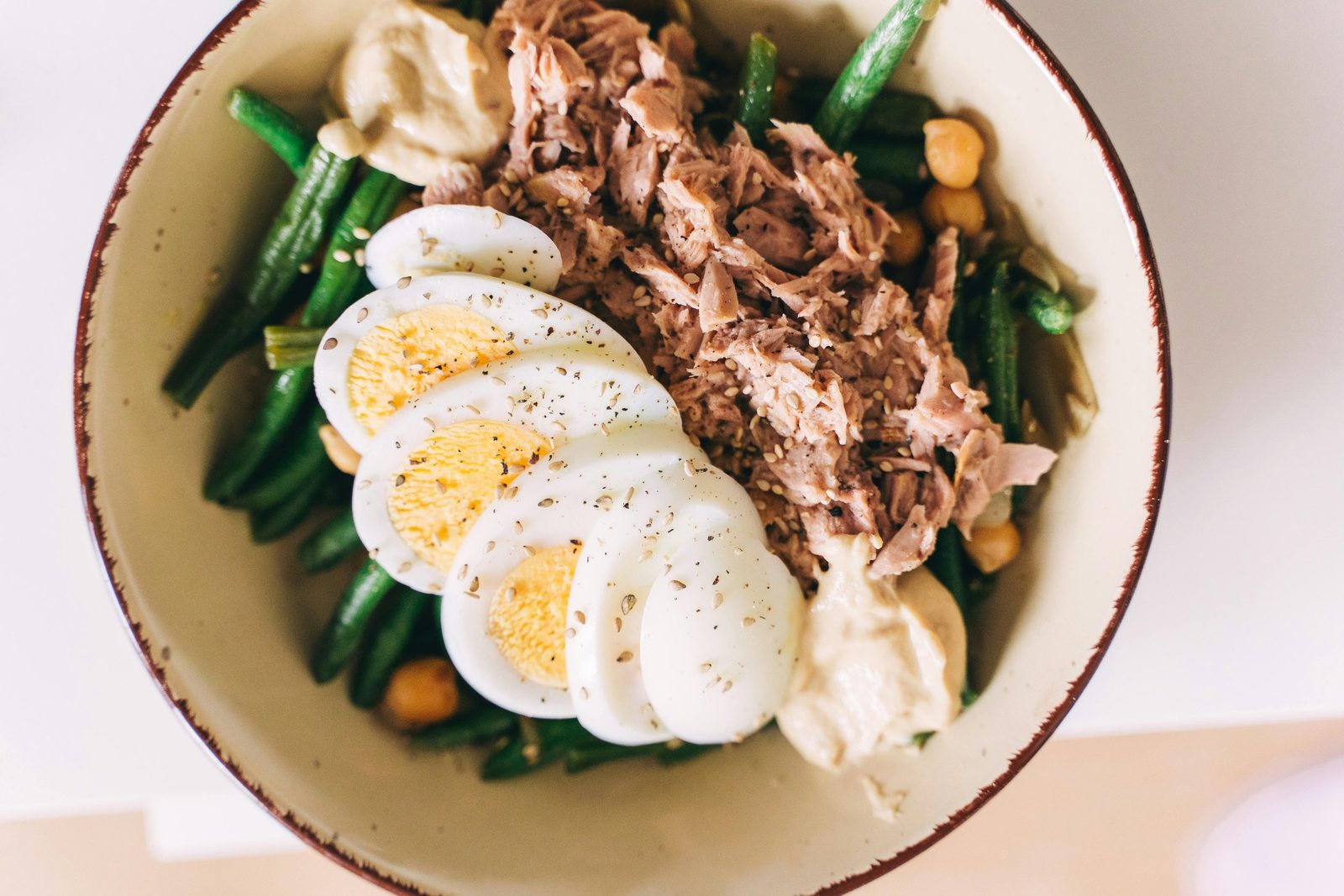
High-quality protein sources that work well on GLP-1s include eggs (easy to eat and digest), Greek yogurt (smooth texture, high protein), fish like salmon or cod (tender and mild), tofu (soft and versatile), and shredded chicken in soup (easy to consume when appetite is low).
Many GLP-1 users find that protein drinks or shakes help meet their needs when eating solid food feels impossible. This isn’t ideal as a primary strategy, but it’s better than not getting enough protein at all. Choose options with at least 20 grams of protein and minimal added sugar.
Build the rest of the plate: fibre, carbs and a little fat
Once protein is on the plate, add a small serving of fibre-rich carbohydrate, then a little fat. A half-cup serving of oatmeal, quinoa, brown rice or sweet potato is a sensible place to start. Berries, apples, pears, beans and wholegrain toast all fit here too.
Then add a small amount of fat: a drizzle of olive oil, a few slices of avocado, or a tablespoon of nut butter. Keep those portions small. Fat slows digestion further, and the meal still has to be finishable.
Fibre matters more than most people expect on these medications, because constipation is one of the most common complaints. Oats, beans, berries, sweet potato and wholegrains all help, but only alongside enough fluid.
Drink enough to stay ahead of constipation
Aim for at least 64 oz of water a day, about eight 8-oz glasses [1][3]. Sip between meals rather than with them, so drinks are not taking up room you need for food. Water, herbal teas such as ginger or peppermint, and broth-based soups all count.
On days when solid food feels like a stretch, bone broth or a protein shake gives you fluid and protein at the same time.
One to watch: carbonated drinks can make bloating worse when your stomach is already emptying slowly.
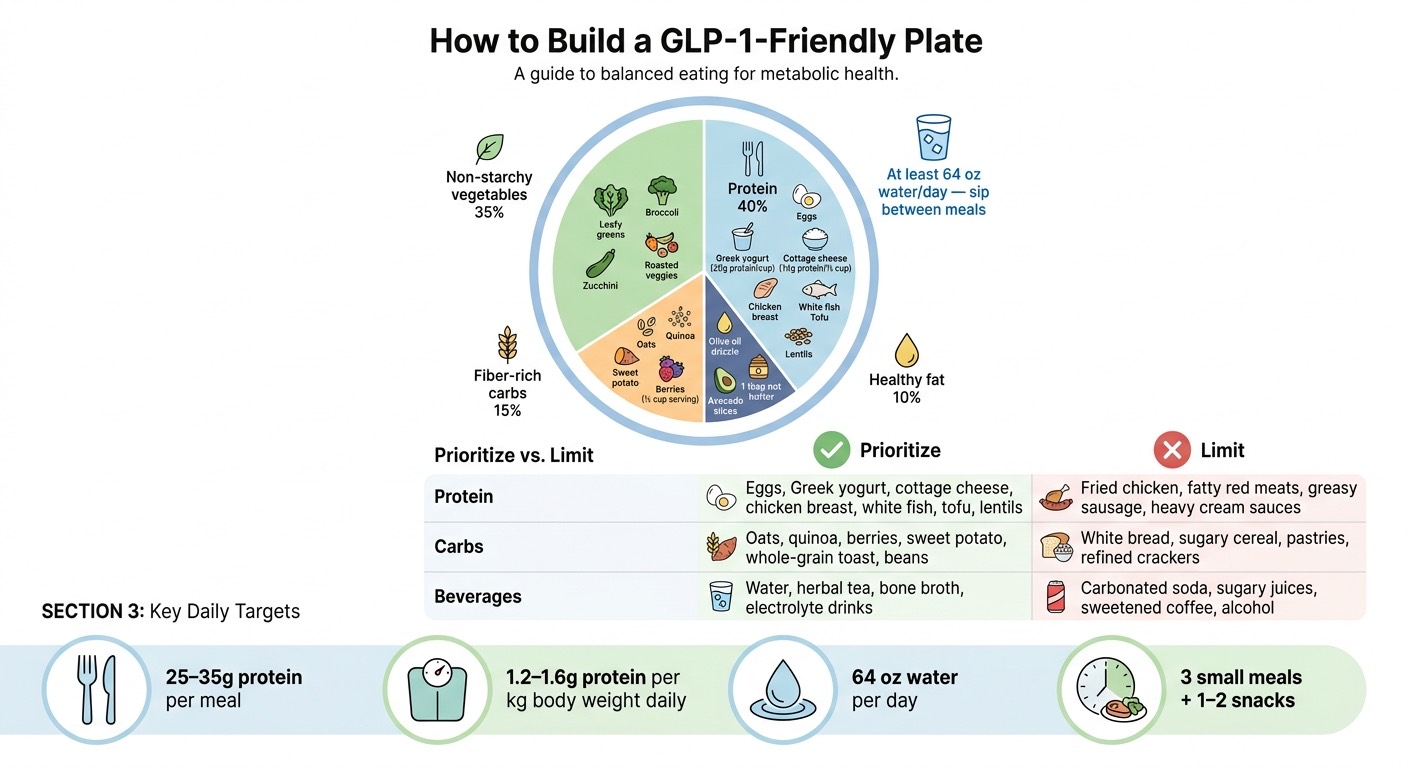
| Category | Prioritise | Limit |
|---|---|---|
| Protein | Eggs, Greek yoghurt, cottage cheese, chicken breast, white fish, tofu, lentils | Fried chicken, fatty red meats, greasy sausage, heavy cream sauces |
| Carbs | Oats, quinoa, berries, sweet potato, wholegrain toast, beans | White bread, sugary cereal, pastries, refined crackers |
| Drinks | Water, herbal tea, bone broth, electrolyte drinks | Carbonated soda, sugary juices, sweetened coffee drinks, alcohol |
The foods that work best on GLP-1s
Not all foods feel the same when you’re on appetite-suppressing medication. Heavy, greasy, or very rich foods often trigger nausea or extreme fullness from tiny portions. Learning which foods your body tolerates well makes eating easier and more pleasant.
Lighter proteins tend to work better than heavy, fatty meats. Fish, chicken breast, eggs, and tofu are generally better tolerated than beef, pork belly, or fried chicken. The texture and fat content make a significant difference in how you feel after eating.
Soups and broths are particularly helpful because they provide nutrition and hydration in an easy-to-consume form. Chicken soup with vegetables, miso soup with tofu, or clear broth with noodles and protein can deliver nutrients when solid foods feel unappealing.
Soft, easy-to-digest foods like yogurt, oatmeal, mashed sweet potato, steamed fish, and scrambled eggs work well when appetite is very low. These don’t require much chewing and go down easily even when you’re not hungry.
Small, frequent portions often work better than trying to eat three full meals. If you can only manage a few bites at a time, focus on eating small amounts every few hours rather than forcing large meals that make you feel sick.
A simple day of meals when appetite is low
This does not need to be elaborate. A plain routine works well on the days eating feels like a chore:
- Breakfast: 1 cup Greek yoghurt with berries, or 2 scrambled eggs
- Mid-morning: a protein shake, or a small handful of almonds
- Lunch: 3-4 oz grilled chicken with a small serving of roasted vegetables
- Afternoon: cottage cheese, or a turkey and cheese roll-up
- Dinner: 3-4 oz white fish such as cod with a small portion of quinoa or mashed sweet potato
If even a half portion feels like too much, reach for a protein-rich snack rather than skipping the meal. String cheese is a far better fallback than nothing.
Match texture and portion size to your symptoms
Different symptoms call for a different food form, not a different target. On nausea-heavy days, soft, cold or room-temperature foods are usually easier. On better days, shift toward denser protein.
| Pattern | Best for | Example foods |
|---|---|---|
| Comfort-focused | High-nausea or rough days | Chicken soup, scrambled eggs, oatmeal |
| Protein-focused | Days with better appetite | Greek yoghurt, grilled chicken or salmon, cottage cheese |
| On-the-go | Busy schedules or low energy | Hard-boiled eggs, protein shakes, tuna packets |
What to avoid while on GLP-1 medication
Certain foods make the already-challenging situation worse by triggering nausea, extreme fullness, or digestive discomfort. Many GLP-1 users learn these through unpleasant trial and error.
Very fatty or greasy foods like fried items, heavy cream sauces, or fatty cuts of meat often cause nausea or severe discomfort. Fat slows digestion even further, which compounds the medication’s effects.
Large portions of anything feel overwhelming. Even healthy foods in normal-sized portions can be too much. Focus on smaller amounts of nutrient-dense foods rather than trying to eat normal-sized meals.
Carbonated drinks can cause bloating and discomfort that’s worse on GLP-1s. Many users find that even drinks they previously enjoyed become unpleasant.
Very sweet foods may trigger nausea or taste aversions. Many GLP-1 users report that foods they previously loved taste too sweet or make them feel sick.
Alcohol is worth watching too. On GLP-1 medications it can feel stronger and last longer, and it may irritate the gut [2][4].
Eating too quickly causes its own problems, because the margin for error is narrow:
“On a GLP-1 the ‘I’m satisfied’ signal and the ‘I’ve had too much’ signal are very close together. Pushing past the first one is the fastest route to nausea.” - Jason Fee, MS, RDN, LDN, Vitae Arete [4]
Spicy and acidic foods do not need to be off-limits across the board, but if they regularly set off heartburn it is worth scaling them back. A simple food-and-symptom log makes the pattern obvious within a week or two.
Know if you’re eating the right foods and getting enough protein and calories
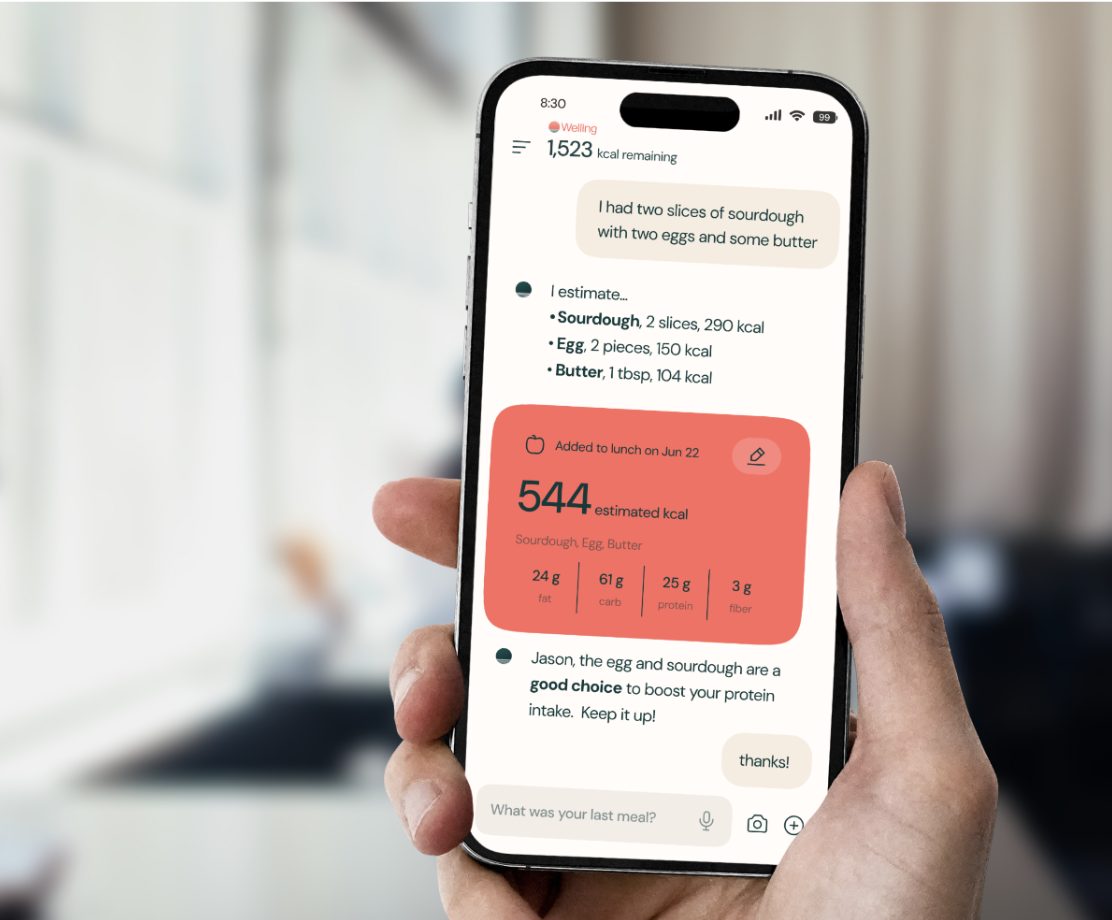
Use Welling to guide you while on your GLP-1 journey. When you’re not hungry, it’s incredibly easy to undereat without realizing it. You might think you’re eating adequately, but tracking your meals often reveals you’re only hitting 800-1,000 calories with insufficient protein.
Just tell Welling what you eat throughout the day, by photo, chat or voice. Alongside calories and macros it tracks fibre, sodium and sugar, which covers the markers that matter most here: protein for muscle, fibre for the constipation these medications are known for. Log your small meals and see exactly how much you are actually getting. This visibility helps you identify when you need to add a protein shake, when you’re short on vegetables, or when your eating has become too restricted.
The app can help you spot patterns too. Maybe mornings are when you tolerate food best, so that’s when you should prioritize protein. Or perhaps certain foods consistently make you feel worse, so you can avoid them. This personalized insight is impossible to gain without tracking.

Preventing muscle loss while losing weight
The biggest risk of GLP-1 medications is losing significant muscle mass along with fat. Muscle loss makes maintaining weight loss much harder, slows your metabolism, and affects your overall health and functionality.
Strength training becomes non-negotiable while on GLP-1s. You don’t need intense bodybuilding routines, but you do need some form of resistance training 2-3 times per week to signal your body to preserve muscle. Even bodyweight exercises, resistance bands, or light weights make a significant difference.
Hitting protein targets consistently is the other critical factor. This is why tracking with Welling is so important. You can’t rely on hunger to guide you because hunger is artificially suppressed. You need data showing whether you’re consistently getting enough protein.
The eating schedule that works
Many GLP-1 users find that eating on a schedule rather than waiting for hunger helps maintain adequate nutrition. Set reminders to eat small amounts every 3-4 hours, even if you’re not hungry.
Breakfast might be your best meal because appetite often feels slightly better in the morning. Make it count by prioritizing protein. A protein shake, eggs with vegetables, or Greek yogurt with nuts can set you up with a solid protein foundation.
Don’t skip meals thinking it’s fine because you’re not hungry. Your body still needs fuel regardless of hunger signals. Skipping meals leads to even lower calorie and protein intake, accelerating muscle loss and metabolic slowdown.

Planning for life after GLP-1s
Most people don’t stay on GLP-1 medications forever. Whether due to cost, side effects, or reaching goal weight, eventually you’ll stop. The habits you build while on the medication determine whether you maintain your weight loss.
Learning portion control while the medication suppresses appetite is valuable. Notice what reasonable portions look like when you’re not driven by excessive hunger. This awareness helps when medication stops and appetite returns.
Building a foundation of nutritious eating habits matters more than ever. Use this time to establish patterns of choosing protein first, including vegetables, and avoiding foods that don’t serve your goals.
Tracking consistently with Welling creates a record of what works for your body and helps you maintain awareness even as appetite changes. The data and habits you build now make the transition off medication much smoother.
The goal isn’t just to lose weight on GLP-1s. It’s to lose it properly while maintaining health, building better eating patterns, and setting yourself up for long-term success regardless of whether you stay on medication.
Frequently asked questions
How do I hit my protein goal if I feel full fast?
Eat protein first: make it part of the first five to ten bites, before you move on to carbohydrate or vegetables. Four to six mini-meals often work better than three larger ones. If chewing is hard, lean on protein shakes, bone broth or ultra-filtered milk, or soft protein-heavy foods such as Greek yoghurt, cottage cheese, eggs and flaked fish.
What should I eat on days when nausea is worse?
Small meals every two to three hours rather than anything large. Bland, easy-to-digest foods: scrambled eggs, oatmeal, soup, crackers, toast, rice, Greek yoghurt. Cold foods such as smoothies or cottage cheese often go down more easily because they smell less and feel lighter. Ginger or peppermint tea can help. Keep protein going with shakes if solids are not happening.
How can I tell if a meal is too heavy?
If it leaves you nauseous, bloated, uncomfortably full long afterwards, or with reflux. Large meals and food that is high in fat, greasy or fried are the usual causes, because these medications slow stomach emptying. Switch to smaller, more frequent mini-meals and easier proteins such as eggs, Greek yoghurt or shakes.
Sources and references
-
Walsh, M. The GLP-1 nutrition protocol: what to eat when you’re not hungry. https://www.maryannwalshrd.com/the-glp-1-nutrition-protocol-what-to-eat-when-youre-not-hungry/
-
Marina Dietitian. What should you eat on GLP-1 medication? A dietitian’s guide. https://marinadietitian.com/what-to-eat-on-glp-1-dietitian-guide/
-
Signos. What to eat on a GLP-1: a nutrition guide for better results. https://www.signos.com/blog/what-to-eat-on-a-glp-1-a-nutrition-guide-for-better-results
-
Fee, J. Vitae Arete. What to eat on a GLP-1: GLP-1-friendly foods and a sample day. https://vitaearete.com/insights/what-to-eat-on-glp1.html
Welling is an AI weight loss coach that simplifies nutrition tracking and provides daily accountability and insights. Rated 4.8 in the App Store by thousands of users.