

Health coaching has changed.
In 2026, you no longer need to schedule weekly calls to receive guidance. AI-powered coaching tools now deliver real-time insights, adaptive nutrition advice, and behavior-based nudges.
But does that mean traditional human coaching is obsolete?
If you’re searching for the best health coaching app, the answer depends on what kind of support you actually need.
This guide breaks down:
What health coaching apps really do
How AI coaching differs from traditional coaching
Where each model wins
Why hybrid coaching is emerging as the dominant approach
How everyday nutrition questions (like “calories in noodles”) are handled
Which model makes the most sense in 2026
Quick Answer
What is the best health coaching app in 2026?
The best health coaching app depends on whether you prioritize real-time AI guidance or structured human support.
AI-powered coaching apps provide 24/7 personalized recommendations, automated tracking, and instant answers.
Traditional coaching platforms deliver deeper emotional accountability, professional oversight, and structured programs.
Hybrid models combine AI automation with human expertise for balanced support.
For users who want continuous daily guidance, conversational nutrition support (such as asking “calories in noodles”), and adaptive calorie recommendations without scheduling sessions, AI platforms like Welling represent the next evolution of health coaching.

Table of Contents
- What Is a Health Coaching App?
- What Makes the Best Health Coaching App in 2026
- AI Coaching: Strengths and Limitations
- Traditional Coaching: Strengths and Limitations
- Daily Execution vs Strategic Oversight
- Nutrition Support in Modern Coaching Apps
- Cost, Accessibility, and Scalability
- Hybrid Coaching: The Emerging Standard
- How to Choose the Right Coaching Model
- Frequently Asked Questions (FAQs)
- References
What Is a Health Coaching App?
A health coaching app is a digital platform designed to guide users toward improved nutrition, fitness, sleep, stress management, and lifestyle habits.
Modern coaching apps typically include:
Habit tracking
Goal setting
Nutrition support
Progress monitoring
Personalized recommendations
Behavioral nudges
Earlier coaching platforms focused primarily on helping professionals manage clients.
In 2026, many apps now coach users directly using ai to deliver real-time, personalized insights.
What Makes the Best Health Coaching App in 2026?
The best health coaching app is not simply the one with the most features. It’s the one that reduces friction while increasing adherence.
The strongest apps combine:
Personalization based on behavior
Instant guidance
Clear feedback loops
Sustainable habit reinforcement
Integrated nutrition awareness
Health improvement is not about isolated decisions. It’s about daily execution.
The model that supports daily execution most effectively tends to win.

AI Coaching: Strengths and Limitations
AI health coaching uses algorithms, behavior patterns, and sometimes wearable data to provide ongoing recommendations.
Where AI Coaching Excels
1. Immediate Response
AI coaching provides instant feedback whether it is:
Adjusting calorie targets
Recommending meal changes
Interpreting a workout
Answering a nutrition query
If you ask, “calories in noodles,” an AI-based coaching system can instantly provide approximate values and suggest alternatives aligned with your goals.
2. Continuous Availability
AI operates 24/7. No appointments. No scheduling.
This makes it especially powerful for:
On-the-go decisions
Impulse control
Late-night food choices
Quick clarification moments
3. Pattern Recognition
AI systems can detect:
Calorie drift trends
Habit inconsistencies
Macro imbalance
Logging gaps
And intervene automatically.
One example of this AI-first approach is Welling, which integrates conversational logging, adaptive calorie guidance, and daily feedback in one interface.
Instead of separating tracking from coaching, it merges them.
Where AI Coaching Has Limits
AI cannot:
Fully understand complex emotional states
Replace therapeutic-level accountability
Interpret nuanced life contexts
Provide deep psychological intervention
It is excellent at execution and feedback but it is weaker at emotional nuance.
Traditional Coaching: Strengths and Limitations
Human coaching offers depth.
Where Traditional Coaching Wins
1. Emotional Context
Human coaches can:
Recognize burnout patterns
Adapt to life transitions
Provide motivational reinforcement
Interpret personal history
2. Strategic Planning
A human coach can build long-term structured programs with nuance.
3. High-Touch Accountability
Some individuals perform better with scheduled check-ins and live interaction.
Where Traditional Coaching Struggles
Limited availability
Higher cost
Scalability constraints
Less immediate response
Slower daily adjustments
Traditional coaching works well for strategic oversight, but less efficiently for moment-to-moment decisions.

Daily Execution vs Strategic Oversight
This is the real distinction.
AI coaching supports daily execution.
Human coaching supports strategic oversight.
Daily execution includes:
Logging meals
Adjusting portion sizes
Responding to cravings
Modifying workouts
Asking spontaneous nutrition questions
Strategic oversight includes:
Long-term goal planning
Habit architecture
Psychological resilience
Big-picture behavior shifts
The best health coaching systems support both layers.
Nutrition Support in Modern Coaching Apps
Nutrition is central to health coaching.
AI-powered apps now allow users to:
Ask conversational nutrition questions
Log meals via chat
Receive macro breakdowns
Adjust calorie targets automatically
For example:
A user asking “calories in noodles” may receive:

Estimated calorie range
Portion comparison
Macro breakdown
Suggested alternatives
Calorie-deficit impact
This real-time interpretation reduces decision fatigue.
AI-based platforms like Welling integrate this capability directly within coaching workflows, not as a separate tool.
Cost, Accessibility, and Scalability
AI coaching advantages:
Lower cost per user
No scheduling dependency
High scalability
Consistent feedback
Traditional coaching advantages:
High personalization
Human accountability
Strong relational engagement
Hybrid systems combine automation for daily tasks with human oversight for complexity.
Hybrid Coaching: The Emerging Standard
The future of health coaching is not AI vs human.
It is AI + human.
AI handles:
Tracking
Logging
Habit reminders
Immediate feedback
Humans handle:
Deep strategy
Emotional nuance
Long-term accountability
Many leading platforms are now blending these approaches.
The AI layer supports execution.
The human layer supports transformation.
How to Choose the Right Coaching Model
Choose AI-first if you:
Want instant feedback
Prefer self-guided systems
Need flexible support
Value automation
Choose traditional coaching if you:
Thrive on human accountability
Want structured weekly check-ins
Prefer deep relational engagement
Choose hybrid if you:
Want automation plus oversight
Need scalability but also depth
Value both execution and strategy
In 2026, many users prefer AI-driven daily coaching supported by occasional human expertise.
Ready for Smarter Health Coaching?
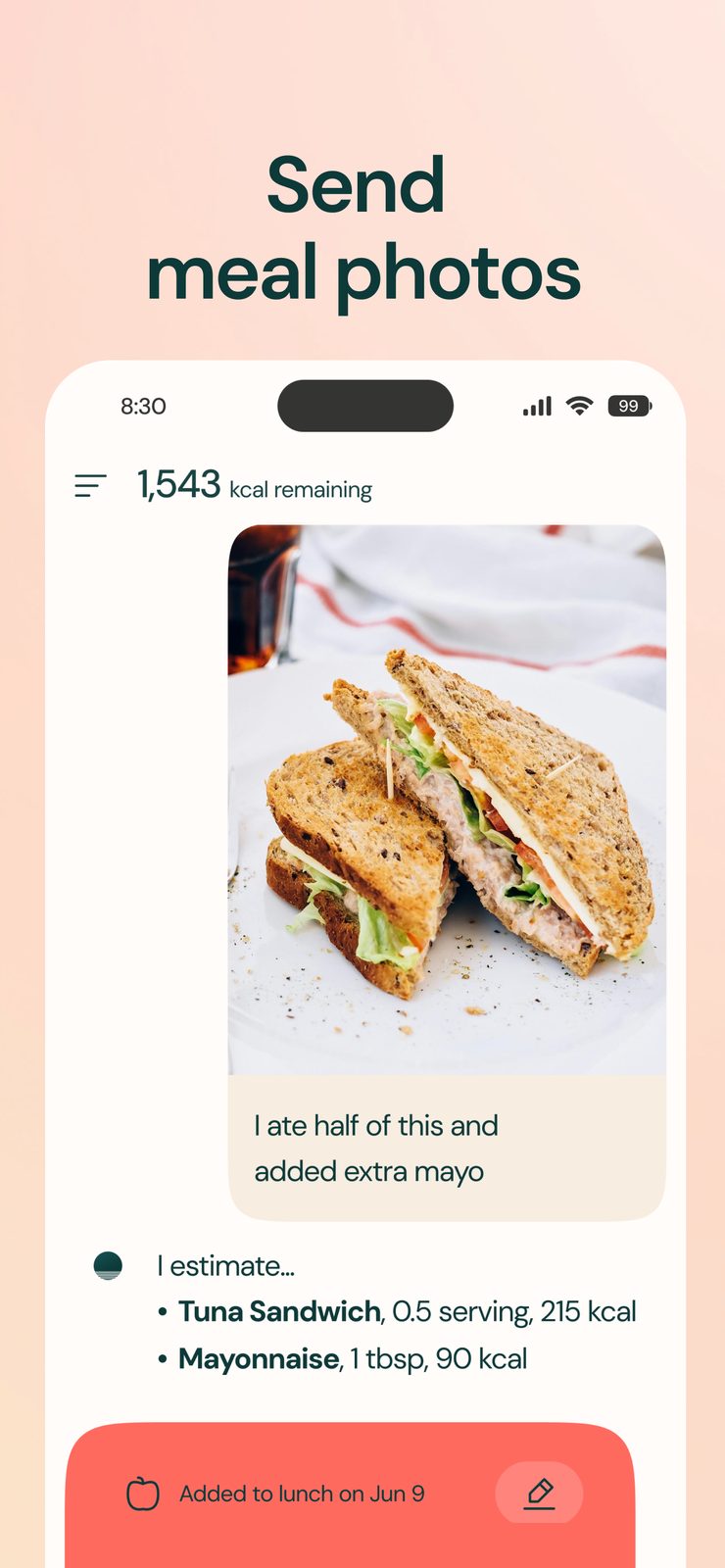
If you want coaching that works in real time, not just during scheduled sessions, AI-assisted platforms offer a modern alternative.
Welling combines conversational nutrition guidance, adaptive calorie targets, and behavior-based coaching into a single streamlined system. Instead of manually calculating numbers or waiting for appointments, users receive immediate feedback that supports everyday decisions.
Explore how AI-powered health coaching simplifies nutrition, calorie awareness, and habit development:
Frequently Asked Questions (FAQs)
What is the best health coaching app for weight management?
The best health coaching app for weight management is one that combines calorie awareness, habit tracking, and adaptive feedback. AI-driven systems often improve daily adherence through automation.
Are AI health coaching apps effective?
AI coaching is effective for daily execution and habit reinforcement. For complex psychological support, human coaching may still provide additional benefits.
Can AI coaching answer specific nutrition questions?
Yes. Modern AI coaching tools can interpret everyday nutrition queries including questions like calories in noodles and provide contextual responses aligned with user goals.
Is AI replacing human health coaches?
AI is not replacing human coaches. Instead, it is becoming the execution layer that supports day-to-day habit consistency, while humans provide strategic oversight.
References
PubMed – Self-Monitoring and Weight Loss
American Journal of Clinical Nutrition – Long-Term Weight Loss Maintenance
Harvard Health – The Importance of Habit and Behavioral Change
Welling is an AI weight loss coach that simplifies nutrition tracking and provides daily accountability and insights. Rated 4.8 in the App Store by thousands of users.