

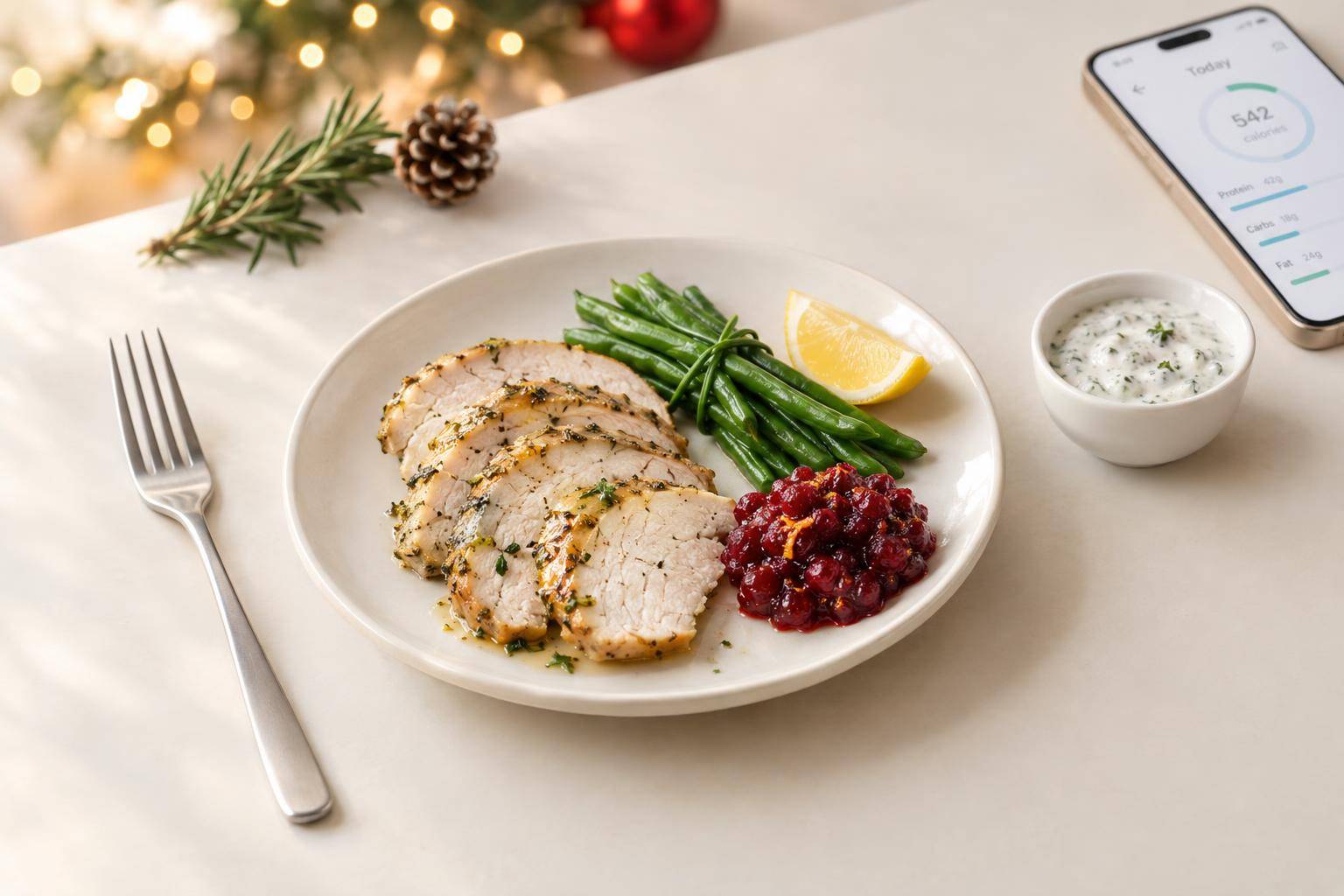
Christmas dinner is built around a big plate, and a GLP-1 medication is built around not wanting one. Semaglutide, tirzepatide and the rest slow gastric emptying, which is exactly why a rich, high-fat, three-course meal tends to sit badly — and why “just a small plate” is the whole strategy rather than a compromise. [1]
These six recipes are built for that: protein first, lower fat, soft textures, and portions you can halve without the dish looking sad. Treat them as options to pick from rather than a menu to serve all at once.
Nutrition figures here are estimates, not targets. Brands, portion sizes and swaps all move the numbers. Follow your prescriber’s advice, never change medication timing or dose without their approval, and seek medical help for persistent vomiting, signs of dehydration or severe abdominal pain. [1]
Table of Contents
- Nutrition at a Glance
- 3 Protein-Focused Christmas Main Dishes
- Watch: Holiday Eating on GLP-1s
- 3 Small Christmas Sides and Desserts
- Choose and Track Your Portions
- Frequently Asked Questions
Nutrition at a Glance
Estimates per full serving, calculated from USDA reference values for the ingredients listed. [2]
| Recipe | Full serving | Calories | Protein | Fibre |
|---|---|---|---|---|
| Herb-Roasted Turkey Breast | 3–4 oz cooked | 125–165 | 26–32 g | 0 g |
| Turkey and Vegetable Shepherd’s Pies | 1 ramekin | 250–280 | 23–27 g | 2–3 g |
| Baked Salmon With Cranberry-Herb Relish | 3–4 oz cooked + relish | 180–240 | 22–25 g | 1–2 g |
| Roasted Winter Vegetables | ½–¾ cup | ~70 | 1–2 g | 2–3 g |
| Greek Yogurt Cranberry Cups | ~½ cup prepared | 95–115 | 12–14 g | 1 g |
| Mini Ginger-Pear Oat Cups | 1 mini cup | 55–70 | ~2 g | 1–2 g |
Halve any row and the calories and protein halve with it. The mains are where the protein is — if you only have appetite for one thing, make it one of the first three.
3 Protein-Focused Christmas Main Dishes
1. Herb-Roasted Turkey Breast
Herbs, garlic and lemon zest carry the flavour, so the meat does not need heavy gravy to be worth eating. Serve it with skimmed pan juices instead.
Yield: 8–12 servings of 3–4 oz cooked meat, from a 4–5 lb breast. Prep: 15 minutes, plus an optional 12-hour dry brine. Roast: 1.5–2 hours at 325–350°F, plus resting.
Ingredients: 4–5 lb bone-in or boneless, skinless turkey breast; 1 tbsp kosher salt; 2 tsp dried thyme; 1 tsp rubbed sage; 1 tsp black pepper; 3 tbsp olive oil; 2 tbsp minced garlic; zest of 1 lemon.
Heat the oven to 325–350°F. Pat the turkey dry, set it in a roasting pan, and rub it all over with the oil, salt, thyme, sage, pepper, garlic and lemon zest.
Roast until the thickest part reads 165°F on an instant-read thermometer. That is the USDA minimum for all poultry and it is the number that matters. [3] If you want to use carryover cooking to keep the meat juicier, pull it no earlier than 160°F, rest it 20–25 minutes, and check again before carving — if it has not reached 165°F, it goes back in the oven. [4]
Serve with the skimmed pan juices.
Substitutions: Boneless skinless chicken breast or pressed firm tofu both work; adjust cooking times, and log tofu from its package label rather than by eye.
2. Individual Turkey and Vegetable Shepherd’s Pies
Single-serving ramekins do the portion control for you — the plate ends when the dish does, which is easier than deciding to stop halfway through a big bake.
Yield: 4 ramekins, one pie each. Prep: 20 minutes. Cook: 20–30 minutes.
Ingredients: 12 oz lean ground turkey (3 oz per ramekin); 1 cup frozen peas and carrots; 1 cup low-sodium turkey or chicken broth; 1 tsp cornstarch, optional; 2 cups mashed potatoes made with low-fat milk or plain Greek yogurt.
Heat the oven to 375°F. Make the mash with low-fat milk or Greek yogurt until smooth and easy to spoon — Greek yogurt adds a few grams of protein and keeps the fat down.
Brown the turkey, then stir in the peas, carrots, broth and the optional cornstarch. Simmer until slightly thickened. Divide between four ramekins and top each with a thin layer of mash.
Set the ramekins on a baking sheet and bake 20–30 minutes, until the filling reaches 165°F. [3] Cool slightly before serving.
3. Baked Salmon With Cranberry-Herb Relish
A lighter main than a rich roast, and the relish makes even a small portion look like a proper Christmas plate.
Yield: 4 servings, 3–4 oz cooked fish each with relish. Prep: 15 minutes. Bake: 12–15 minutes.
Ingredients: Four 4-oz salmon fillets; 12 oz fresh cranberries; 1 orange, zested and juiced; 1 tbsp fresh parsley; 1 minced shallot; a pinch of cinnamon.
Heat the oven to 400°F and line a baking sheet. Pulse the cranberries, orange zest and juice, shallot, parsley and cinnamon in a food processor until coarse and spoonable.
Bake the salmon 12–15 minutes, until it reaches 145°F and flakes easily. [3] Spoon the cold relish over the top.
Substitutions: Farmed Atlantic salmon is noticeably richer than wild — if it feels too heavy, a lean white fish like cod drops both the fat and the calories by roughly half. Leave the raw shallot out if alliums bother you.
Watch: Holiday Eating on GLP-1s
A short Southern New Hampshire Health segment on managing holiday meals while on a GLP-1, covering much the same ground from a clinical side.
3 Small Christmas Sides and Desserts
Low fat, small portions, and textures that tend to go down more easily when your stomach is emptying slowly.
4. Roasted Winter Vegetables
Yield: 4 servings of about ½–¾ cup. Prep: 10 minutes. Roast: 20–30 minutes.
Ingredients: 1 cup peeled sliced carrots; 1 cup halved Brussels sprouts; 1 cup peeled cubed butternut squash; 1 tbsp olive oil; 1 tsp dried thyme or rosemary; ½ tsp salt; 1 tsp lemon juice, optional.
Heat the oven to 400°F. Toss the vegetables with the oil, herbs and salt and spread them in a single layer on a baking sheet. Roast 20–30 minutes, stirring halfway, until tender and lightly browned. Finish with the lemon juice and divide into four.
Lower-fibre swap: Brussels sprouts are the most likely culprit if you are bloating. Replace them with another cup of carrot or squash and cook until soft. If nausea is an issue, start at a half serving.
5. Greek Yogurt Cranberry Cups
Cold, high in protein, and about as far from a heavy Christmas pudding as a dessert gets. At 12–14 g of protein a cup, this is the only dessert here that meaningfully contributes to a protein target.
Yield: 4 servings of about ½ cup. Prep: 10 minutes. Cook: 10–12 minutes for the sauce. Chill: 30 minutes.
Ingredients: 2 cups plain nonfat or low-fat Greek yogurt; ½ cup unsweetened cranberry sauce or cooked cranberries; 1 tsp orange zest; ½ tsp cinnamon; 1 tbsp maple syrup, optional.
For the sauce, simmer 1 cup fresh or frozen cranberries with 2–4 tbsp orange juice for 10–12 minutes until the berries burst, then cool completely.
Mix the yogurt with the orange zest and cinnamon and divide between four cups. Top each with 2 tbsp sauce and the optional maple syrup. Chill at least 30 minutes.
Substitutions: Lactose-free Greek yogurt works unchanged. For no added sugar, skip the maple syrup and use a sweetener you tolerate. Soft pear mellows the tartness but changes the estimate.
6. Mini Ginger-Pear Oat Cups
Warm, lightly sweet, and portioned by the tin rather than by willpower.
Yield: 12 mini cups. Serving: 1 cup. Prep: 15 minutes. Bake: 20–25 minutes.
Ingredients: 1½ cups quick oats; 1 cup finely diced peeled pear; 2 egg whites; 1 tsp ground ginger; 1 tsp cinnamon; 2 tbsp maple syrup or a noncaloric sweetener; pinch of salt.
Heat the oven to 350°F and grease a 12-cup mini muffin tin. Mix everything together, divide between the cups and bake 20–25 minutes until firm and golden. Cool slightly before removing.
Use certified gluten-free oats if you need them. Worth knowing: these are a treat, not a protein source — about 2 g a cup. A spoonful of plain nonfat Greek yogurt on top adds more protein than the cup itself contains. Start with one if fibre worsens your symptoms.
Choose and Track Your Portions
Match the recipes to your appetite on the day rather than to the occasion. Tolerance shifts with your medication, your dose and how long you have been on it, so the plate that worked last month may not be the one that works this week. [1]
Full Servings, Half Servings, and Lighter Swaps
| Recipe | Full serving | Half serving | Lighter swap |
|---|---|---|---|
| Herb-Roasted Turkey Breast | 3–4 oz cooked | 1.5–2 oz | Take the leanest slice, skip the skin |
| Turkey and Vegetable Shepherd’s Pies | 1 ramekin | ½ ramekin | Swap half the mash for cauliflower mash |
| Baked Salmon With Cranberry-Herb Relish | 3–4 oz cooked | 1.5–2 oz | Use white fish; relish on the side, no butter |
| Roasted Winter Vegetables | ½–¾ cup | ¼ cup | Herbs instead of butter or cheese |
| Greek Yogurt Cranberry Cups | ~½ cup | ¼ cup | 1 tbsp cranberry sauce instead of 2 |
| Mini Ginger-Pear Oat Cups | 1 mini cup | ½ cup | One cup, no toppings |
A few things that help more than the recipes do:
- Use a side plate. A full dinner plate sets an expectation your stomach will not meet.
- Protein first, then vegetables, then starch or dessert if there is room.
- Eat slowly and stop at comfortably full, not at empty plate.
- Do not skip earlier meals to save room. On a GLP-1 that usually backfires — you arrive unable to eat much anyway and end the day well short on protein.
- Sip fluids through the day rather than drinking a lot alongside dinner, which fills a slow-emptying stomach fast.
For the year-round version of this, our guide to eating on a GLP-1 and the protein targets that go with it cover the same ground in more depth, and there is a general holiday guide that is not medication-specific.
Log What You Eat With Welling
The awkward part of tracking a holiday meal is that you rarely eat what you served. Log it from a photo, a chat message or a voice note — describing the plate takes about as long as saying it out loud — then adjust the entry for what you actually left behind. Welling estimates in 2.6 seconds on average and tracks calories, protein and fibre against your target.
Mention the swaps in the description when you log, because they matter here: “shepherd’s pie but with cauliflower mash instead of potato” or “half a salmon fillet, relish on the side” gets you a different and more accurate number than logging the recipe as written.
Treat the result as rough tracking, not a target. Welling is a logging tool, not medical advice, and it does not know what your prescriber told you.
Conclusion: Choose Portions That Suit Your Tolerance
Build the plate around turkey or salmon, add soft-cooked vegetables, and finish with something small and cold if you still have room. Let how you feel that day set the portion — on a GLP-1 the goal at Christmas is to eat enough, particularly of protein, rather than to finish what you were given.
If low appetite, frequent nausea or trouble eating enough is running on past the holiday, that is a conversation with your clinical team rather than something to solve with recipes. [1]
Frequently Asked Questions
How can I get enough protein with a small appetite?
Eat it first, before anything else goes on the plate. Turkey breast gives you about 26 g of protein in a 3 oz serving, so one modest portion covers a meaningful share of a day’s target even if you manage nothing else. [2]
After that, lean on protein that does not feel like a big meal: Greek yogurt, eggs, cottage cheese, a shake. If a full portion is too much, plate half and refrigerate the rest to eat as a snack two hours later — two small protein servings are far easier than one large one when your stomach is emptying slowly.
Can I prepare these recipes ahead of time?
Most of it, yes. The cranberry sauce keeps 3 days refrigerated. The dry brine or herb rub on the turkey goes on the night before. The yogurt cups can be assembled the day before, and the oat cups keep several days in an airtight container.
Leave the turkey and the mash for the day itself. The shepherd’s pies can be assembled ahead and baked from cold — add about 10 minutes, and check the filling still reaches 165°F.
How do I log recipe substitutions in Welling?
Describe the swap in plain language when you log the meal. Welling is chat-first, so “individual shepherd’s pie, cauliflower mash instead of potato, about half of it” is a valid entry, and the estimate comes from that description rather than from a fixed recipe entry you have to edit.
If a dish has several changes, logging the components separately — the meat, the mash, the vegetables — usually lands closer than describing the finished dish, because each part is something the model has a clean reference for.
Are these recipes only for people on GLP-1 medication?
No. Nothing here is medication-specific — they are high-protein, lower-fat, modest-portion dishes, which is useful to anyone eating with a small appetite, recovering from illness, after bariatric surgery, or simply wanting a Christmas dinner that does not need a lie-down afterwards. The portion framing is what makes them suited to a GLP-1, not the ingredients.
What if I feel nauseated during the meal?
Stop eating and sip water or a warm drink slowly. Cold or room-temperature foods are often easier than hot ones, and fat is usually the trigger worth suspecting first — gravy, butter, cream, skin. Nausea is among the most common GLP-1 side effects and tends to ease as your body adjusts to a dose. Persistent vomiting, signs of dehydration or severe abdominal pain are different, and warrant contacting your prescriber rather than waiting it out. [1]
Sources and References
-
Cleveland Clinic. GLP-1 agonists. https://my.clevelandclinic.org/health/treatments/13901-glp-1-agonists
-
U.S. Department of Agriculture. FoodData Central nutrient database. https://fdc.nal.usda.gov/
-
USDA Food Safety and Inspection Service. Safe minimum internal temperature chart. https://www.fsis.usda.gov/food-safety/safe-food-handling-and-preparation/food-safety-basics/safe-temperature-chart
-
BBC Good Food. Roast turkey with citrus butter. https://www.bbcgoodfood.com/recipes/roast-turkey-citrus-butter
-
Skinnytaste. Pear cranberry crisp. https://www.skinnytaste.com/pear-cranberry-crisp/