

The holiday season is supposed to be joyful, but if you’re working on health goals, it often feels like walking through a minefield of temptation. Office parties with endless snacks, family gatherings centered around elaborate meals, reunion dinners that stretch for hours, and the constant pressure to eat everything offered to you.
By January, many people feel like they’ve undone months of progress and need to “start over.”
Here’s what most people get wrong: the holidays don’t ruin your progress. The guilt spiral and extreme restriction that follows does. You can absolutely enjoy celebrations, eat foods you love, and still maintain your progress. It just requires a different approach than either extreme restriction or complete abandon.
Why the all-or-nothing approach backfires every time
Most people approach the holidays in one of two ways. They either try to maintain perfect control (which leads to stress, food obsession, and eventually breaking down), or they decide to throw caution to the wind and “start fresh in January” (which leads to weeks of overeating and genuine progress loss).
Both approaches fail because they’re based on the false idea that you’re either “on track” or “off track.” In reality, there’s no track. There’s just your life, and the holidays are part of it. The goal isn’t to survive the holidays. It’s to enjoy them while making choices that feel good in the moment and afterward.
The mental stress of trying to be perfect during celebrations often causes more harm than the actual food. Stress hormones affect your metabolism, sleep, and food choices. Ironically, people who stress less about holiday eating often maintain their weight better than those who are anxious and restrictive.
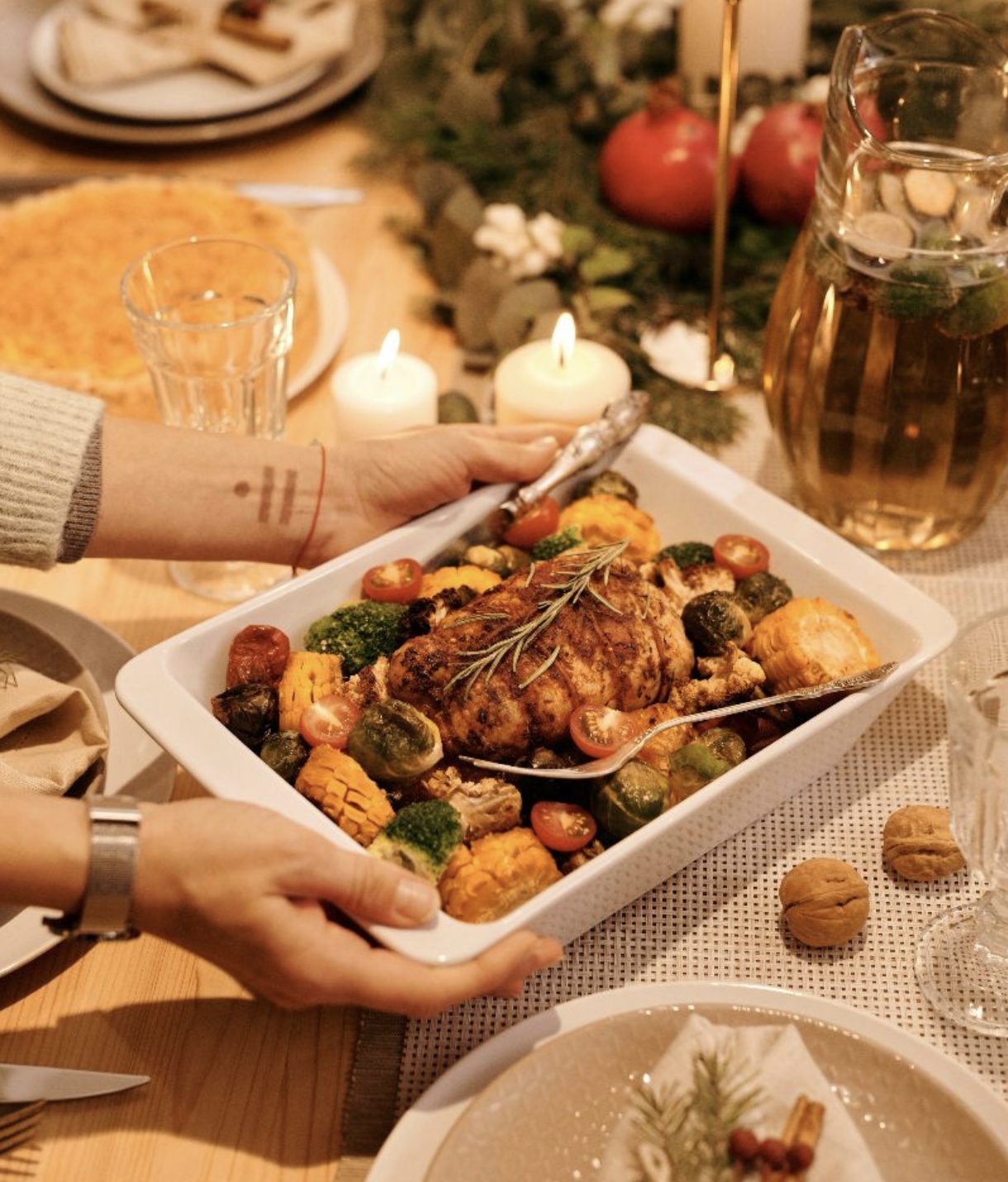
The strategy that actually works: Selective indulgence
Instead of eating everything offered or avoiding everything enjoyable, get strategic about what’s worth it. Ask yourself: “Is this food special, or just available?” The pineapple tarts your aunt makes once a year? Worth it. The random cookies from the grocery store at the office party? Probably not.
This isn’t about rules or restriction. It’s about being intentional. When you eat things that are truly special to you, you enjoy them fully without guilt. When you skip things that aren’t that important to you, you don’t feel deprived because you’re saving room for what you actually want.
The three-question test before eating at gatherings:
Is this special or something I can get anytime?
Do I actually want this, or am I eating it because it’s there?
Will I enjoy this, or will I regret it in an hour?
These questions help you distinguish between genuine enjoyment and mindless eating.
How to handle the specific holiday challenges
The endless office snacks: Your desk neighbor keeps leaving cookies on your desk. The pantry is stocked with treats. Every meeting has food.
Strategy: Pick one or two treats during the week that you actually want and enjoy them fully. Ignore the rest. Most of it isn’t even that good, you’re just eating because it’s there.
The family pressure to eat everything: Your grandmother is offended if you don’t eat three servings. Your relatives comment on your plate.
Strategy: Take small portions of everything to show appreciation, eat what you genuinely enjoy, and politely decline seconds by emphasizing how good everything was that you’re too full to eat more.
The multi-course reunion dinner: Chinese New Year, Christmas dinner, Hari Raya celebrations often involve elaborate multi-course meals that last hours.
Strategy: Eat slowly, participate in conversation, and focus on your actual favorites rather than sampling everything. No one tracks exactly what you eat when you’re engaged in the gathering.
The alcohol situation: Social pressure to drink, multiple toasts, celebration after celebration.
Strategy: Alternate alcoholic drinks with water or tea. Nurse one drink throughout the evening. Choose quality over quantity. Two glasses of wine you actually savor beats five beers you’re drinking because everyone else is.
The morning-after strategy that prevents spiraling
The day after a big celebration, your instinct might be to skip meals, do extra cardio, or “be really good” to compensate. Don’t do this. It starts the restriction-binge cycle that keeps people stuck for months.
Instead, just return to your normal eating routine immediately. Not “extra healthy” meals. Not tiny portions. Just your regular meals. Your body is incredibly good at regulating itself when you don’t interfere with extreme measures.
That 2-3 kg weight gain after a big meal? It’s mostly water retention from extra sodium and carbs, plus the actual weight of food in your digestive system. It’s not fat. It will normalize in 2-3 days if you just eat normally and stay hydrated.

Smart eating during the actual celebrations
Start with protein and vegetables: At buffets or large meals, fill your plate with protein and vegetables first. Then add the special dishes you’re excited about. This way you’re satisfied from nutritious food and can enjoy treats without overeating them.
Eat before you go: Having a small, protein-rich snack before parties prevents arriving starving. When you’re hungry, everything looks amazing and you lose the ability to be selective. A handful of nuts, some yogurt, or a hard-boiled egg takes the edge off.
Use smaller plates if possible: This isn’t about restriction, it’s about not accidentally taking more than you actually want. Smaller portions let you try multiple things without feeling stuffed and uncomfortable.
Slow down and enjoy: When you’re eating something special, actually taste it. Put your phone down, engage in conversation between bites, notice the flavors. You’ll feel more satisfied with less food.
Track without judgment during the season
Using a nutrition coach like Welling during the holidays removes the emotional weight of “good” and “bad” days. You’re just collecting information. Log your celebration meals alongside your regular meals. You might discover that even during the holiday season, 70-80% of your meals are still your normal routine. Those few celebration meals don’t define your progress.
Tracking also helps you see that one big dinner doesn’t ruin anything. When you look at your week as a whole, you realize that enjoying your company’s Christmas dinner on Friday doesn’t negate the healthy meals you had Monday through Thursday.
The data removes the drama. Instead of feeling like you “ruined everything,” you can see objectively that you’re still making progress overall.
What “maintaining” actually looks like
Maintaining your progress during the holidays doesn’t mean the scale never fluctuates or you eat perfectly at every event. It means that by January, you’re roughly where you were in November. No significant regression. Maybe you didn’t lose weight during December, but you didn’t gain either. That’s a win.
Some people even continue losing weight during the holidays because they’ve figured out how to enjoy celebrations without overdoing it the rest of the time. They eat normally most days, indulge at actual celebrations, and don’t stress about any of it.
Maintenance isn’t boring or restrictive. It’s the sustainable middle ground where you can participate fully in life while still caring for your health.
Welling is an AI weight loss coach that simplifies nutrition tracking and provides daily accountability and insights. Rated 4.8 in the App Store by thousands of users.