

You’ve been eating well for three weeks straight. Then Friday night hits, you’re exhausted from work, and you end up ordering in instead of cooking. Before you know it, Saturday becomes a write-off too. By Sunday evening, you’ve convinced yourself that you’ve undone all your progress and might as well just start over next week.
Sound familiar? The food choices weren’t the main problem here. The mental spiral that followed was. Your brain has developed patterns of thinking that actively work against your weight loss efforts, and most people don’t even realize it’s happening.
Why your brain works against you
Your brain evolved to keep you safe, not to help you lose weight. It’s constantly scanning for threats and trying to conserve energy. When you start changing your eating habits, your brain interprets this as potential danger. Less food? That’s a threat to survival. Different routines? That’s uncomfortable and risky.
This is why negative thought patterns around food and weight loss feel so automatic and convincing. They’re your brain’s way of trying to get you back to familiar, “safe” behaviors, even when those behaviors don’t serve your goals.
Understanding the most common mental traps helps you recognize them when they happen, which dramatically reduces their power over your actions.
The catastrophic thinking trap
One meal doesn’t go as planned, and suddenly your brain announces that everything is ruined. You had bubble tea with full sugar instead of asking for less sweet, so clearly you’ve destroyed three weeks of progress. The entire day is shot, so you might as well get char kway teow for dinner too.
This is catastrophic thinking, where your brain takes a minor setback and blows it completely out of proportion. One higher-calorie meal becomes “I’ve destroyed everything.” One skipped workout becomes “I’ll never be consistent.” One scale fluctuation becomes “This isn’t working.”
The reality is that your body doesn’t work in all-or-nothing terms. One meal represents roughly 3-5% of your weekly food intake. Even if that meal was double your normal calories, it’s not enough to reverse consistent progress. Weight loss happens over weeks and months, not based on individual meals or days.
The fix: When you catch catastrophic thinking, zoom out to the bigger picture. Look at your last seven days, not just today. Ask yourself: “Will this matter in a week? In a month?” Usually, the answer is no.
The comparison trap that kills motivation
You follow health accounts on social media. A friend posts about losing 10kg in two months. Your colleague mentions doing intermittent fasting and dropping weight easily. Meanwhile, you’ve been working hard for six weeks and lost 2kg.
Your brain immediately concludes: “I’m doing something wrong. Everyone else succeeds faster. I’m just bad at this.” This comparison trap makes you feel like a failure even when you’re making genuine progress.
Here’s the truth: you have no idea what’s really happening in other people’s lives. That social media transformation might have taken two years, not two months. Your friend’s “easy” weight loss might involve struggling you never see. Your colleague might regain everything next month.
More importantly, their journey has nothing to do with yours. Different genetics, different lifestyles, different starting points, different goals. Losing 2kg in six weeks is excellent progress that compounds over time into significant results. But comparison makes it feel inadequate.
The fix: Track your own progress against your own baseline, not against other people. Using an AI nutrition coach like Welling helps you focus on your personal patterns and progress. You can see how your habits today compare to your habits six weeks ago, which is the only comparison that actually matters.

The “perfection” mindset
You plan to start eating healthier on Monday. The plan includes meal prep every Sunday, gym four times per week, drinking eight glasses of water daily, and cutting out all snacks. Monday goes perfectly. Tuesday is pretty good. Wednesday you forget your meal prep at home and have to buy lunch. Thursday the plan falls apart.
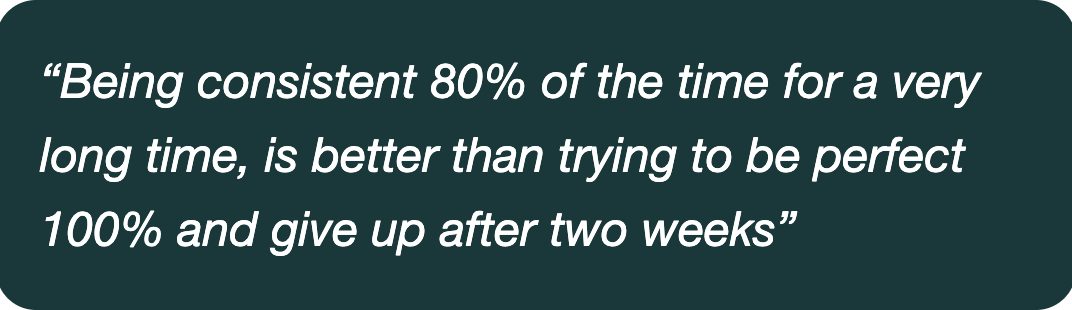
Your brain decides: “If I can’t do it perfectly, why bother?” You abandon the entire plan instead of adjusting it. This perfection paralysis keeps people stuck in cycles of starting and stopping because any deviation from the perfect plan feels like complete failure.
The truth is that perfect execution is impossible and unnecessary. You don’t need to follow your plan perfectly to see results. You need to follow it consistently enough that your overall patterns support your goals. That might mean hitting your targets 70% of the time while the other 30% is messier, and that still works.
The fix: Lower the bar for what counts as success. If your plan requires perfection, make it easier. Three gym sessions instead of four. Meal prep just lunches, not dinners too. One healthy change at a time instead of overhauling everything. Success you can maintain beats perfection you can’t sustain.
The blame spiral
When progress stalls, your brain immediately looks for something or someone to blame. It’s your busy schedule. Your family’s eating habits. The fast food center near your office. Your metabolism. Your age. Your stress levels. While some of these factors genuinely affect weight loss, focusing on them keeps you stuck.
Blame feels like an explanation, but it’s actually an excuse that prevents problem-solving. When you blame external factors, you stay passive instead of looking for solutions within your control.
The fix: For every external factor you identify, ask: “What small part of this could I influence?” You can’t control your office location, but you can pack lunch twice a week. You can’t change your family’s preferences, but you can control your portions and add vegetables to your plate. You can’t eliminate stress, but you can develop coping strategies that don’t involve food.
The all-or-nothing mindset
Your eating is either “good” or “bad.” Days are either “on track” or “off track.” You’re either following your plan perfectly or you’ve completely failed. This black-and-white thinking eliminates all the middle ground where sustainable progress actually happens.
Real life exists in the gray area. Most days will involve a mix of choices that align with your goals and choices that don’t. A day can include a healthy breakfast, a moderate lunch, and a larger-than-planned dinner, and still support your overall progress. But all-or-nothing thinking labels that entire day as a failure because of one meal.
The fix: Rate your days on a scale instead of labeling them good or bad. A day where you hit 70% of your goals is different from a day where you hit 30%, even though neither is perfect. Tracking with Welling helps you see that most days fall somewhere in the middle, and that middle ground is where sustainable weight loss happens.

Retraining your brain takes practice
These thought patterns developed over years or decades. They won’t disappear overnight just because you understand them. But awareness is the first step. When you catch yourself in one of these mental traps, you can choose to think differently instead of automatically believing every thought your brain generates.
Start by noticing your thoughts without judgment. “I’m catastrophizing right now” or “That’s comparison trap talking” creates distance between you and the thought. It’s not truth, it’s just a pattern you’re learning to recognize and change.
Over time, these new thinking patterns become more automatic. Your brain learns that one off-plan meal doesn’t equal disaster. That your progress matters regardless of what others are doing. That imperfect consistency beats perfect starts and stops. This mental shift often makes more difference than any specific diet strategy ever could.
Welling is an AI weight loss coach that simplifies nutrition tracking and provides daily accountability and insights. Rated 4.8 in the App Store by thousands of users.