

What is the best WeightWatchers alternative in 2026?
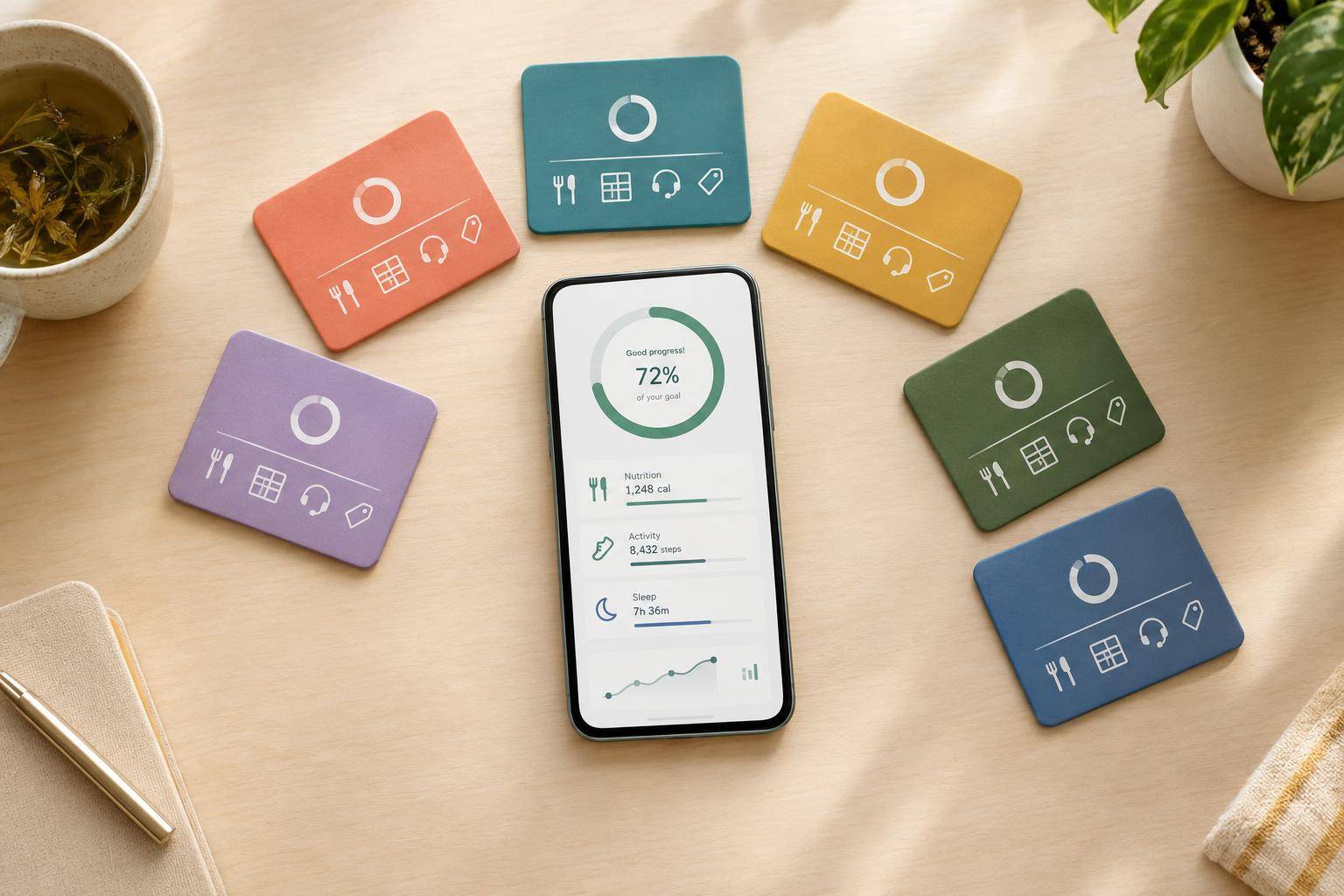
For most people leaving WeightWatchers, Welling is the closest replacement that keeps the guidance without the programme fee: you log a meal from a photo, chat or voice note in 2.6 seconds on average and get an AI nutrition coach on the free plan. If what you valued about WW was the structured behaviour change and a human coach, Noom is the nearest equivalent. If you want nutrient depth instead of either, Cronometer goes furthest.
The real decision is not which app is best in the abstract. It is which part of WeightWatchers you are actually replacing: the Points system, the coaching, the workshops, or just the habit of logging something every day.
Table of Contents
- Why people leave WeightWatchers
- What to look for in a WeightWatchers alternative
- Quick comparison
- Best WeightWatchers alternatives 2026
- How to switch from Points to calories
- Frequently asked questions
Why People Leave WeightWatchers
Three reasons come up repeatedly, and they point at different replacements.
The first is cost. Digital plans start at around $23 per month, and plans with workshops or coaching cost more. That is a recurring charge for a system you could approximate with a free calorie tracker, and once the novelty of the programme wears off, many people find they are paying mainly for the habit of opening the app.
The second is the Points system itself. Points are deliberately abstracted away from the underlying numbers, which is what makes them easy to follow and also what makes them hard to carry anywhere else. You learn what a day costs in Points rather than what a meal contains. The moment you stop paying, that knowledge does not transfer to a food label, a restaurant menu, or any other app.
The third is logging friction. Points require looking food up in a specific database to get a Points value, which is the same search-and-tap loop most trackers ask for. If logging was the thing that wore you down, switching to another search-based tracker solves nothing.
What to Look for in a WeightWatchers Alternative
Work out which of these you are actually replacing before comparing prices.
How you log. If you quit because logging was tedious, this is the only variable that matters. Photo, voice and chat logging remove the search step entirely; barcode scanning removes it for packaged food. A faster database is still a database.
What the numbers mean. Points hide calories and macros by design. Calories and grams are harder at first and far more portable: they appear on every food label and in every other app you might use later.
Whether you need a person. WeightWatchers sells accountability as much as tracking. Some alternatives replace it with a human coach, some with an AI coach available at any hour, and some with nothing at all. Be honest about which you will actually use.
What the free tier really includes. Several apps here put the feature you want behind a subscription, which is how you end up paying again for something you left WW to stop paying for.
Quick Comparison
| Option | Tracking | Support | Reported U.S. price |
|---|---|---|---|
| WeightWatchers | Points-based food tracking | Connect and workshops, depending on plan | From about $23/month |
| Welling | Calories, macros, fibre, sodium and sugar; photo, chat, voice and barcode logging | AI nutrition coach, included free | Free plan; Premium price varies |
| Noom | Calories plus colour-coded food categories and habit lessons | Human coach and AI assistant | About $59–$70/month, less on longer terms |
| MyFitnessPal | Calories and macros; 14M+ food entries | Forums and friends, no built-in coaching | Free; Premium $19.99/month or $79.99/year |
| Lose It! | Calorie budget, macros, Snap It photo logging | Challenges and social features | Free; Premium about $39.99/year |
| Cronometer | Calories, macros and 80+ nutrients from USDA and NCCDB | Self-directed, no coaching | Free; Gold $5.99/month or $49.99/year |
| Healthi | Points-style tracking | Not verified | Not verified |
Competitor prices are the figures reported at the time of writing and change often. Before paying, check the total charge, the renewal date and the cancellation terms, not just the advertised monthly rate.
Best WeightWatchers Alternatives 2026
1. Welling
Welling replaces Points with the actual numbers and replaces the search-and-tap loop with AI logging. You photograph a meal, describe it in chat or send a voice note, and it logs in 2.6 seconds on average. Barcode scanning covers packaged foods.
For someone leaving WW, that speed is usually the decisive feature. The Points habit works because logging is simple, not because Points are meaningful, so an alternative that makes logging simpler than Points were is a genuine upgrade rather than a lateral move.
What you see instead of a Points balance is calories, protein, carbohydrates, fat, fibre, sodium and sugar, with a daily target calculated from your body stats and goal. That is more detail than Points and less than Cronometer, which is the right level for most people replacing a programme rather than auditing a diet.
The coaching is the part that most directly substitutes for what WW charges for. The AI nutrition coach answers questions, suggests what to eat against your remaining targets, and is available whenever you open the app rather than at a scheduled workshop. It is not a person, and if the human relationship was the point, Noom is the closer match.
The free plan is unusually complete for this category: photo, chat and voice logging, calorie and macro tracking, and access to the coach. That makes it a genuinely free replacement for a paid programme, rather than a trial that becomes a subscription.
Best for: Anyone who liked having guidance and daily structure but wants to stop paying a monthly programme fee, and anyone who quit because logging took too long.
Try Welling free on iOS and Android
2. Noom
Noom is the alternative that replaces WeightWatchers’ psychology rather than its tracking. Daily ten-to-fifteen-minute lessons drawn from cognitive behavioural therapy address why you eat rather than only what, which is the closest thing on this list to what WW workshops are selling.
It tracks calories rather than Points, and sorts food into green, yellow and orange categories by calorie density. That is a familiar move for anyone coming from Points — a simplified proxy that is easy to follow and harder to carry elsewhere — though the underlying calorie figure is at least visible beneath it.
Standard plans include a human coach alongside Welli, Noom’s AI assistant. Reviews are mixed on the coaching: some find it genuinely supportive, others report scripted or slow replies. Worth knowing before you choose Noom specifically for the human element.
The cost is the catch. At roughly $59 to $70 per month, Noom is substantially more expensive than WeightWatchers, dropping to about $32 to $45 effective monthly on longer commitments. If leaving WW was partly about the recurring charge, Noom is a step in the wrong direction.
Best for: People who left WW for reasons other than price, and who want structured behaviour-change lessons with a human coach attached.
3. MyFitnessPal
MyFitnessPal is the default destination for people who want to stop using a proprietary system and start using plain numbers. Its database of over 14 million entries means almost anything you eat already exists in it, including branded and restaurant items.
You track calories and macros, with protein, carbohydrates, fat, fibre and sodium all visible. Premium adds custom macro targets and per-meal calorie goals. There is no coaching of any kind, which is the main thing you give up in the move from WW — the forums and friend system are not a substitute for a programme.
Two caveats matter. Much of the database is user-submitted, so entries vary in quality and are worth checking against the label for anything you eat often. And barcode scanning, the single feature that makes logging packaged food fast, requires Premium at $19.99 per month or $79.99 per year — which on an annual basis is not far off what WW digital costs.
Best for: Self-directed people who want the biggest food database and are happy tracking without any coaching.
4. Lose It!
Lose It! is the simplest calorie-first replacement. Onboarding sets a daily calorie budget, and the whole app is organised around spending it — which is conceptually close to a Points budget, without the proprietary maths.
Logging works through search, barcode scanning, or Snap It photo recognition, against roughly 7 million verified entries. The free tier is more generous than MyFitnessPal’s: calorie tracking, barcode scanning, goal setting and basic macros are all included, with no paywall on the scanner.
Premium, at about $39.99 per year, adds detailed nutrient breakdowns, meal planning and extra device support. Support comes from in-app challenges and social features rather than coaching, so like MyFitnessPal it replaces WW’s tracking but not its accountability.
Best for: People who want a budget to spend each day rather than lessons or points, and who want barcode scanning without paying for it.
5. Cronometer
Cronometer is the opposite end of the spectrum from Points. Where WW abstracts everything into one number, Cronometer shows you more than 80 nutrients per entry, drawn from curated USDA and NCCDB data rather than user submissions.
That makes it the most accurate option here by a distance, and the most demanding. Logging is manual search or barcode only, with no AI photo or voice entry, and the interface assumes you want the data. There is no coaching, no community and no programme structure.
The free tier covers calories, macros, the database and barcode scanning. Gold, at $5.99 per month or $49.99 per year, is the cheapest paid tier in this comparison and adds advanced nutrient reports and removes ads.
Best for: People leaving WW because they wanted real nutritional information, not a simplified score, and who do not need accountability built into the app.
6. Healthi
Healthi comes up frequently in WeightWatchers alternative discussions because it uses a points-style system, which makes it the most familiar-feeling switch for someone who liked Points but not the price.
Beyond that, there is little that can be stated with confidence. Its current tracking method, nutrition guidance, coaching and community features are not well documented, and U.S. pricing and plan limits are unclear. If a points-style system is specifically what you want, it is worth evaluating directly; if you want to compare on the criteria above, the other five options are far easier to assess before paying.
Best for: Worth a look only if replicating the Points experience is the specific goal.
How to Switch from Points to Calories
You cannot convert a Points history into calories, and the WeightWatchers app does not offer calorie tracking, so the switch is a clean break rather than a migration.
The transition is easier than it sounds because you already have the habit. Log your normal meals in a new app for a week without changing what you eat and without trying to hit a target. That week does two things: it tells you what your current intake actually is in calories, and it shows you which of your regular meals are expensive and which are not — the same intuition Points gave you, in units that work everywhere.
Set a target only after that week. A deficit of roughly 300 to 500 calories a day is a sustainable starting point for most people, and our TDEE calculator will give you the maintenance figure to subtract it from.
Expect the first fortnight to feel more detailed than Points did. That is the trade: you are handling the real numbers instead of a score computed from them, and the payoff is that those numbers mean something on every food label you will ever read.
Stop Paying a Programme Fee to Log Your Food
Most of what WeightWatchers charges for is structure: something to open each day, a number to stay under, and the sense that someone is paying attention. None of that requires Points, and none of it requires a monthly fee.
Welling logs a meal from a photo, chat or voice note in 2.6 seconds on average, shows you calories and macros instead of a proprietary score, and includes an AI nutrition coach on the free plan.
Try Welling free on iOS and Android
Frequently Asked Questions
What is the best free alternative to WeightWatchers?
Welling and Lose It! have the most useful free tiers for someone leaving WW. Welling’s free plan includes AI photo, chat and voice logging, calorie and macro tracking, and the AI nutrition coach, which is the closest free equivalent to having guidance built in. Lose It! includes barcode scanning free, which MyFitnessPal charges for. Cronometer’s free tier is also capable but offers no coaching of any kind.
Can I keep using Points without paying for WeightWatchers?
Not in the WeightWatchers app, which requires an active subscription and does not offer calorie tracking as an alternative view. Healthi uses a points-style system and is the usual suggestion for people who want that specific experience elsewhere, though its current features and pricing are not well documented. Most people switching find that calories transfer better anyway, because they appear on every food label.
Is Noom cheaper than WeightWatchers?
No, generally the opposite. Noom’s standard plans run about $59 to $70 per month against WW digital from around $23, dropping to roughly $32 to $45 effective monthly on longer commitments. Noom’s argument is the behaviour-change curriculum and human coaching, not price. If cost is why you are leaving WW, Noom is not the answer.
Do I need a coach to lose weight?
No. Weight loss comes from a sustained calorie deficit, not from a particular programme or coaching format. What coaching provides is adherence, which is where most attempts fail. If accountability is the thing that keeps you consistent, choose an option that offers it — a human coach in Noom, or an AI coach you can ask at any hour in Welling. If you have tracked successfully on your own before, MyFitnessPal, Lose It! or Cronometer will do the job without the extra cost.
How accurate is AI photo logging compared with searching a database?
For straightforward meals where the components are visible, photo logging is reliable enough for daily tracking and considerably faster. It is weakest on mixed dishes where ingredients are hidden, such as sauces and stews, where describing what went in gives better results than the photo alone. A curated database like Cronometer’s remains more accurate for anyone who needs precision to the gram, but accuracy you abandon after three weeks is worth less than an estimate you keep up for a year.
Will I regain weight if I stop following a structured programme?
Not inherently, but the risk is real if the programme was doing the work rather than teaching you something portable. This is the strongest practical argument for switching to calories: Points stop meaning anything the moment you stop paying, whereas understanding roughly what your usual meals contain is knowledge you keep. Spend the first few weeks after switching learning your regular meals in calories, and you end up less dependent on any app than you were on the programme.
References
Hall, K. D. & Kahan, S. (2018). Maintenance of lost weight and long-term management of obesity. Medical Clinics of North America, 102(1), 183–197. https://pubmed.ncbi.nlm.nih.gov/29156185/
Burke, L. E., Wang, J. & Sevick, M. A. (2011). Self-monitoring in weight loss: a systematic review of the literature. Journal of the American Dietetic Association, 111(1), 92–102. https://pubmed.ncbi.nlm.nih.gov/21185970/
Johnston, C. A. et al. (2013). Comparison of weight loss among named diet programs. JAMA, 312(9), 923–933. https://pubmed.ncbi.nlm.nih.gov/25182101/
USDA FoodData Central. Nutrient reference database. https://fdc.nal.usda.gov/