


Weight loss in 2026 is no longer just about counting calories.
Modern weight loss and calorie tracking apps combine food logging, macro tracking, maintenance calorie calculation, behavioral insights, and increasingly AI-powered automation.
If you want sustainable fat loss, you need two things:
A clear understanding of your calorie needs
A tracking system you can stick to consistently
This guide explains how weight loss apps work, how to calculate maintenance calories, and which tools stand out.
Quick Answer
What are weight loss and calorie tracking apps?
Weight loss and calorie tracking apps are digital tools that help users:
Log food and track daily calorie intake
Monitor macronutrients (protein, carbs, fats)
Calculate maintenance calories and calorie deficits
Track weight trends and progress over time
Stay accountable with reminders or coaching features
The best apps in 2026 combine accurate calorie tracking with automation and behavioral support to make consistency easier.

Table of Contents
- What Is a Weight Loss App?
- Why Calorie Tracking Works for Weight Loss
- What Are Maintenance Calories?
- How to Calculate Maintenance Calories
- Types of Weight Loss and Calorie Tracking Apps
- AI and the Future of Calorie Tracking
- How to Choose the Right App
- Frequently Asked Questions (FAQs)
- References
What Is a Weight Loss App?
A weight loss app is a tool designed to help users reduce body weight by monitoring energy intake and habits.
Most weight loss and calorie tracking apps include:
Food logging
Calorie and macro breakdown
Activity tracking
Weight progress charts
Goal setting
Some apps focus heavily on coaching and behavior change, while others emphasize data accuracy and nutrition precision.
Why Calorie Tracking Works for Weight Loss
Weight loss is driven by energy balance.
When you consume fewer calories than you burn, you create a calorie deficit, which leads to fat loss over time.
Calorie tracking works because it:
Increases awareness of food intake
Highlights portion sizes
Identifies high-calorie patterns
Makes adjustments measurable
Research on self-monitoring consistently shows that tracking behaviors correlate with improved weight management outcomes.
The key is sustainability, not perfection.
What Are Maintenance Calories?
Your maintenance calories are the number of calories your body needs to maintain its current weight.
If you eat:
At maintenance → weight stays stable
Below maintenance → weight decreases
Above maintenance → weight increases
Maintenance calories are often referred to as Total Daily Energy Expenditure (TDEE).
Knowing this number is essential before setting a weight loss target. You can calculate your Total Daily Energy Expenditure (TDEE) using our TDEE Calculator.

How to Calculate Maintenance Calories
To calculate maintenance calories, you estimate your TDEE.
TDEE combines:
Basal Metabolic Rate (BMR) means calories burned at rest.
Activity level means daily movement and exercise.
Thermic effect of food means energy used for digestion.
Step 1: Estimate BMR
BMR depends on age, weight, height, and sex. Many apps calculate this automatically.
Step 2: Apply Activity Multiplier
Common activity multipliers:
Sedentary → BMR × 1.2
Lightly active → BMR × 1.375
Moderately active → BMR × 1.55
Very active → BMR × 1.725
Formula:
TDEE ≈ BMR × Activity Multiplier
That number represents your maintenance calories.
Step 3: Create a Deficit
A common weight loss strategy is reducing intake by 300–500 calories below maintenance.
Most modern calorie tracking apps calculate this automatically once you input your goal.
Types of Weight Loss and Calorie Tracking Apps
Not all apps are built the same.
Traditional Calorie Counters
Examples include:
MyFitnessPal
Lose It!
Strengths:
Large food databases
Barcode scanning
Community features
Best for users comfortable with manual logging.
Precision-Focused Nutrition Apps
Example:
Cronometer
Strengths:
Verified food data
Detailed macro and micronutrient breakdown
Accurate recipe scaling
Best for users who want deeper nutrition analysis.
AI-Assisted Weight Loss and Calorie Tracking Apps
AI-powered apps are changing how calorie tracking works.
Instead of manually searching databases, users can:
Describe meals in chat
Upload food photos
Receive automatic calorie and macro estimates
Adjust portions dynamically
One example is Welling, which combines conversational food logging and adaptive calorie tracking to reduce manual entry friction.
For beginners, reducing logging complexity often improves long-term adherence.
AI and the Future of Calorie Tracking
The shift toward AI matters for one reason: consistency.
Common reasons people stop tracking include:
Logging fatigue
Time consumption
Entry errors
Overwhelm
AI-based systems aim to lower these barriers by simplifying food input and automating calculations.
As tracking becomes easier, adherence improves and adherence drives results.
How to Choose the Right App
When comparing weight loss and calorie tracking apps, consider:
Ease of logging
Maintenance calorie calculation support
Accuracy of food database
Habit or coaching features
Integration with wearables
The best app is the one you will consistently use.
Ready to Simplify Weight Loss Tracking?
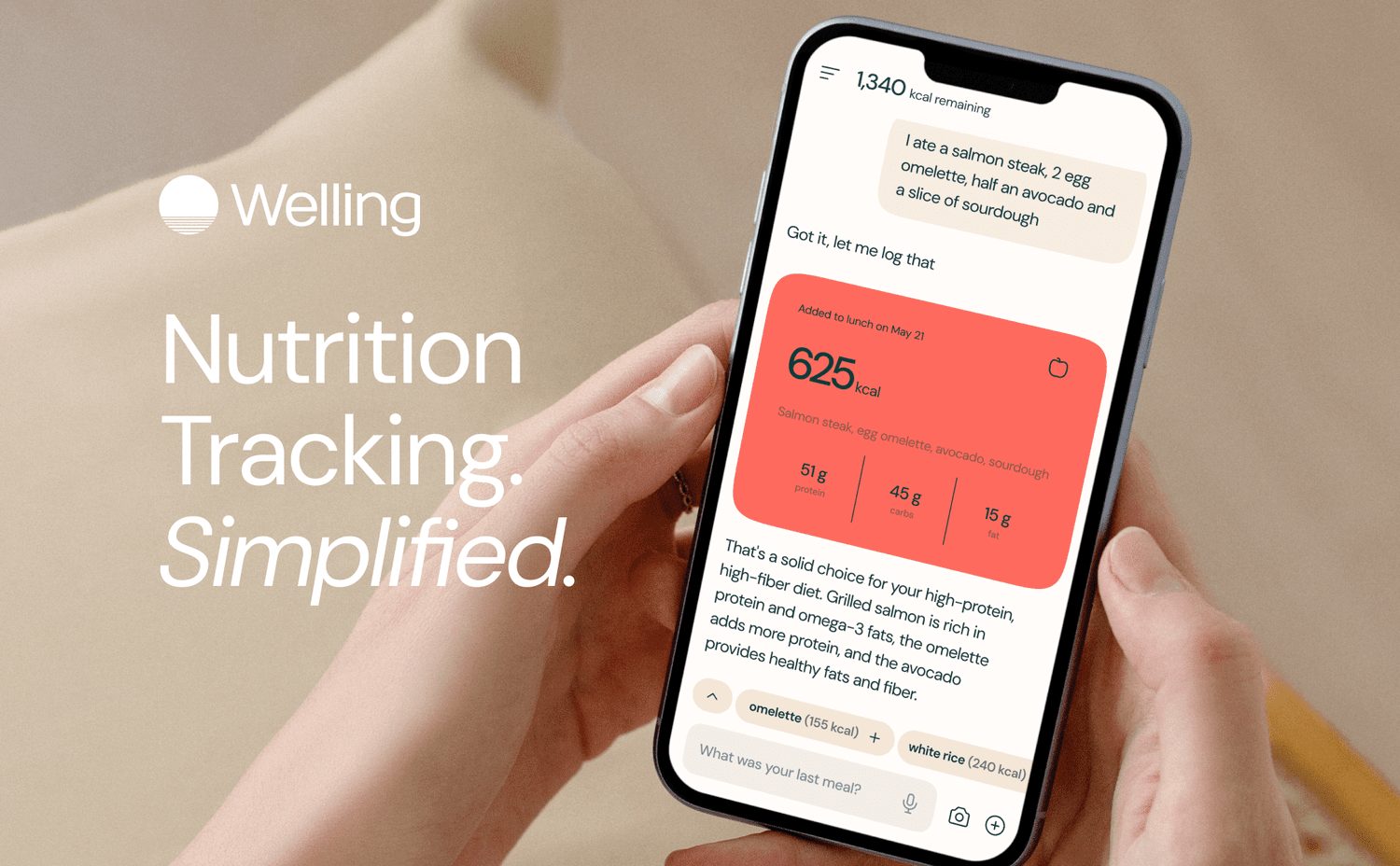
If manual calorie logging feels overwhelming, AI-assisted tracking can reduce friction.
Welling uses chat-based and photo-based food logging to make calorie tracking faster and more intuitive helping users stay aligned with maintenance and deficit goals without spending excessive time searching databases.
Frequently Asked Questions (FAQs)
How do weight loss apps calculate calorie goals?
Most apps estimate maintenance calories (TDEE) using your profile information and subtract a calorie deficit based on your weight loss goal.
How do I know if my maintenance calories are accurate?
Maintenance calorie estimates are approximations. Tracking your weight for 2–3 weeks while eating at the estimated number helps validate whether it is accurate.
Are calorie tracking apps effective for weight loss?
They can be effective when used consistently. Self-monitoring is strongly associated with improved weight management outcomes.
Do I need to track calories forever?
Not necessarily. Many users track temporarily to build awareness, then transition to more intuitive eating once habits stabilize.
References
Mayo Clinic – Calorie Calculator
PubMed – Self-Monitoring and Weight Loss
American Journal of Clinical Nutrition – Long-Term Weight Loss Maintenance
Welling is an AI weight loss coach that simplifies nutrition tracking and provides daily accountability and insights. Rated 4.8 in the App Store by thousands of users.