

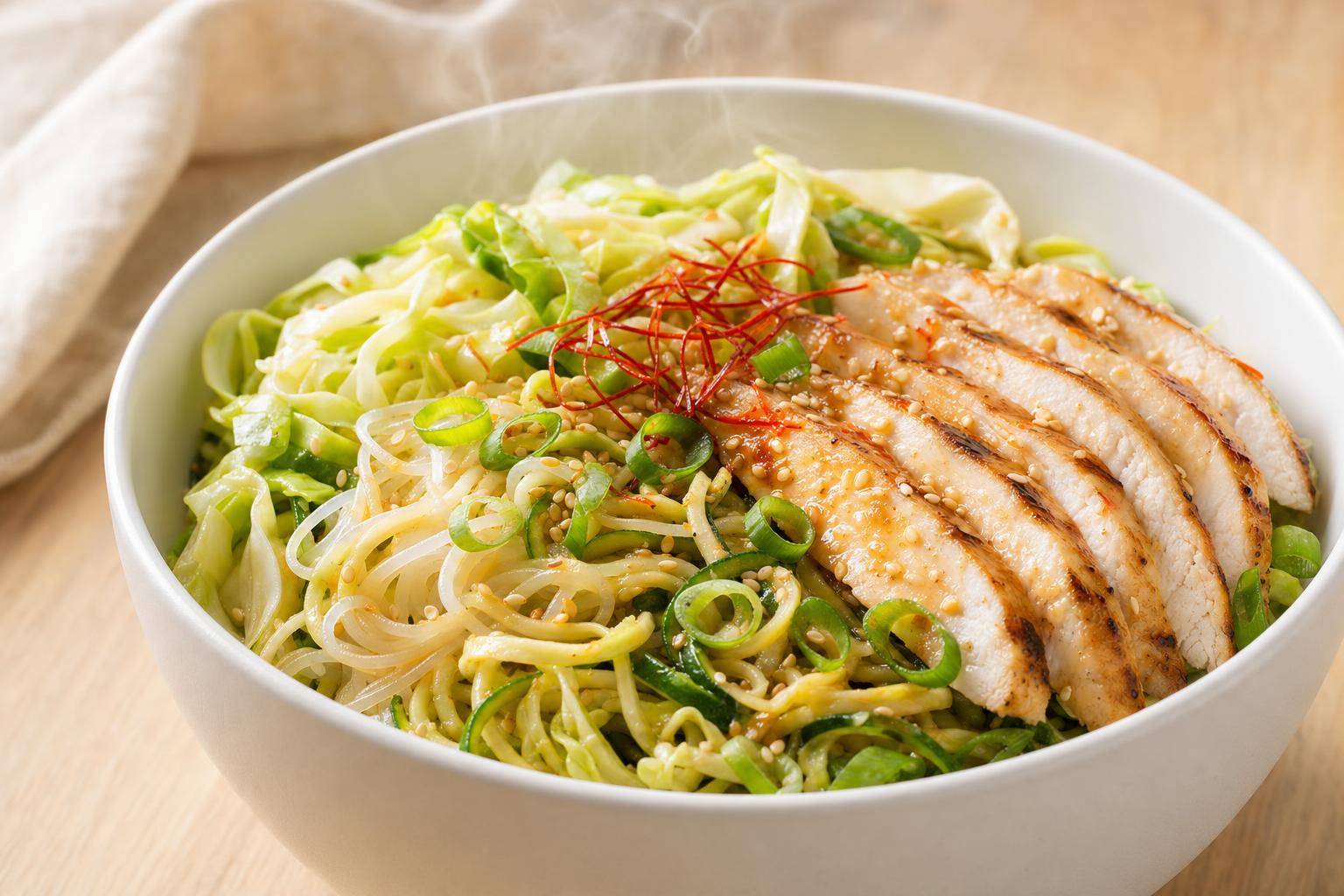
You can keep a noodle bowl between roughly 110 and 400 calories without giving up the meal. The pattern behind every recipe below is the same: pick a lighter base, keep the noodle portion honest, lean on a lean protein, and let broth, citrus, garlic, ginger and soy do the work that oil and cream usually do.
The base is what moves the number most. Shirataki runs about 10 to 20 calories per 100g, zucchini about 17 to 20 per cup, and cabbage ribbons are similarly cheap. Soba, glass and rice noodles can all still fit, but at roughly 99 to 130 calories per 100g cooked they need a measured portion rather than a loose handful.
Table of Contents
- Watch: shirataki noodle recipes
- Quick comparison
- What makes a noodle recipe lower in calories
- The 12 recipes
- How to track noodle bowls without guesswork
- Frequently asked questions
Watch: Shirataki Noodle Recipes
Quick Comparison
| # | Recipe | Est. calories | Noodle base | Protein | Best use case |
|---|---|---|---|---|---|
| 1 | Zucchini Noodles with Lemon Garlic Chicken | 260–305 | Zucchini | Chicken breast | High-protein dinner |
| 2 | Shirataki Noodle Veggie Stir Fry | 110–220 | Shirataki | Tofu or chicken | Quick lunch |
| 3 | Cabbage Noodle Chicken Stir Fry | 250–300 | Cabbage ribbons | Chicken | Volume-heavy dinner |
| 4 | Light Miso Ramen with Soft-Boiled Egg | 220–295 | Shirataki | Egg | Comfort-food swap |
| 5 | Turkey Meatball Noodle Soup | 300–400 | Shirataki | Turkey meatballs | Meal prep |
| 6 | Spicy Peanut Shirataki Bowl | 200–300 | Shirataki | Tofu or chicken | Quick lunch |
| 7 | Garlic Shrimp Zucchini Noodles | about 300 | Zucchini | Shrimp | High-protein dinner |
| 8 | Chicken and Vegetable Soba Salad | 360–370 | Soba | Chicken | Cold lunch, meal prep |
| 9 | Egg Drop Vegetable Noodle Soup | 130–220 | Shirataki or glass | Egg | Light comfort food |
| 10 | Tofu and Vegetable Glass Noodle Bowl | 250–300 | Glass noodles | Tofu | Quick lunch |
| 11 | Chicken Pho-Inspired Bowl | 250–280 | Rice noodles | Chicken breast | Comfort-food swap |
| 12 | Cauliflower and Cabbage Pad Thai | 200–300 | Cauliflower, cabbage, few noodles | Shrimp, tofu or egg | Volume eating |
Calorie figures are estimates for a single serving and move with your oil, sauce and protein portion. The two lightest bowls, numbers 2 and 6, are both shirataki. Numbers 5 and 8 hold up best for meal prep.
What Makes a Noodle Recipe Lower in Calories
Three things, in order of how much they matter.
The base. Swapping wheat or rice noodles for zucchini, cabbage or shirataki is the single biggest lever, and it is not close. A cup of zucchini noodles is around 17 to 20 calories against roughly 200 for a cup of cooked pasta. Shirataki is lower still, because it is mostly water and konjac fibre. If you would rather keep real noodles, a 50/50 mix of vegetable noodles and the real thing keeps the texture and halves the base.
The portion. When you do use soba, glass or rice noodles, measure them. Cooked noodles absorb water and sauce at different rates, so the same visual amount can vary a lot. About 100g cooked per serving is a sensible anchor, with vegetables making up the rest of the bowl’s volume. Our guide to noodle calories ranks the common types if you want to choose a base by number.
The sauce. This is where bowls quietly double. Sesame oil is about 120 calories a tablespoon and peanut butter around 95, so a generous pour of either can outweigh the noodles themselves. The recipes below use low-sodium soy, rice vinegar, citrus, ginger and garlic to carry flavour, with oil measured rather than poured.
Protein is the fourth element, and its job is satiety rather than calorie control. Chicken breast, shrimp, turkey, tofu and egg all add substance for relatively little.
The 12 Recipes
1. Zucchini Noodles with Lemon Garlic Chicken
About 260 to 305 calories a serving, depending on oil and chicken portion. Zucchini keeps the base at roughly 17 to 20 calories per cup, and since it is around 92% water you get a full bowl for very little. Chicken breast carries the protein; lemon juice, zest and garlic carry the flavour for almost nothing.
Texture is the thing people get wrong. Salt the spiralised zucchini for 15 minutes, pat it thoroughly dry, then sauté no longer than 60 seconds in a hot pan. Any longer and it releases its water into the sauce.
2. Shirataki Noodle Veggie Stir Fry
The lightest bowl here. A full batch of shirataki with non-starchy vegetables lands near 110 calories, rising to about 220 once you add protein and oil. Add 6oz sliced chicken breast or 7oz pressed tofu to an 8oz pack of noodles.
Watch the sesame oil, which is where this dish gains most of its calories. And do not skip the prep: rinse the noodles well, then dry-fry them for two to three minutes before anything else goes in the pan. Shirataki straight from the packet is wet and slightly rubbery; dry-fried, it behaves like a noodle.
3. Cabbage Noodle Chicken Stir Fry
Roughly 250 to 300 calories, built on shredded green cabbage instead of noodles. Cabbage gives you a genuinely large bowl for very few calories, with enough chew to stand in for the real thing.
Sauté it for four to five minutes only. Overcooked cabbage turns soft and watery and loses the texture that makes the swap work. Chicken breast adds over 21g of protein a serving; garlic, fresh ginger and low-sodium soy give it a takeaway flavour without the takeaway calories.
4. Light Miso Ramen with Soft-Boiled Egg
About 220 to 295 calories with shirataki noodles and one soft-boiled egg, which adds roughly 90 calories of its own.
Use two cups of low-sodium chicken or vegetable stock for warmth and volume. Whisk the miso into a little warm broth before it goes in the pot, and take the pot off direct heat first so the miso keeps its flavour. Baby bok choy, shiitake and carrot bulk the bowl out for almost nothing.
5. Turkey Meatball Noodle Soup
Around 300 to 400 calories, and the best of these for meal prep. Broth and shirataki keep it light while the meatballs make it a proper meal. Bake the meatballs rather than frying them.
Rinse the shirataki under cold water before it goes into the pot. Bok choy, carrots and mushrooms add volume and hold up well to reheating.
6. Spicy Peanut Shirataki Bowl
About 200 to 300 calories, with most of them in the sauce and protein, which is exactly where you want them. For two packs of shirataki, use a quarter cup of natural peanut butter thinned with two tablespoons of water, then ginger, garlic, low-sodium soy and rice vinegar.
With shredded chicken this comes to roughly 261 to 286 calories and 29 to 31g of protein. Rinse the noodles for a minute and dry-fry them for five to seven minutes — with a sauce this thick, the sauce slides off wet noodles.
7. Garlic Shrimp Zucchini Noodles
About 300 calories. Zucchini noodles at roughly 20 calories a cup leave room for a generous amount of shrimp, which is lean enough to push protein high without much fat. No cream, no butter: garlic, chilli, lemon and a measured teaspoon of oil.
Salt the zoodles for 15 minutes and dry them, then cook them for two to three minutes after the shrimp comes out of the pan.
8. Chicken and Vegetable Soba Noodle Salad
About 369 calories and 30g of protein, and the one to make if you want something cold. Soba is around 99 calories per 100g cooked, lighter than ramen or glass noodles and higher in protein than most. Stick to about 100g cooked per serving and let julienned carrot, sliced pepper and broccoli fill the bowl.
Dress with low-sodium soy or tamari, rice vinegar, ginger, garlic and a small amount of toasted sesame oil. Partially freezing the chicken breast for 20 minutes before slicing gives you thinner, more even strips.
9. Egg Drop Vegetable Noodle Soup
About 220 calories with the egg, dropping to roughly 130 without it. A clear broth with ginger, garlic and spring onion, shirataki noodles, and egg stirred through at the end.
Baby bok choy, sliced mushroom and carrot add bulk and fibre. Rinse and dry-fry the noodles first, as in the other shirataki bowls.
10. Tofu and Vegetable Glass Noodle Bowl
Roughly 250 to 300 calories, and the plant-based option. Glass noodles are heavier than shirataki, so the portion does the work: about 100g cooked, with bok choy, shredded cabbage, bean sprouts, carrot and pepper making up the rest.
Press the firm tofu for 15 minutes, then sear it in a teaspoon of oil until golden. Dress with low-sodium soy, rice vinegar, garlic and ginger.
11. Chicken Pho-Inspired Bowl
About 264 calories, with a modest rice noodle portion and most of the character coming from the broth. Simmer star anise, cinnamon, ginger and garlic in low-sodium chicken broth; chicken breast adds around 21.6g of protein.
Finish with bean sprouts, basil, coriander, jalapeño, lime and spring onion. The toppings are where a pho-style bowl gets its personality, and they cost almost nothing.
12. Cauliflower and Cabbage Pad Thai
About 200 to 300 calories, and the lightest noodle-style bowl here. Cabbage sliced into thin ribbons is the base, cauliflower adds bulk, and a small amount of rice noodles keeps it recognisable as Pad Thai.
Shrimp, tofu or a scrambled egg for protein; tamarind and a small splash of fish sauce for the flavour. Sauté the cabbage four to five minutes so it keeps some bite, and add bean sprouts at the end for crunch.
How to Track Noodle Bowls Without Guesswork
Noodle bowls are among the harder meals to log accurately, for two reasons.
The first is that the calories often sit in the things you are not thinking about. Sesame oil, peanut sauce and a generous drizzle of chilli oil can add more than the noodles, and none of them look like much in the bowl.
The second is portion. Cooked noodles absorb water and sauce unevenly, so a glance is rarely enough, and the gap between bases is large: shirataki at about 10 to 20 calories per 100g against roughly 130 for cooked rice noodles. Mistaking one for the other, or eyeballing 150g as 100g, is the difference between a bowl that fits your day and one that does not.
The practical fix is to log the components rather than the finished dish — noodles, protein, oil and sauce as separate items — which is also how you learn which part of your usual bowl is carrying the calories. Welling will do this from a photo, identifying the noodle type and estimating the portion, and will fold the result into a daily target based on your own TDEE rather than a generic number.
Frequently Asked Questions
Which noodle swap is best for weight loss?
Shirataki, also sold as konjac noodles. At roughly 10 to 20 calories per 100g with almost no net carbs, nothing else comes close — it is mostly water and soluble fibre, which is why it fills a bowl without filling your day. The trade-off is texture, which is why rinsing and dry-frying matters so much. If shirataki is not for you, cabbage ribbons and zucchini noodles are the next best, and both behave more like a normal vegetable in the pan.
How do I make a noodle bowl filling without adding calories?
Volume and protein, in that order. Non-starchy vegetables — bean sprouts, bok choy, broccoli, cabbage — add bulk and fibre for very little, so a bowl that is half vegetables eats much bigger than its calorie count suggests. Then add a lean protein: chicken, shrimp, turkey, tofu or egg. Broth-based bowls also tend to be more filling than oil-based sauces at the same calories. If you want to keep real noodles, a 50/50 mix with vegetable noodles is the easiest compromise.
Which of these work best for meal prep?
The turkey meatball soup and the cold soba salad. Shirataki holds up well in storage and freezes for up to three months, which makes the soup reheat cleanly. The soba salad is designed to be eaten cold, so it needs nothing at all on the day.
Raw vegetable noodles are the exception. Zucchini releases water as it sits, so store it separately and give it a fast sauté just before serving rather than prepping the finished bowl.
Are shirataki noodles actually worth eating, or just low in calories?
Both things are true at once. They are nutritionally close to empty, contributing fibre and little else, so they are not doing much for you beyond displacing something heavier. But that displacement is the point: they let you keep the shape of a meal you enjoy at a quarter of the calories. Treat them as a vehicle for the protein, vegetables and sauce rather than as a food in their own right, and build the bowl so the nutrition comes from everything else in it.
Can I just eat smaller portions of normal noodles instead?
Yes, and for some people that works better than swapping. The reason the swaps exist is that a measured 100g of cooked noodles looks sparse in a bowl, and a sparse bowl is harder to stick with. Bulking the same portion out with cabbage, bean sprouts or zucchini gives you the volume back without the calories. If small portions genuinely satisfy you, the base matters much less — just weigh them, because cooked noodles are easy to underestimate.
Keep the Bowl, Lose the Guesswork
Across all twelve, the pattern holds: a lighter base, an honest portion, a lean protein, and flavour from aromatics rather than oil. None of it requires giving up the meal.
The part that trips people up afterwards is knowing what the bowl actually came to. Welling estimates the noodle type and portion from a photo in 2.6 seconds on average, so a home bowl and a restaurant one end up comparable rather than guessed at.
Try Welling free on iOS and Android
References
Institute of Medicine. (2005). Dietary Reference Intakes for Energy, Carbohydrate, Fiber, Fat, Fatty Acids, Cholesterol, Protein, and Amino Acids. National Academies Press. https://www.ncbi.nlm.nih.gov/books/NBK56068/
Rolls, B. J. (2009). The relationship between dietary energy density and energy intake. Physiology & Behavior, 97(5), 609–615. https://pubmed.ncbi.nlm.nih.gov/19303887/
USDA FoodData Central. Nutrient reference database. https://fdc.nal.usda.gov/