
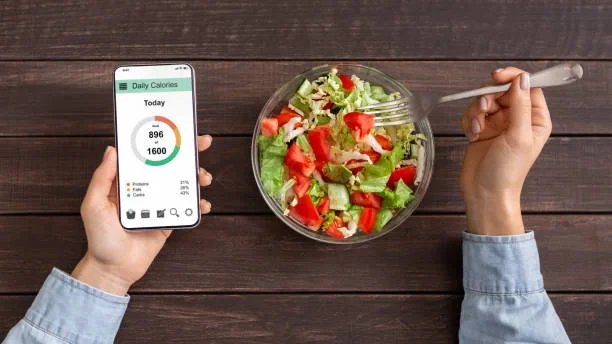
How many calories does a woman need per day?
Most adult women need between 1,600 and 2,400 calories per day to maintain their weight, depending on age, height, weight, and activity level. For fat loss, a daily intake 300 to 500 calories below maintenance is the most widely recommended starting point. Use the calculator below for a personalised daily calorie target based on your specific stats.
Table of Contents
- Calorie Calculator for Women
- Why Do Women Need Fewer Calories Than Men on Average?
- How Do Calorie Needs Change Throughout a Woman’s Life?
- What Is a Safe Minimum Calorie Intake for Women?
- How Do Hormones Affect Calorie Needs in Women?
- What Nutrients Are Women Particularly at Risk of Undereating?
- How Do You Track Calories as a Woman Without Obsessing?
- Frequently Asked Questions
- References
Calorie Calculator for Women
Calorie Calculator for Women
Your BMR (calories at rest)
Your TDEE (maintenance calories)
Your daily calorie target
Key nutrients to prioritise:
Why Do Women Need Fewer Calories Than Men on Average?
The difference in average calorie needs between women and men is primarily a function of body composition rather than sex itself. Women on average have lower total body mass and a higher proportion of body fat relative to lean muscle mass compared to men of similar height. Since lean muscle tissue burns more calories at rest than fat tissue, lower average muscle mass translates to a lower average BMR and therefore lower TDEE.
Hormonal differences also play a role. Oestrogen influences energy metabolism and fat distribution. During the reproductive years, oestrogen promotes fat storage particularly in the hips and thighs, and modulates insulin sensitivity in ways that affect how efficiently the body uses energy. These hormonal factors create real but modest differences in metabolic rate beyond what body composition alone explains.
For practical calorie calculations, using the Mifflin-St Jeor equation with female-specific coefficients, as this calculator does, accounts for these differences accurately without requiring knowledge of body composition. The calculator is calibrated specifically for women at each age across the lifecycle.
How Do Calorie Needs Change Throughout a Woman’s Life?
A woman’s calorie needs shift meaningfully across several distinct life stages, and using a fixed calorie target across decades produces increasingly inaccurate results.
In the teens and early twenties, calorie needs are at their peak for most women, reflecting higher activity levels, growth completion, and a higher proportion of lean muscle mass relative to later decades.
From the mid-twenties onward, BMR typically declines at a rate of approximately 1 to 2 percent per decade, primarily due to gradual muscle mass loss. A woman who maintained her weight eating 2,000 calories at age 25 may find that the same intake produces gradual weight gain by age 45 if her activity and muscle mass have both declined, even with no conscious change in eating patterns.
Pregnancy increases calorie needs by 340 calories per day in the second trimester and 450 in the third, as covered in the pregnancy calorie calculator. Breastfeeding adds a further 300 to 500 calories above pre-pregnancy maintenance.
The perimenopause and menopause transition, typically beginning in the mid-forties to early fifties, involves hormonal changes that reduce BMR and shift fat storage patterns toward the abdomen. Calorie needs decrease during this period and protein requirements become more important for maintaining muscle mass that is more vulnerable to loss as oestrogen declines.
After menopause, iron requirements drop from 18 mg to 8 mg per day since menstrual losses cease, but calcium and vitamin D needs increase to 1,200 mg and 800 IU per day respectively to support bone density in the absence of oestrogen’s protective effects.
What Is a Safe Minimum Calorie Intake for Women?
The minimum safe calorie intake for most women in standard health conditions is generally cited at 1,200 calories per day for unsupervised dieting. This floor exists because below this level it becomes extremely difficult to meet nutritional needs for vitamins, minerals, and adequate protein without very careful supplementation.
This minimum is often misunderstood as a target rather than a floor. Eating 1,200 calories is not recommended as an ongoing strategy for any woman whose maintenance calories are significantly above this, as it creates an unnecessarily large deficit that increases muscle loss, fatigue, hair loss, hormonal disruption, and the risk of nutritional deficiency.
For pregnant women, the minimum rises to 1,800 calories per day during exclusive breastfeeding and to the minimum TDEE during pregnancy without any deficit whatsoever, since the calorie needs of the growing foetus are non-negotiable.
A sustainable calorie deficit of 300 to 500 calories below individual TDEE, producing weight loss of 0.3 to 0.5 kg per week, is the approach with the strongest long-term evidence for fat loss without the adverse effects of extreme restriction.
How Do Hormones Affect Calorie Needs in Women?
The menstrual cycle produces measurable but modest shifts in BMR across the month. Research has found that BMR increases by approximately 2 to 10 percent in the luteal phase, the two weeks between ovulation and menstruation, compared to the follicular phase that precedes ovulation. For a woman with a BMR of 1,400 calories, this represents approximately 30 to 140 additional calories burned per day in the second half of the cycle.
This hormonal fluctuation also affects appetite, with many women reporting increased food cravings and hunger in the luteal phase. Understanding that this increased appetite partly reflects a genuine increase in metabolic need, not just psychological craving, can reduce the self-criticism that many women experience around premenstrual eating changes.
Thyroid hormones significantly affect metabolic rate in both sexes, but thyroid disorders are approximately five to eight times more common in women than men. Hypothyroidism can reduce BMR by 15 to 30 percent, making standard calorie calculations significantly overestimate true maintenance calories. If weight loss is consistently slower than expected despite careful tracking, thyroid function testing with a doctor is a worthwhile step.
What Nutrients Are Women Particularly at Risk of Undereating?
Iron deficiency is the most common nutritional deficiency worldwide and disproportionately affects women of reproductive age due to monthly menstrual losses. The recommended intake during reproductive years is 18 mg per day, more than double the 8 mg recommended for men and post-menopausal women. Dietary sources include red meat, dark poultry, shellfish, lentils, spinach, and fortified cereals. Vitamin C consumed alongside plant-based iron significantly improves absorption.
Calcium is critical throughout life for bone density, with requirements of 1,000 mg per day during reproductive years and 1,200 mg after menopause. Many women fall short, particularly those avoiding or limiting dairy.
Folate at 400 mcg per day is important for all women of reproductive age, since neural tube development occurs in the first weeks of pregnancy often before pregnancy is confirmed. A prenatal vitamin containing methylfolate is recommended for any woman who may become pregnant.
Vitamin D deficiency is widespread and affects bone health, immune function, mood, and hormonal regulation. The recommended intake of 600 IU per day, rising to 800 IU after age 70, is often insufficient for people with limited sun exposure, and many healthcare providers recommend supplementation of 1,000 to 2,000 IU for women in northern latitudes or indoor lifestyles.
How Do You Track Calories as a Woman Without Obsessing?
Calorie tracking has a complex relationship with women’s mental health, particularly for those with a history of disordered eating or diet culture exposure. For most women, tracking is a neutral informational tool that builds awareness and supports goals. For some, it can become a source of anxiety or reinforce unhealthy patterns.
The most practical approach is to track to build awareness, not to achieve perfection. Logging within a reasonable range, say within 100 to 150 calories of your target, and paying more attention to weekly averages than daily precision reduces the stress of individual meal decisions while still providing meaningful data.
Welling’s approach is designed to reduce tracking friction to its minimum: 2.6 seconds on average from a photo, chat, or voice note, with 95.6 percent food identification accuracy. The AI nutrition coach answers questions and provides guidance in natural language rather than displaying a data dashboard that can feel clinical or judgmental. Setting weekly check-ins rather than obsessing over daily numbers is a healthier pattern for most women, and one the coach actively supports.
Start tracking your nutrition on Welling
Personalised calorie and nutrition tracking built for women.
Welling logs meals from a photo, chat, or voice note in 2.6 seconds on average and tracks the nutrients women are most at risk of undereating, including iron, calcium, and folate, alongside your daily calorie total.
Frequently Asked Questions
How many calories should a woman eat per day to lose weight?
A sustainable starting point is 300 to 500 calories below your TDEE, producing approximately 0.3 to 0.5 kg of fat loss per week. For most women, this results in a daily intake between 1,300 and 1,800 calories depending on body size and activity level. The calculator above gives a personalised target based on your specific stats.
Is 1,200 calories enough for a woman?
1,200 calories is the minimum recommended floor for most women, not a recommended target. Many women require 1,400 to 1,800 calories or more even in a fat loss phase, and eating at 1,200 calories when maintenance is significantly higher creates a deficit that is too aggressive for sustainable fat loss without unacceptable muscle loss and nutritional risk.
How many calories does the average woman burn per day?
Average TDEE for women in Western populations ranges from approximately 1,600 kcal per day for sedentary smaller women to over 2,500 kcal per day for very active larger women. The average across age groups is approximately 1,900 to 2,000 kcal per day, though individual variation is significant.
Do women need fewer calories as they age?
Yes, on average. BMR declines by approximately 1 to 2 percent per decade due to gradual muscle mass loss. This means a woman who maintained weight at 1,900 calories at 30 may find she maintains weight at approximately 1,750 calories at 50, assuming similar activity levels. The calculator above adjusts for age in its formula.
What nutrients do women need more of than men?
Women of reproductive age need more iron (18 mg vs 8 mg) due to menstrual losses. Women also need the same calcium as men but face higher deficiency risk due to lower average calorie intake and dairy avoidance. Folate is particularly important for women of reproductive age. After menopause, women’s nutrient needs shift, with iron requirements decreasing but calcium and vitamin D requirements increasing.
How do I know if I am eating enough as a woman?
Signs of consistent under-eating include persistent fatigue, hair loss, irregular or absent periods, cold sensitivity, difficulty concentrating, frequent illness, and slow wound healing. If you are tracking and your intake is consistently below 1,200 calories or you are experiencing these symptoms, speaking with a healthcare provider or registered dietitian is recommended.
References
- Mifflin, M. D., et al. (1990). A New Predictive Equation for Resting Energy Expenditure in Healthy Individuals. American Journal of Clinical Nutrition, 51(2), 241-247. https://pubmed.ncbi.nlm.nih.gov/2305711/
- National Institutes of Health Office of Dietary Supplements. (2024). Iron Fact Sheet for Health Professionals. https://ods.od.nih.gov/factsheets/Iron-HealthProfessional/
- National Institutes of Health Office of Dietary Supplements. (2024). Calcium Fact Sheet for Health Professionals. https://ods.od.nih.gov/factsheets/Calcium-HealthProfessional/
- Benton, M. J., Hutchins, A. M., & Dawes, J. J. (2020). Effect of Menstrual Cycle on Resting Metabolism. Journal of Women’s Health, 29(5), 738-745. https://pubmed.ncbi.nlm.nih.gov/32237938/
- Frankenfield, D., Roth-Yousey, L., & Compher, C. (2005). Comparison of Predictive Equations for Resting Metabolic Rate. Journal of the American Dietetic Association, 105(5), 775-789. https://pubmed.ncbi.nlm.nih.gov/15883556/
- Hall, K. D., & Guo, J. (2017). Obesity Energetics: Body Weight Regulation and the Effects of Diet Composition. Gastroenterology, 152(7), 1718-1727. https://pubmed.ncbi.nlm.nih.gov/28193517/

Mickey Kittinuttakul