

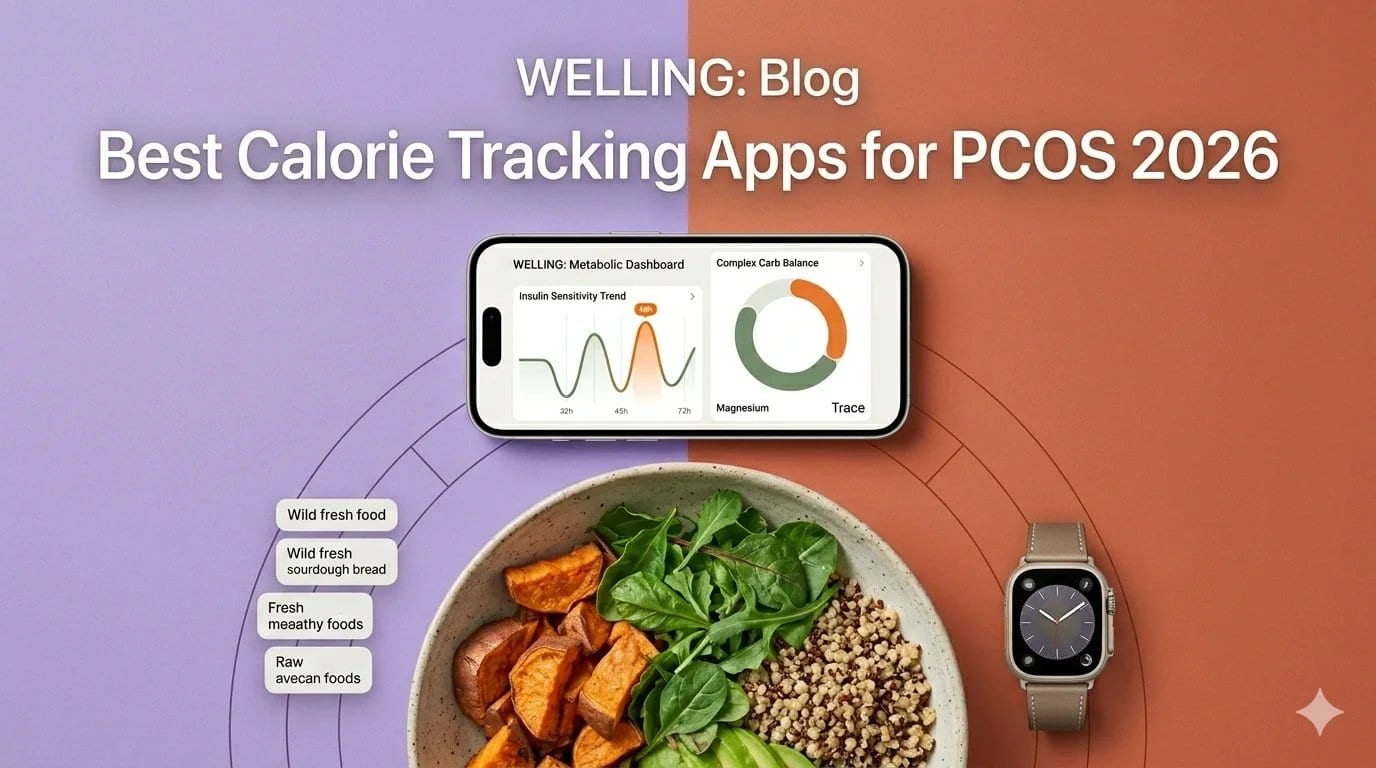
The best calorie tracking app for PCOS in 2026 is Welling. It tracks the macros most relevant to insulin management in PCOS, including net carbs and protein, through a conversational interface that makes consistent daily logging sustainable alongside the fatigue, hormonal fluctuations, and appetite variability that characterise the condition. For users who also need detailed micronutrient monitoring for PCOS-relevant nutrients like inositol, zinc, and magnesium, Cronometer provides the most complete data.
Table of Contents
- Why PCOS changes how nutrition tracking needs to work
- What to look for in a calorie tracker for PCOS
- The best calorie tracking apps for PCOS in 2026
- Nutritional priorities for PCOS management
- Frequently asked questions
Polycystic ovary syndrome affects approximately 10 to 15 percent of women of reproductive age globally, making it one of the most common endocrine conditions. Its effects on nutrition are significant and specific: insulin resistance is present in an estimated 50 to 70 percent of women with PCOS regardless of body weight, which means that the standard calorie-counting advice that works for general weight management is often inadequate for PCOS.
Insulin resistance changes how the body processes carbohydrates, how it stores fat, how hunger signals are regulated, and how weight loss responds to a calorie deficit. The dietary approach that produces the best results for most women with PCOS is not simply eating less. It is managing carbohydrate quality and quantity, maintaining a higher protein intake to support satiety and blood sugar regulation, and ensuring adequate micronutrient status in the specific areas where PCOS commonly creates deficiencies.
A calorie tracker that shows only a daily calorie total misses most of this. A tracker that shows calories alongside macros, tracks specific micronutrients, and provides coaching grounded in the actual nutritional science of PCOS management is a meaningfully different tool.
Why PCOS Changes How Nutrition Tracking Needs to Work
Insulin resistance is the central mechanism that makes standard dietary advice less effective for PCOS. When cells are less responsive to insulin, the body produces more of it to compensate. Elevated insulin levels directly stimulate androgen production in the ovaries, which drives the hormonal symptoms of PCOS including irregular cycles, acne, and excess hair growth. The same elevated insulin increases fat storage, particularly around the abdomen, and makes it physiologically harder to access stored fat during a calorie deficit.
Carbohydrate quality matters for this reason in a way that it does not for people without insulin resistance. A high-glycaemic carbohydrate, like white bread or sugary drinks, produces a larger and faster insulin spike than a low-glycaemic carbohydrate with the same calorie content. For someone with PCOS and insulin resistance, repeatedly eating high-glycaemic foods maintains the elevated insulin environment that drives symptoms and makes weight management harder. Tracking carbohydrate quality alongside carbohydrate quantity is what makes a food diary clinically relevant for PCOS.
Inflammation is the other key factor. Chronic low-grade inflammation is common in PCOS and is influenced by dietary pattern over time. Anti-inflammatory dietary patterns including adequate omega-3 fatty acids, high dietary fibre, and sufficient vitamin D have been associated with improvements in PCOS symptoms in clinical studies. A food tracker that shows fibre and key nutrients makes these patterns trackable.
What to Look for in a Calorie Tracker for PCOS
Carbohydrate and net carb tracking needs to be visible and easy to read. Many women with PCOS benefit from a lower-carbohydrate approach or from prioritising low-glycaemic carbohydrates, and tracking total carbs alongside fibre is what makes that manageable daily.
Protein tracking in grams is important because higher-protein diets consistently improve insulin sensitivity, increase satiety, and support weight management in PCOS. A daily gram target visible in real time helps women maintain the protein intake that makes adherence easier.
Micronutrient tracking for PCOS-relevant nutrients including inositol (as a compound in foods), vitamin D, magnesium, zinc, and omega-3 fatty acids is relevant for women following a therapeutic dietary approach to PCOS management.
Non-punitive design matters particularly for PCOS because the condition creates appetite and energy variability that means daily intake fluctuates in ways that are physiological rather than motivational. An app that treats every overage as a failure is misunderstanding the biology.
Ease of logging during difficult days. PCOS fatigue is real, particularly in the luteal phase or during hormonal transitions. An app that requires five minutes per meal to log will be abandoned during exactly the periods when consistent tracking matters most.
The Best Calorie Tracking Apps for PCOS in 2026
Welling
Welling is the most practical daily calorie tracker for women with PCOS because the logging process is fast enough to sustain during the days when energy and motivation are lower, and the nutritional data it tracks is directly relevant to insulin management and anti-inflammatory eating.
Chat and photo logging requires nothing more than describing a meal or photographing it. The AI calculates calories, protein, carbohydrates, fat, fibre, and sodium in about 2.6 seconds, with 95.6% food identification accuracy. For a woman with PCOS who eats a varied, home-cooked, plant-rich diet because she knows it works better for her symptoms, this approach handles the full range of her meals without requiring database searches that slow her down.
The macros Welling tracks are the ones that matter most for PCOS: protein for satiety and insulin sensitivity, carbohydrates for glycaemic load awareness, and fibre for gut health and blood sugar regulation. Setting specific gram-based targets for protein and carbohydrates gives clear daily reference points that are more useful for PCOS management than percentage-based targets that shift with daily calorie variation.
Welling’s AI nutrition coach was built by a team of weight loss coaches, certified nutritionists, and registered dietitians. It provides coaching that contextualises your daily intake against your targets and suggests adjustments in real time. For a woman with PCOS who is still learning how different dietary patterns affect her symptoms and energy, that coaching layer closes the gap between logging data and understanding what to do with it.
Welling is rated 4.8 on the App Store, has processed over 2 million food logs, and is free on iOS and Android. Trainers and gyms including Anytime Fitness use Welling with their clients, which reflects its credibility beyond casual use.
Try Welling free: https://www.welling.ai
Cronometer
Cronometer earns its place specifically for women with PCOS who are following a medically supervised nutritional protocol and need to track the specific micronutrients most relevant to the condition. Inositol is found in several plant foods and its content is tracked in Cronometer’s detailed database. Vitamin D, magnesium, zinc, and omega-3 fatty acid content are all tracked with verified USDA data.
For women working with an endocrinologist or registered dietitian on PCOS management who has set specific micronutrient targets, Cronometer provides the tracking depth needed to verify dietary adequacy for those nutrients. The custom macro targets allow carbohydrate ceilings to be set in grams, which supports a low-glycaemic dietary approach.
The manual logging requirement is a practical barrier during PCOS fatigue periods. Many women with PCOS find Cronometer sustainable for periodic tracking checks of two to four weeks rather than as a long-term daily habit, and use a faster app like Welling for day-to-day logging.
Best for: Women with PCOS working with a dietitian or endocrinologist who need to verify specific micronutrient intake and are willing to invest in manual logging for clinical accuracy.
MyFitnessPal
MyFitnessPal’s large database and macro tracking on the premium tier provide the basics of PCOS-relevant nutritional tracking. Custom carbohydrate and protein targets can be set, and the barcode scanner handles the branded products and convenience foods that appear in most people’s diets alongside home cooking.
The database accuracy limitation applies particularly to PCOS users because the glycaemic impact of specific foods matters. User-submitted entries for mixed dishes and restaurant food carry enough variance that the carbohydrate estimates they produce are not reliable enough for women actively managing insulin resistance through carbohydrate quality.
Best for: Women with PCOS who eat primarily from packaged and branded foods and want a widely-used tracker with custom macro targets on the premium plan.
Lifesum
Lifesum includes a PCOS-aware dietary mode in its premium plan that provides nutritional guidance calibrated to the condition alongside meal planning recommendations. The food database includes verified entries for a wide range of whole foods and the interface is clean and non-punitive in its framing.
The cycle tracking integration that Lifesum provides alongside Apple Health data allows nutritional recommendations to adjust based on menstrual cycle phase, which is particularly relevant for women with PCOS whose appetite, energy, and dietary needs fluctuate across the cycle in ways that irregular cycles can make harder to predict.
Best for: Women with PCOS who want a dedicated PCOS dietary mode, cycle-aware nutritional guidance, and structured meal planning as part of their daily tracking experience.
Nutritional Priorities for PCOS Management
Protein is the macro with the most consistent evidence for PCOS benefit. Research supports higher protein intake for improving insulin sensitivity, reducing androgen levels, and increasing satiety in women with PCOS. A daily target of 1.4 to 1.6 grams of protein per kilogram of bodyweight is a reasonable starting point for women with PCOS, particularly those who are also managing weight.
Carbohydrate quality matters more than carbohydrate quantity for most women with PCOS. The goal is not zero carbohydrates but prioritising low-glycaemic carbohydrates including whole grains, legumes, vegetables, and most fruits over high-glycaemic options including refined flour products, sugary drinks, and processed snacks.
Anti-inflammatory foods including oily fish, walnuts, flaxseed, olive oil, colourful vegetables, and berries support the reduction of chronic inflammation that underlies many PCOS symptoms. Tracking dietary variety using Welling’s food tracker makes it visible whether these food groups are appearing regularly in your diet.
Vitamin D deficiency is common in PCOS and associated with worsened insulin resistance and hormonal dysregulation. Tracking dietary vitamin D intake alongside any supplement you take gives a realistic picture of your total input. Foods including fatty fish, egg yolks, and fortified dairy are the primary dietary sources.
Use Welling’s TDEE calculator to establish a personalised calorie baseline before setting a deficit. PCOS can affect resting metabolic rate in ways that make standard calculation less accurate for some women, and starting from an honest baseline reduces the risk of setting a target that is too aggressive.
Frequently Asked Questions (FAQs)
Do calorie tracking apps actually help with PCOS?
Yes, when the tracking is focused on the right nutritional metrics. General calorie counting without attention to carbohydrate quality, protein intake, and relevant micronutrients is less effective for PCOS than targeted tracking of those specific variables. Welling makes macro tracking fast enough to sustain daily and provides coaching that contextualises the data for health goals including PCOS management.
Should women with PCOS follow a low-carb diet?
The evidence does not conclusively support strict low-carbohydrate dieting for all women with PCOS, but most research supports reducing high-glycaemic carbohydrates and emphasising whole-food, low-glycaemic carbohydrate sources. The degree of carbohydrate restriction that is beneficial varies between individuals, which is why working with a registered dietitian familiar with PCOS is more reliable than applying a fixed dietary template.
Is intermittent fasting good for PCOS?
Some women with PCOS find intermittent fasting helpful for managing blood sugar and insulin levels, particularly time-restricted eating patterns like 14:10 or 16:8. For others, the hormonal effects of fasting are less beneficial or create increased cortisol that worsens symptoms. The evidence is mixed enough that trying it under professional guidance rather than as a default recommendation is the safer approach.
How does PCOS affect appetite and hunger?
Insulin resistance in PCOS disrupts the hunger hormones leptin and ghrelin, which can make it harder to feel full after meals and easier to experience cravings for high-glycaemic foods. This is physiological rather than motivational, and is one of the reasons that a high-protein diet is particularly beneficial: protein produces a stronger satiety response than carbohydrates or fat at equivalent calorie counts, which partially compensates for disrupted hunger signalling.
Can tracking calories worsen disordered eating patterns in PCOS?
This is a valid concern, particularly given the elevated rates of disordered eating in women with PCOS. Tracking is a tool that can support awareness or create anxiety depending on the individual and the framing. If you have a history of disordered eating, discuss dietary tracking with a healthcare provider or therapist before starting. Welling’s non-punitive coaching tone is designed with this in mind, but professional guidance remains the appropriate first step for anyone with this history.
Start Tracking What PCOS Actually Responds To
The most useful calorie tracker for PCOS is one that makes it easy to see your protein, carbohydrates, and fibre every day without the logging process adding to an already demanding condition.
Welling logs meals in 2.6 seconds by chat or photo, tracks the macros and nutrients most relevant to PCOS, and coaches you daily on what to adjust. Rated 4.8. Free on iOS and Android.
References
Teede, H. J. et al. (2018). Recommendations from the international evidence-based guideline for the assessment and management of polycystic ovary syndrome. Human Reproduction, 33(9), 1602-1618. https://pubmed.ncbi.nlm.nih.gov/29947739/
Moran, L. J. et al. (2013). Dietary composition in restoring reproductive and metabolic physiology in overweight women with polycystic ovary syndrome. The Journal of Clinical Endocrinology and Metabolism, 88(2), 812-819. https://pubmed.ncbi.nlm.nih.gov/12574218/
Marsh, K. A. et al. (2010). Effect of a low glycemic index compared with a conventional healthy diet on polycystic ovary syndrome. American Journal of Clinical Nutrition, 92(1), 83-92. https://pubmed.ncbi.nlm.nih.gov/20444960/
Healthline. (2024). The PCOS Diet: What to Eat to Manage Symptoms. https://www.healthline.com/nutrition/pcos-diet