

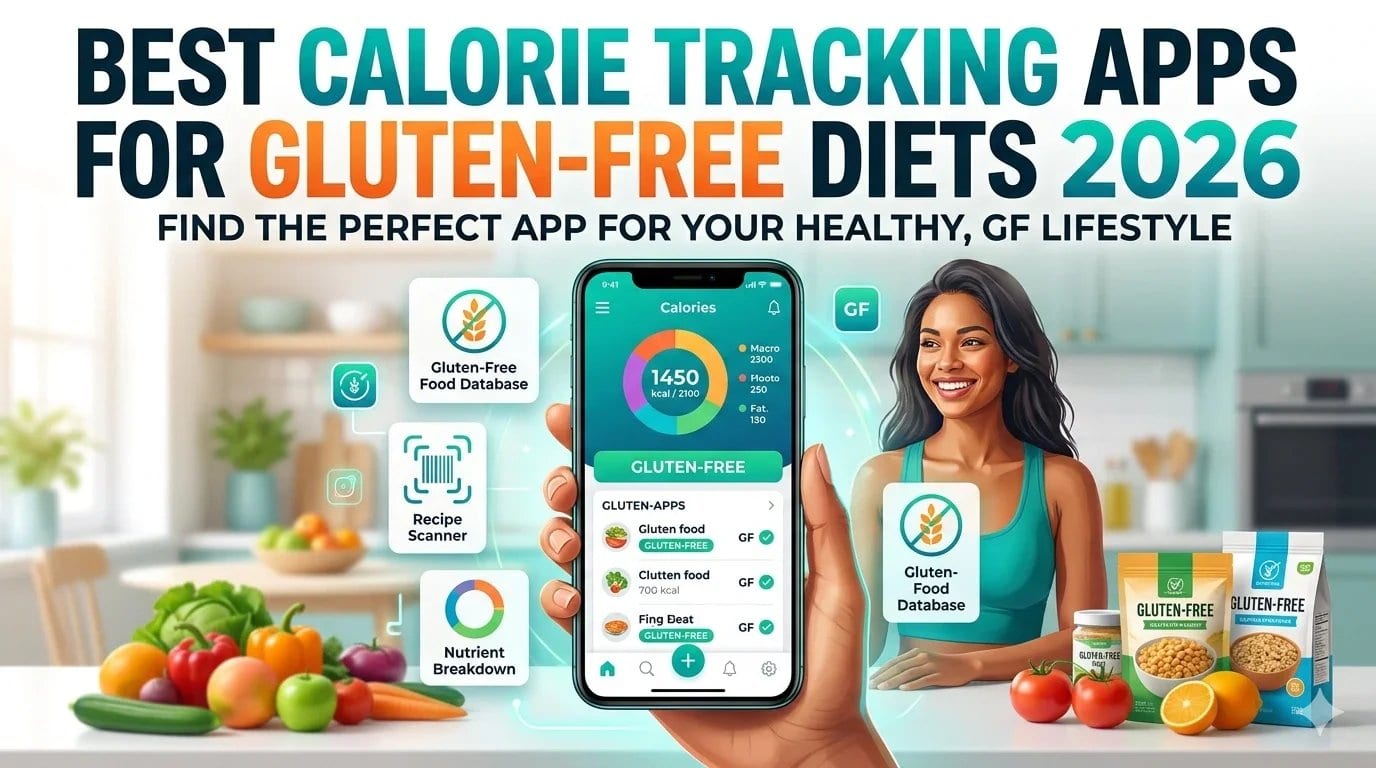
What is the best calorie tracker for gluten free diets?
The best calorie tracker for gluten free diets in 2026 is Welling, which uses AI photo scanning to log food instantly and flags gluten-containing ingredients, making it fast and reliable for people managing celiac disease or gluten intolerance. Other strong options include Cronometer (detailed ingredient data), MyFitnessPal (large food database with gluten filters), and Yummly (recipe-focused with gluten free filtering). The right choice depends on whether you need strict celiac-level accuracy or general gluten avoidance support.
Table of Contents
- Why Gluten Free Dieters Need a Specialised Food Tracker
- What to Look for in a Gluten Free Diet App
- Best Calorie Tracking Apps for Gluten Free Diets 2026
- Nutrients to Watch on a Gluten Free Diet
- Common Mistakes When Tracking Gluten Free
- Frequently Asked Questions
- References
Why Gluten Free Dieters Need a Specialised Food Tracker
For most people, calorie tracking is about monitoring energy intake. For someone with celiac disease or non-celiac gluten sensitivity, food tracking carries a second layer of urgency: every meal is a potential exposure risk.
Gluten hides in unexpected places. Soy sauce, malt vinegar, some oats, processed meats, and even certain medications can contain gluten. A general calorie tracker that does not surface ingredient data or flag gluten-containing items can give you accurate macro numbers while missing something that will make you ill.
At the same time, going gluten free without attention to nutrition can lead to common deficiencies. Many gluten free substitute products are lower in fibre, iron, B vitamins, and folate compared to their wheat-based counterparts. Tracking these nutrients alongside calories is important for long-term health on a gluten free diet.
The best gluten free food tracker addresses both of these needs: it helps you avoid gluten and helps you eat a nutritionally complete diet within that constraint.
What to Look for in a Gluten Free Diet App
Not every calorie tracking app handles gluten free diets well. Here are the features that matter most:
Gluten flagging or filtering. The app should either allow you to filter out gluten-containing foods or visibly flag them in search results and logs. This is the baseline for any celiac nutrition app.
Detailed ingredient data. For strict gluten avoidance, you need to see ingredients, not just macros. An app that shows “wheat” or “barley malt” in the ingredient list is far more useful than one that only shows calories.
A large, verified food database. The more complete the database, the fewer gaps you will have in your food log. Gaps often mean eating something unverified, which is higher risk on a gluten free diet.
Micronutrient tracking. As noted above, B vitamins, iron, calcium, and fibre are often low on poorly planned gluten free diets. An app that shows these daily is helpful for catching deficiencies early.
Ease of logging. Gluten free dieters often cook from scratch more than average. An app with fast meal logging, photo recognition, or recipe builders saves significant time.
Best Calorie Tracking Apps for Gluten Free Diets 2026
1. Welling
Best for: Fast logging with AI-powered ingredient awareness
Welling is an AI calorie tracker that logs food through photo recognition. You photograph a meal, and the AI identifies the ingredients, estimates portions, and logs the nutritional data automatically. For gluten free dieters, this means you can log a home-cooked meal or restaurant dish quickly without manually searching a database.
Where Welling stands out for gluten free users is the AI nutrition coach built into the app. You can ask it direct questions like “does this dish contain gluten”, “what gluten free foods are high in iron”, or “is this enough fibre for today” and get a specific, contextual answer. This is useful in the real world where reading a label or researching an ingredient mid-meal is inconvenient.
Setting your dietary preference to gluten free in the app helps the AI surface relevant food suggestions and flag potential issues in your log. The food tracker also supports detailed nutrient views so you can monitor the micronutrients that are commonly low on gluten free diets.
Welling is free to get started with a premium plan for advanced features.
Pros: Photo logging under 30 seconds, AI coach for ingredient questions, micronutrient visibility, personalised dietary preferences Cons: Newer app, community and recipe-sharing features still growing
2. Cronometer
Best for: Strict ingredient and micronutrient tracking for celiac disease
Cronometer is the most data-rich calorie tracker available and it is a strong choice for people with celiac disease who need to be meticulous. It tracks over 84 nutrients per food entry and allows you to view full ingredient lists for packaged foods in its database.
You can create a custom food tag or filter for gluten free items, and the detailed ingredient data helps you catch hidden sources of gluten in processed foods. Nutritionists who work with celiac patients often recommend Cronometer for this level of detail.
The downside is the learning curve. Cronometer is not the fastest app to use day to day, and it requires more effort to set up and navigate than apps like Welling or MyFitnessPal. It does not have photo scanning, so every meal is manually logged.
Cronometer has a solid free plan and a Gold tier for additional analysis tools.
Pros: Best micronutrient depth of any app on this list, full ingredient visibility, trusted by dietitians for celiac management
Cons: No photo scanning, manual logging only, less intuitive interface
3. MyFitnessPal
Best for: Large food database with gluten free filtering
MyFitnessPal has a food database of over 14 million entries and allows users to filter by dietary preference including gluten free. This makes it practical for finding verified gluten free products, particularly branded packaged foods, quickly.
The database size is its main advantage for gluten free dieters. The more complete the food entry, the less likely you are to guess at whether something is safe. However, the database is user-submitted, so accuracy varies and not all entries include ingredient lists.
MyFitnessPal does not have specific celiac disease tools or robust micronutrient tracking on its free plan. The premium version unlocks more nutritional detail. For general gluten avoidance rather than strict celiac management, it performs reasonably well.
Pros: Largest food database, gluten free diet filter, familiar interface, strong community
Cons: User-submitted data quality varies, micronutrients behind paywall, no AI coaching
4. Yummly
Best for: Gluten free recipe discovery and meal planning
Yummly is primarily a recipe platform rather than a pure calorie tracker, but it has robust gluten free filtering and integrates nutritional data for every recipe. If a significant part of your gluten free diet involves cooking from recipes, Yummly is worth including in your toolkit.
You can filter thousands of recipes by gluten free, dairy free, or any combination of dietary restrictions, and log meals directly from the recipe you cooked. The calorie and macro data come from the recipe ingredients, which tends to be more accurate than guessing at a restaurant meal.
Where Yummly falls short is in daily calorie and nutrient tracking for non-recipe meals, restaurant food, and packaged products. It is best used alongside a dedicated gluten free food tracker rather than as a standalone solution.
Pros: Excellent gluten free recipe filtering, accurate recipe-based nutrition logging, meal planning features
Cons: Not a full calorie tracker for all meals, limited outside of recipe context
5. Lose It!
Best for: Clean interface with basic gluten free support
Lose It! has a clean, straightforward interface and a decent food database with barcode scanning. It supports dietary preferences including gluten free, which helps filter food suggestions.
For casual gluten avoidance, Lose It! works fine. For people with celiac disease who need strict ingredient visibility and micronutrient tracking, it does not go deep enough. The database is smaller than MyFitnessPal and the ingredient detail is limited on the free plan.
Pros: Clean interface, barcode scanner, gluten free dietary preference setting
Cons: Limited ingredient detail, not suitable for strict celiac tracking, micronutrients limited on free plan
Nutrients to Watch on a Gluten Free Diet
Eliminating gluten removes many fortified foods from the diet, particularly wheat-based products that are enriched with B vitamins and iron. Research published in the Journal of Human Nutrition and Dietetics has found that people on long-term gluten free diets are at increased risk of deficiency in several key nutrients.
Fibre. Many gluten free substitute products use refined starches like rice flour or tapioca, which are lower in fibre than whole wheat. Aim to include naturally gluten free high-fibre foods like beans, lentils, quinoa, vegetables, and fruit.
Iron. Wheat flour is typically fortified with iron. Gluten free flours often are not. Red meat, lentils, spinach, pumpkin seeds, and fortified gluten free cereals are good alternatives. Tracking iron intake with a celiac nutrition app helps ensure you are hitting the recommended 8 mg per day for men and 18 mg for women.
B vitamins (B1, B2, B3, folate). Again, fortification of wheat products means removing them from the diet reduces B vitamin intake. Include foods like eggs, meat, legumes, nuts, and naturally gluten free fortified cereals.
Calcium. Some gluten free diets inadvertently restrict dairy if cross-contamination concerns lead to avoiding products made in shared facilities. Make sure calcium intake from dairy, fortified plant milks, broccoli, or almonds is adequate.
Zinc. Wholegrains are a major source of zinc in most diets. On a gluten free diet, replacing them with refined alternatives can reduce zinc intake. Meat, shellfish, seeds, and legumes are strong gluten free sources.
Using the macro tracker and nutrient dashboard in Welling makes it straightforward to spot these gaps in your daily intake before they become a problem.
Common Mistakes When Tracking Gluten Free
Assuming “gluten free” means healthy. Gluten free labelling on packaged foods does not mean the product is nutritionally superior. Many gluten free snacks and breads are high in sugar and refined starch and low in fibre and protein. Tracking helps you see past the label.
Not logging restaurant meals accurately. Restaurant meals are where cross-contamination risk is highest and where calorie and macro estimates are most uncertain. The AI food scanner in Welling can help estimate calories from a photo, but always check with staff about gluten cross-contamination for celiac-level safety.
Relying on user-submitted database entries. Apps with user-submitted food databases can have inaccurate or incomplete entries for gluten free products. Verify packaged foods by scanning the barcode where possible and checking ingredient lists yourself for anything that looks unfamiliar.
Ignoring the nutritional quality of substitutes. Swapping regular pasta for gluten free pasta is fine, but if the gluten free version has significantly less fibre and protein, your overall nutrition changes. Tracking keeps you aware of these shifts.
Managing a gluten free diet is easier with the right tracking tool.
Welling logs your food in seconds with a photo, flags nutritional gaps like low iron or fibre, and gives you an AI nutrition coach to answer your gluten free questions on the spot.
Start tracking free on Welling
Frequently Asked Questions
What is the best free calorie tracker for gluten free diets?
Welling and Cronometer both have strong free plans for gluten free tracking. Welling is faster to use day to day with photo logging, while Cronometer offers the deepest micronutrient data. For strict celiac management, Cronometer’s free tier is worth the extra setup effort. For general gluten free tracking with a faster workflow, Welling is the better choice.
Can I use MyFitnessPal if I have celiac disease?
You can, but with caution. MyFitnessPal’s database includes many gluten free labelled products and allows you to set a gluten free dietary preference. However, much of the database is user-submitted and ingredient lists are not always complete. For celiac disease, supplementing with Cronometer for ingredient-level checks is advisable.
Does Welling support gluten free diet preferences?
Yes. You can set gluten free as a dietary preference in Welling, and the AI nutrition coach inside the app can answer ingredient and safety questions about specific foods. The food scanner also helps you log quickly without manually searching a database.
What nutrients are commonly deficient on a gluten free diet?
The most commonly deficient nutrients on a long-term gluten free diet are fibre, iron, B vitamins (particularly folate, B1, B2, and B3), calcium, and zinc. This is largely because gluten free substitute products are often made from refined, unfortified flours. A good gluten free food tracker will surface these nutrients in your daily log so you can adjust your diet accordingly.
Is it worth tracking calories on a gluten free diet?
Yes, for two reasons. First, many people who switch to a gluten free diet inadvertently eat fewer calories because their food choices are more restricted, particularly at social events and restaurants. Tracking ensures you are eating enough. Second, gluten free packaged products can be calorie-dense due to added sugars and fats used to improve texture. Tracking prevents unintentional weight gain from substitutes.
How do I track cross-contamination risk in a calorie tracking app?
Most calorie tracking apps do not track cross-contamination risk, which is primarily a kitchen and restaurant safety issue rather than a nutrition data issue. For cross-contamination guidance, resources from Coeliac UK and the Celiac Disease Foundation are more useful. Use your calorie tracker for nutrition monitoring and use separate resources for managing contamination risk.
References
Saturni, L., Ferretti, G., & Bacchetti, T. (2010). The Gluten-Free Diet: Safety and Nutritional Quality. Nutrients, 2(1), 16-34. https://www.mdpi.com/2072-6643/2/1/16
Shepherd, S. J., & Gibson, P. R. (2013). Nutritional Inadequacies of the Gluten-Free Diet in Both Recently-Diagnosed and Long-Term Patients with Coeliac Disease. Journal of Human Nutrition and Dietetics, 26(5), 491-499. https://onlinelibrary.wiley.com/doi/10.1111/jhn.12018
Celiac Disease Foundation. (2024). Sources of Gluten. https://celiac.org/gluten-free-living/what-is-gluten/sources-of-gluten/
Coeliac UK. (2024). Nutritional Deficiencies and Coeliac Disease. https://www.coeliac.org.uk/information-and-support/coeliac-disease/nutritional-deficiencies/
National Institutes of Health Office of Dietary Supplements. (2024). Iron Fact Sheet for Health Professionals. https://ods.od.nih.gov/factsheets/Iron-HealthProfessional/
Theethira, T. G., & Dennis, M. (2015). Celiac Disease and the Gluten-Free Diet: Consequences and Recommendations for Improvement. Digestive Diseases, 33(2), 175-182. https://pubmed.ncbi.nlm.nih.gov/25925921/