

_Update Apr 16: The Cal AI app has been removed from the Apple App Store due to violation of Apple’s Payment Terms. _
Introduction: Why People Are Looking for Cal AI Alternatives
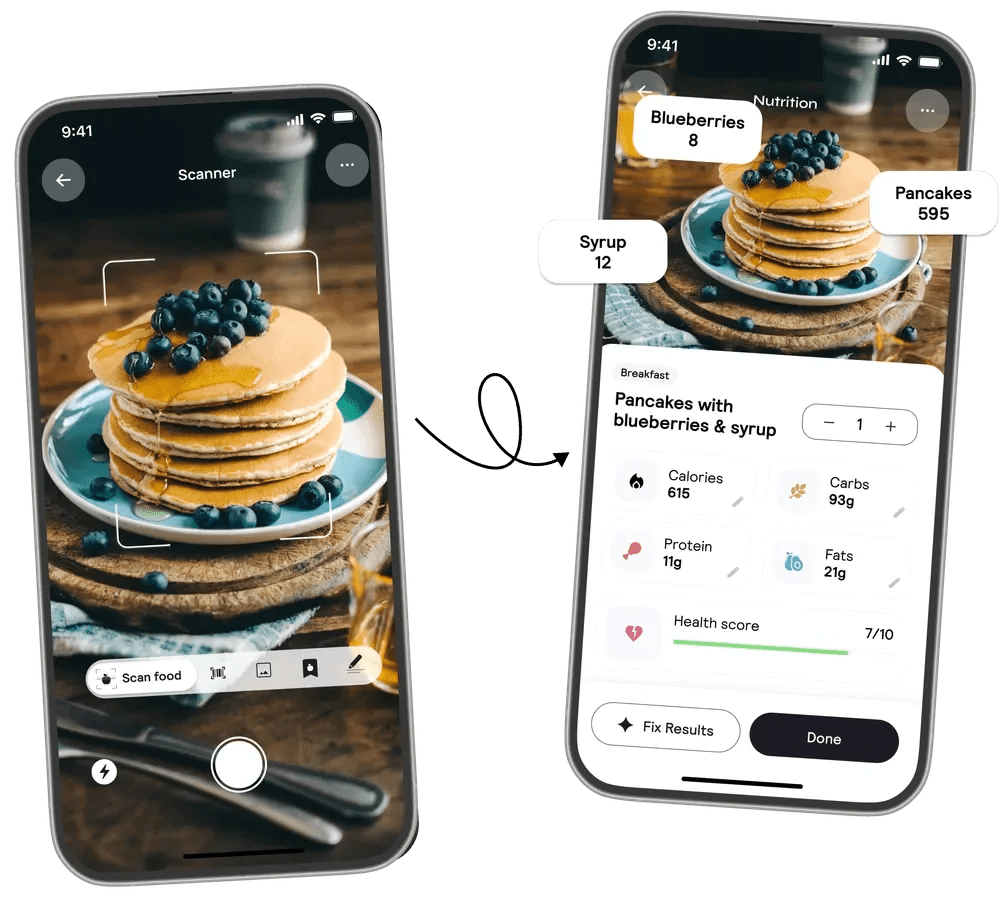
Cal AI made photo-based calorie tracking mainstream. Point your phone at a plate, get an instant calorie estimate, it was a genuinely useful idea. But as the AI nutrition space has matured in 2026, users are discovering that Cal AI has meaningful gaps: limited coaching, no conversational logging, basic macro tracking, and a user experience that has not kept pace with what the best apps now offer.
The good news is that the best Cal AI alternatives do everything Cal AI does and significantly more. They offer smarter photo recognition, real AI coaching, conversational food logging, and personalized targets that actually adapt to your body and habits.
This guide ranks the best Cal AI alternatives of 2026, with honest comparisons, pricing breakdowns, and clear recommendations for different types of users.
What Makes a Good Cal AI Alternative?
Not every calorie app is worth switching to. Here is the criteria we used to evaluate every app on this list:
1. Photo Logging Accuracy Cal AI’s core feature is food photo recognition. Any true alternative needs to match or beat it, across restaurant meals, home cooking, and international cuisine.
2. Logging Speed and Flexibility Does the app offer multiple ways to log? Can you describe a meal in plain language, or are you stuck searching a database?
3. AI Coaching Quality Does the app give you personalized, actionable feedback, or just show you a calorie number and leave you to figure out the rest?
4. Goal Personalization Does it calculate targets specific to your body, activity level, and timeline — or does it hand everyone the same generic plan?
5. Macro Tracking Calories alone are not enough for most users. Does the app track protein, carbs, and fat accurately?
6. Value What do you actually get for the price?
Top Cal AI Alternatives 2026: Full Rankings
#1: Welling: Best Overall Cal AI Alternative
Welling is the strongest Cal AI alternative available in 2026, and for most users, it is a significant upgrade. Where Cal AI focuses primarily on photo recognition, Welling builds a complete AI nutrition coaching system around it.
What sets Welling apart:
Photo Logging Like Cal AI, Welling lets you snap a photo of any meal and get an instant calorie and macro breakdown. The recognition engine handles restaurant dishes, home cooking, fast food, and international cuisine. In side-by-side accuracy tests, Welling’s estimates are comparable to Cal AI’s for standard dishes and outperform it on complex or mixed-ingredient meals.
While most global apps are optimized for Western food, Welling has spent considerable effort in optimizing for international cuisines, ranging from Asian to Arabic foods.
Chat Logging This is where Welling pulls ahead. Instead of only photo logging, you can describe your meal in plain language: “I had a bowl of pho with beef, noodles, and bean sprouts.” Welling parses the description and logs it automatically. For meals that are hard to photograph, a soup, a stir fry, something you ate at a desk, this significantly lowers the cognitive energy needed for calorie tracking.
AI Nutrition Coaching Cal AI tracks what you eat. Welling coaches you on what to do about it. The AI provides:
Real-time feedback on where you stand against your daily calorie and protein targets and helps you understand whether a food is suitable for your goals.
Guidance when you are over or under your goals.
Adaptive recommendations based on your eating patterns over time
Daily and weekly insights and progress analysis
Personalized Targets and Preferences Set your goal, weight loss, muscle gain, or maintenance, and Welling calculates personalized daily calorie, protein, carb, and fat targets based on your height, weight, age, activity level, and target timeline.
Welling also has custom diet preferences fields where you can state whether you have additional diet requirements (for example from a doctor or nutritionist) or food preferences that Welling should take into account whenever it helps with recipe and mealplan suggestions.
Progress Tracking Weekly weight trends, macro split visualization, and pattern analysis help you see what is working and where to adjust.
Key Stats:
Rating: 4.8 out of 5 on the App Store
Food logs processed: 2M+
Available: iOS and Android
Cost: 7 day free trial
Best for: Anyone who has used Cal AI and wants more than just photo logging, users who eat restaurant meals or international cuisine, people who want genuine AI coaching alongside their tracking.
Welling vs. Cal AI: Cal AI gives you a calorie estimate from a photo. Welling gives you that plus conversational logging, AI coaching, personalized macros, and progress analysis. For users who want a complete nutrition system, Welling is the clear upgrade.
#2: MyFitnessPal: Best for Food Database Breadth
MyFitnessPal remains the most widely used calorie tracking app in the world, with a food database of over 14 million entries and deep integrations with fitness devices and apps. It also acquired Cal AI in March 2026.
Strengths:
Largest crowdsourced food database of any calorie app
Barcode scanning for packaged foods
Strong integration with wearables and fitness apps
Large user community with recipe sharing
Weaknesses:
Manual database searching is slow and tedious
User-submitted entries are frequently inaccurate
AI features are limited compared to purpose-built AI apps
Premium tier is expensive relative to what it delivers
Best for: Users who primarily eat packaged foods with barcodes, or who are already in the MyFitnessPal ecosystem and want deep app integrations.
MyFitnessPal vs. Cal AI: Cal AI wins on photo logging speed. MyFitnessPal wins on database breadth and app integrations. Neither offers the AI coaching layer that Welling provides.
#3: Noom: Best for Behavior Change Psychology
Noom takes a psychology-first approach to weight loss. Instead of just counting calories, it uses cognitive behavioral techniques to change your relationship with food over time. Noom has also expanded beyond just being an app and started selling GLP related weight loss drugs as well.
Strengths:
Strong behavior change methodology backed by research
Color-coded food system for intuitive portion guidance
Daily lessons on eating psychology, habits, and motivation
Human coach availability at premium tiers
Weaknesses:
Expensive at $60–$70 per month
Calorie tracking is less precise than dedicated AI tracking apps
Food classification system can feel oversimplified for advanced users
Best for: People whose eating challenges are primarily psychological or emotional, stress eating, boredom eating, restrictive cycles.
Noom vs. Cal AI: Cal AI tracks what you eat. Noom helps you understand why you eat it. They solve different problems. For pure calorie and macro accuracy, Cal AI and Welling are better. For emotional eating patterns, Noom’s coaching layer adds real value.
#4: Fitia: Best for Simplicity
Fitia is a clean, straightforward calorie tracking app with a beginner-friendly interface. It does the core job well without overwhelming new users.
Strengths:
Intuitive, easy-to-learn interface
Solid barcode scanner
Exercise logging integration
Reasonable price point
Weaknesses:
Limited AI features
No photo-based calorie estimation
No conversational AI coaching
Manual searching is still required for non-barcoded foods
Best for: Beginners who want simple calorie tracking without complexity, users who are just starting to track their food intake.
Fitia vs. Cal AI: Cal AI is faster to log with its photo recognition. Fitia is more beginner-friendly but more tedious for anyone with a varied or restaurant-heavy diet.
#5: Foodvisor: Best for Structured Diet Plans
Foodvisor combines calorie tracking with curated diet plans, health scores, and motivational content. It is particularly popular in Europe and among users who want more structure than a blank tracking interface.
Strengths:
Wide variety of diet plans (keto, paleo, Mediterranean, and more)
Clean, motivational design
Hydration tracking
Recipe library with nutritional breakdowns
Weaknesses:
AI features are limited
Photo logging less accurate than dedicated AI apps
Full feature access requires premium subscription
Best for: Users who want structured meal plans and guidance alongside basic tracking support.
Foodvisor vs. Cal AI: Cal AI is stronger on photo logging accuracy. Foodvisor has a far broader recipe and diet plan library. Neither provides the real-time AI coaching that Welling offers or the cognitive behavior therapy approach that Noom offers.
#6: Yazio: Best Budget Option
Yazio offers solid calorie tracking, macro monitoring, and built-in intermittent fasting support at a lower price point than most competitors.
Strengths:
Affordable premium tier
Built-in intermittent fasting tracker
Clean food database
Recipe logging support
Weaknesses:
Basic AI features
No conversational food logging
Less polished coaching experience
Best for: Budget-conscious users who want calorie tracking with fasting support and do not need advanced AI features.
Which Cal AI Alternative Should You Choose?
Switch to Welling if: You want everything Cal AI offers, fast photo logging, accurate calorie estimation, wide barcode database, plus help and guidance in understanding your diet and how to make improvements. Welling is the best all-around upgrade.
Choose MyFitnessPal if: You eat mostly packaged foods and want the largest database and widest app integrations available.
Choose Noom if: Your primary challenge is your relationship with food, emotional eating, stress eating, or breaking long-held habits.
Choose Fitia if: You are completely new to calorie tracking and want the simplest possible starting point.
Choose Foodvisor if: You want a structured diet plan (keto, Mediterranean, etc.) with some tracking support built in.
Choose Yazio if: Budget is your top priority and you are interested in intermittent fasting alongside basic tracking.
Frequently Asked Questions
What is Cal AI? Cal AI is an AI-powered calorie tracking app that allows photo tracking of their meals to receive an instant calorie estimate. It was one of the first mainstream apps to make photo-based food logging simple and fast. They have since be acquired by MyFitnessPal
Why are people looking for Cal AI alternatives? While Cal AI’s photo logging feature is useful, many users find it limited over time and also find the photo logging to be inaccurate at times. Common reasons people look for alternatives include: the lack of AI nutrition coaching, no conversational food logging option, limited macro tracking depth, and a user experience that has not kept up with newer apps like Welling.
Update Apr 16, 2026: Cal AI has since been banned from the Apple App Store.
Is Welling better than Cal AI? For most users, yes. Welling matches Cal AI on photo logging and adds conversational logging, full AI nutrition coaching, personalized macro targets, and weekly progress analysis. It offers a simpler yet complete nutrition system rather than just a calorie estimator.
Are there free Cal AI alternatives? Yes. Welling, MyFitnessPal, Lose It!, Lifesum, and Yazio all offer free tiers or free trials with core calorie tracking features.
What is the most accurate AI calorie tracker in 2026? Welling consistently performs well on accuracy across diverse meal types, including restaurant dishes, home cooking, and international cuisine. Its combination of photo recognition and conversational logging also reduces the guesswork required for meals that are difficult to photograph.
Can AI calorie tracking apps help with weight loss? Research consistently shows that tracking food intake improves weight loss outcomes by increasing awareness and accountability. AI-powered apps improve on traditional tracking by reducing the friction of logging, which increases consistency, the most important factor in long-term results.
How does photo-based calorie counting work? Photo-based calorie counting uses computer vision and machine learning to identify food items in an image, estimate portion sizes, and calculate nutritional content. The accuracy depends on the quality of the model and the diversity of the training data, which is why results can vary between apps for the same meal. Some apps optimize for specific type of foods, like Welling that optimizes for international cuisines, not just Western food.
What should I look for when switching from Cal AI? The most important features to evaluate are: photo logging accuracy for your typical meals, whether the app supports conversational or text-based logging as a backup, the quality of AI coaching and feedback, and how well it calculates personalized calorie and macro targets for your specific goal.