
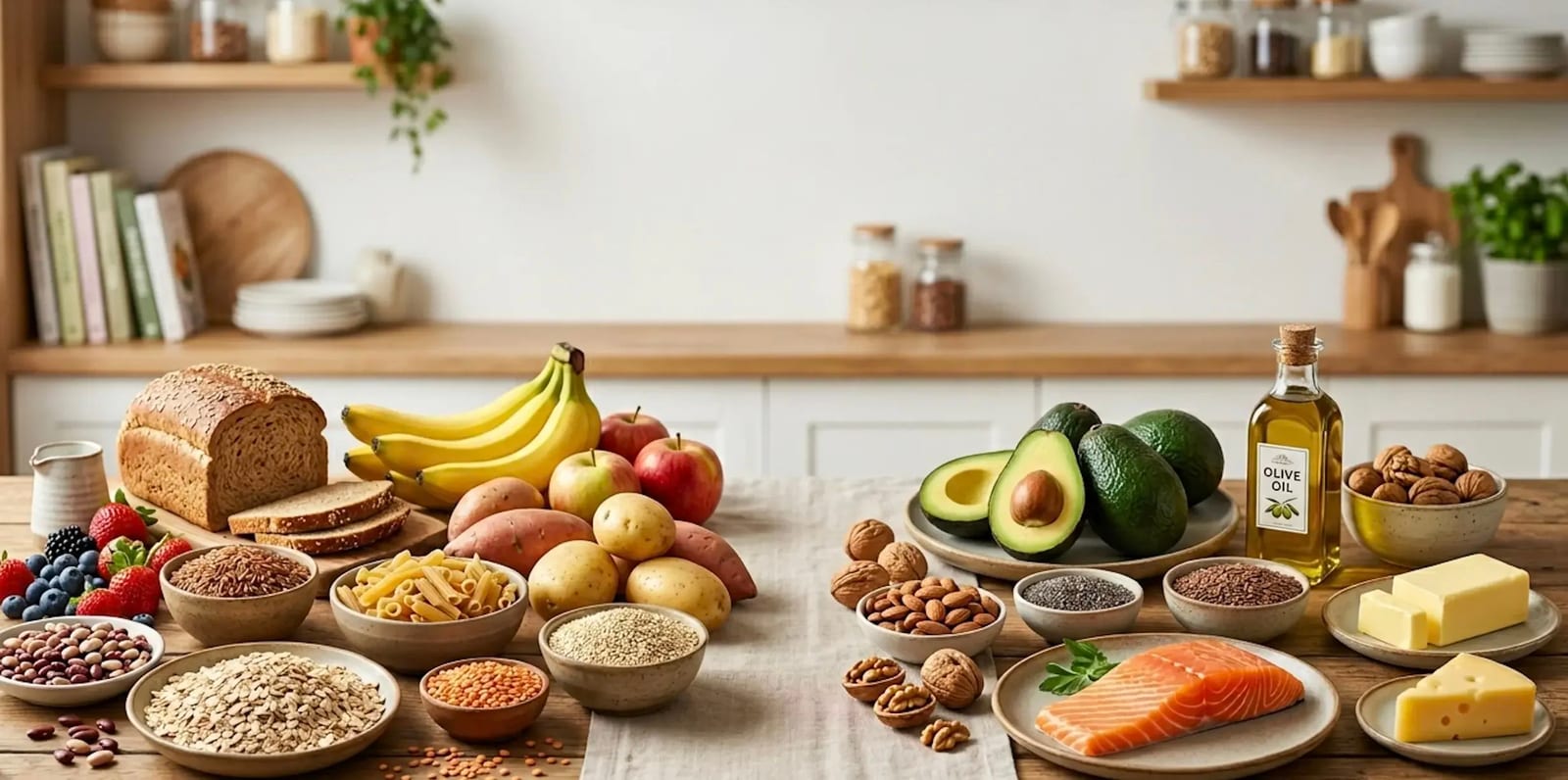
Carbs and fats both play important roles. Weight loss depends more on calories and food quality than eliminating one macronutrient.
Carbs vs fat is one of the most debated topics in nutrition. Some diets tell you to cut carbs completely, while others warn against eating too much fat. It’s confusing—and often misleading.
If you’ve ever wondered which one actually matters more for weight loss and health, you’re not alone. The truth is, it’s not as simple as choosing one over the other.
Carbs vs Fat: What’s the Real Difference?
Carbohydrates and fats are both essential macronutrients, but they serve different roles in the body. Carbs are your body’s primary energy source, while fats support hormone production and long-term energy storage.
The key difference isn’t just carbs vs fat—it’s the quality and quantity of each.
Is It Better to Cut Carbs or Fat for Weight Loss?
Research shows that both low-carb and low-fat diets can be effective. As long as total calories and protein intake are similar, fat loss results are usually comparable.
Instead of eliminating one entirely, it’s more effective to:
Maintain a calorie deficit
Prioritize protein intake
Choose higher-quality food sources
Sustainability matters more than strict rules.
What Happens If You Eat More Fat Than Carbs?
When fat intake increases and carbs are significantly reduced, your body may enter a metabolic state called ketosis. In this state, fat becomes the primary fuel source instead of glucose.
This can lead to more stable energy for some people, but it’s not required for fat loss. The overall calorie balance still plays the biggest role.
Can You Eat High Carbs and High Fat Together?
Yes—but this combination can be tricky.
Highly processed foods that are rich in both carbs and fats (like fast food or desserts) are designed to be extremely palatable. They can:
Increase cravings
Lead to overeating
Make calorie control harder
This is why food quality matters just as much as macronutrient balance.
Which Is Worse for Belly Fat: Carbs or Fat?
Neither carbs nor fat alone is responsible for belly fat. The main driver is a calorie surplus over time.
However, diets high in added sugars—especially fructose—are more strongly linked to increased abdominal fat. This makes refined carbs a bigger concern than whole, complex carbohydrates.
Healthy Sources of Carbs and Fats
Choosing the right types of carbs and fats makes a major difference.
Better carb choices:
Whole grains, fruits, vegetables
Foods high in fiber and nutrients
Better fat choices:
Avocado, nuts, olive oil
Unsaturated fats over trans fats
Focusing on whole, minimally processed foods helps support both health and weight management.
Practical Approach: Finding the Right Balance
Instead of choosing sides in the carbs vs fat debate, focus on balance.
Pay attention to how your body responds, your energy levels, and your ability to stay consistent. There’s no single “perfect” ratio that works for everyone.
👉 Pro tip: Using an AI-based tracker like Welling can help you understand how your carb and fat intake affects your energy, hunger, and progress—so you can find the balance that works best for you.
The carbs vs fat debate isn’t about choosing a winner. Both are important, and both can fit into a healthy diet.
What matters most is total calorie intake, food quality, and consistency over time. When you focus on those, results will follow.
FAQ
1. Is it better to eat carbs or fats?
Both are important. The best approach is a balanced intake based on your lifestyle and preferences.
2. Is it better to cut carbs or fat for weight loss?
Neither is superior. Weight loss depends on maintaining a calorie deficit and choosing sustainable habits.
3. What happens when you eat more fat than carbs?
Your body may shift to burning fat for energy (ketosis), but fat loss still depends on total calories.
4. Can I eat high carbs and high fat together?
Yes, but it may lead to overeating if the foods are highly processed and calorie-dense.
5. Which is worse for belly fat: carbs or fat?
Excess calories—especially from added sugars—are the main cause, not one specific macronutrient.