
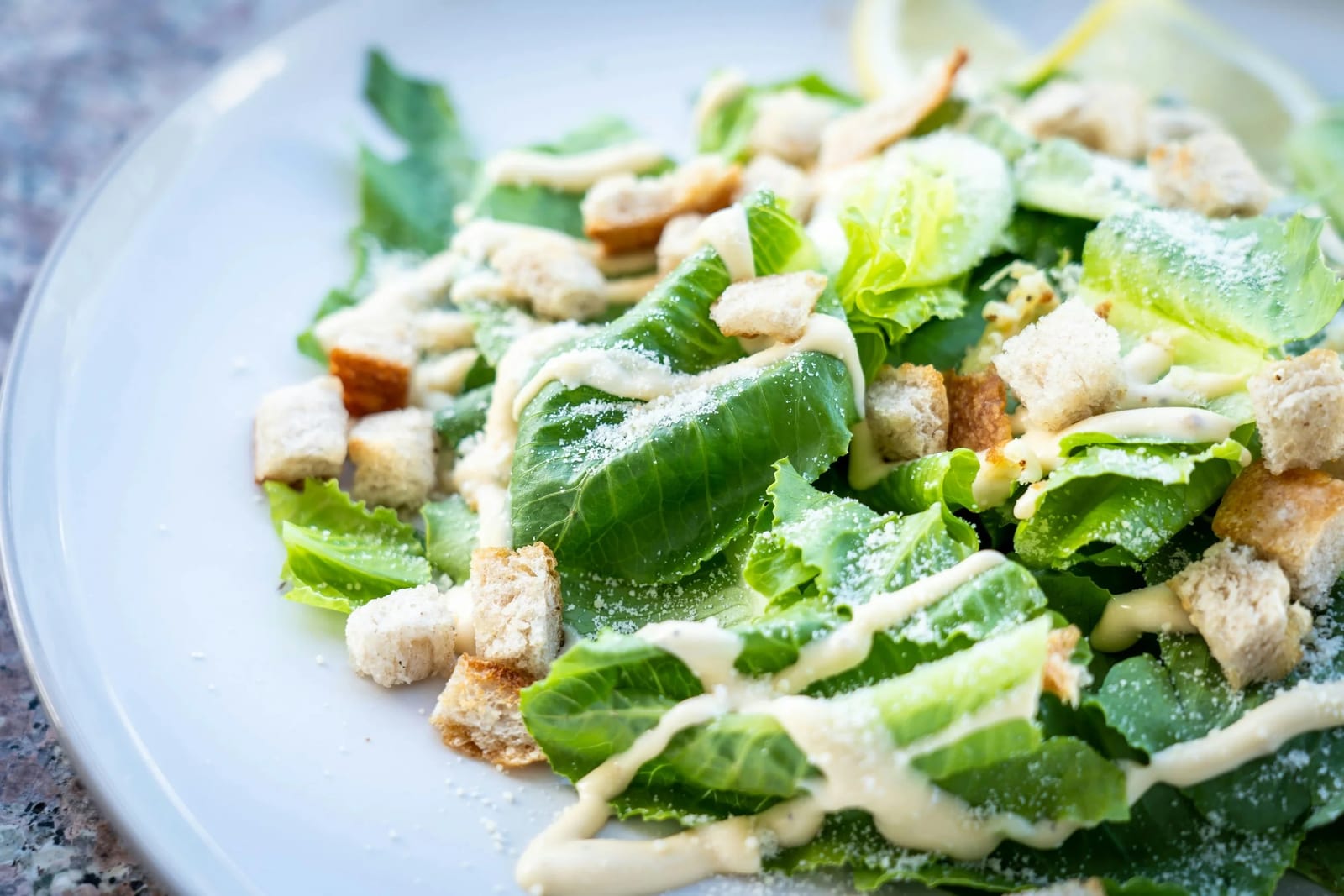
Calories in Caesar salad range from 150 to 500+ depending on dressing, toppings, and portion size. Dressing is the biggest contributor. Homemade versions are usually lower in calories, and small ingredient swaps can significantly reduce total intake.
Caesar salad is often seen as a healthy and light meal choice, especially for those trying to eat better. However, when you take a closer look at the calories in Caesar salad, the numbers can be higher than expected. While it includes fresh romaine lettuce, the dressing, cheese, and croutons can quickly increase the total calories. This popular dish can vary widely depending on ingredients and preparation, making it important to understand what really goes into your bowl.
Calories in Caesar Salad: How Many Calories Are There?
The calories in Caesar salad typically range from 150 to 400 calories per serving. A simple version with light dressing and fewer toppings stays on the lower end. However, once you add creamy Caesar dressing, parmesan cheese, croutons, or grilled chicken, the total can easily exceed 500 calories. Portion size also plays a major role, especially in restaurant servings, which are often larger. Differences in ingredients and preparation methods explain why calorie counts can vary significantly from one version to another.
What Affects the Calorie Count
Several factors influence the calories in Caesar salad. The amount of dressing used is one of the biggest contributors, followed by portion size and added toppings. Cooking methods, such as grilled versus fried chicken, also make a noticeable difference. Even small variations in ingredients can change the overall calorie total.
Ingredient Breakdown and Calories
To better understand the calories in Caesar salad, it helps to look at each ingredient. Romaine lettuce is very low in calories, usually under 20 per serving. The Caesar dressing is the main contributor, adding around 150 to 250 calories depending on how creamy and generous the portion is. Parmesan cheese can add 20 to 80 calories, while croutons contribute about 50 to 100 calories. If chicken is included, grilled chicken adds around 120 to 200 calories, while fried versions can be significantly higher. Overall, the dressing and toppings drive most of the calorie content.
Restaurant vs Homemade Caesar Salad
Restaurant Caesar salads are often higher in calories compared to homemade versions. This is mainly because restaurants use more dressing, larger portions, and extra toppings to enhance flavor. At home, you can control how much dressing, cheese, and croutons you use. You can also choose lighter ingredients or smaller portions. This flexibility makes homemade Caesar salad a better option for managing calorie intake.
How to Make Caesar Salad Lower in Calories
Reducing the calories in Caesar salad is simple with a few small changes. Use less dressing or switch to a lighter version, and add it gradually. Choose grilled chicken instead of fried, and limit the amount of cheese and croutons. Increasing the lettuce portion can also make the salad more filling without adding many calories. These small adjustments can make a big difference.
Tracking your meals can help you better understand your calorie intake and make more informed food choices over time.