

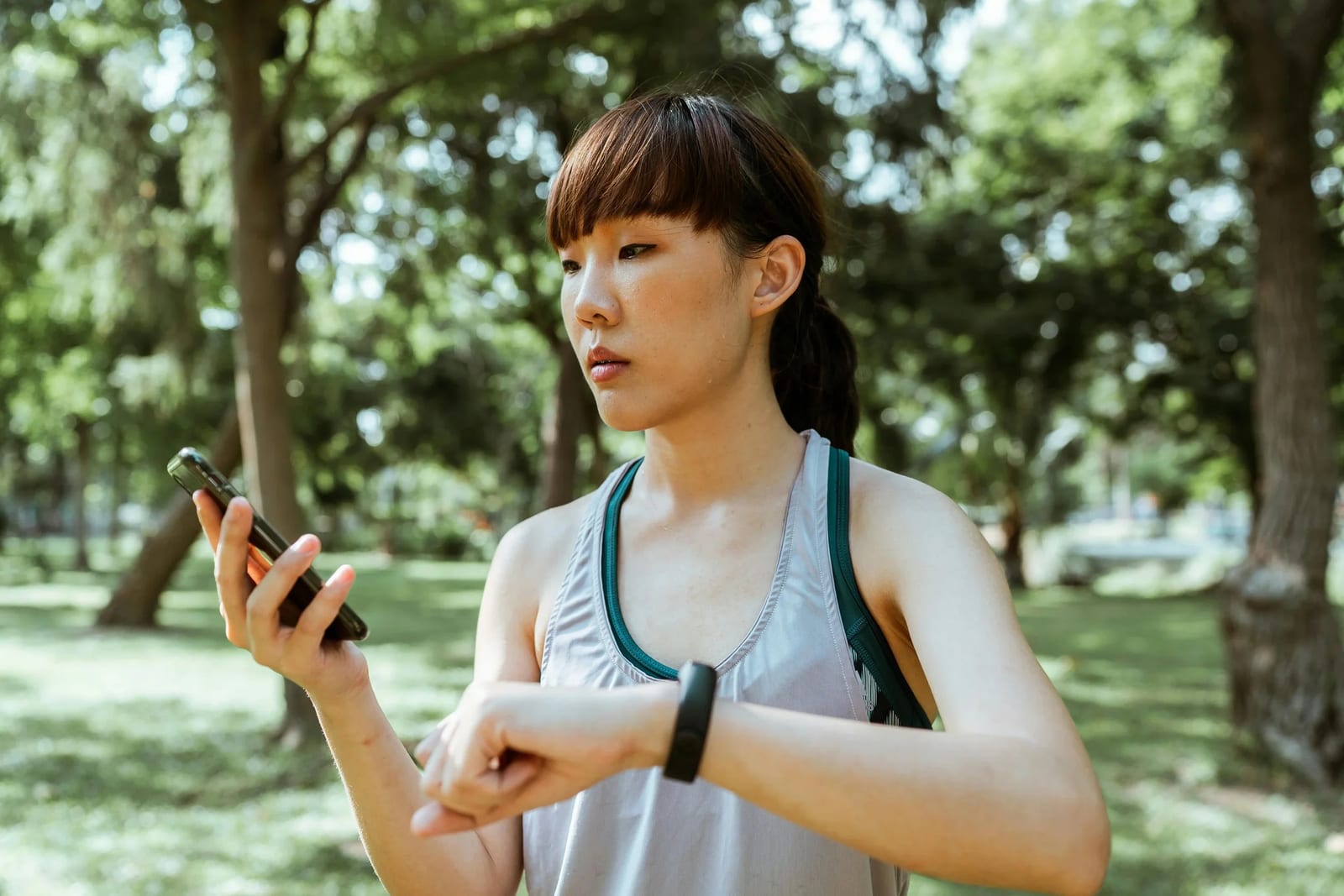
The best calorie tracking app for women in 2026 is Welling. It handles the real complexity of how women eat, across different life phases, hormonal shifts, and busy schedules, through a conversational interface that makes daily logging fast enough to maintain long-term. For women who also want menstrual cycle integration, Lifesum connects with cycle tracking apps and provides nutritional guidance adjusted for different phases of the month.
Table of Contents
- Why calorie tracking for women needs a different approach
- What to look for in a nutrition app as a woman
- The best calorie tracking apps for women in 2026
- How to choose based on your goals and life stage
- Tips for tracking nutrition sustainably as a woman
- Frequently asked questions
Calorie tracking advice has a gender problem. Most apps are designed around a generic daily calorie target that does not account for the fact that a woman’s nutritional needs shift throughout her menstrual cycle, across different life stages, during pregnancy and postpartum recovery, and through perimenopause and menopause. A nutrition app that treats a 28-year-old woman and a 52-year-old woman identically, or that ignores how progesterone affects appetite in the luteal phase, is not really designed for women at all. It just happens to be available to them.
The best nutrition apps for women in 2026 address this gap in different ways. Some integrate cycle tracking data to adjust recommendations across the month. Some focus on making daily logging sustainable through simplicity and speed. Some provide coaching that takes hormonal context seriously rather than treating food choices as a purely mathematical problem. This guide covers the options that genuinely stand out, what each one does well, and how to choose based on your specific situation.
A note on approach before we start: this article is about supporting healthy nutrition and sustainable eating habits, not about restriction. The goal of tracking is awareness and informed decision-making, not achieving a specific number at any cost.
Why Calorie Tracking for Women Needs a Different Approach
Women’s calorie and nutritional needs are not static. They fluctuate in ways that have real physiological explanations and that most calorie apps completely ignore.
During the follicular phase of the menstrual cycle, estrogen is rising and many women find hunger is relatively easier to manage. Insulin sensitivity tends to be higher, and energy levels are generally good. During the luteal phase, in the two weeks before a period, progesterone rises and appetite typically increases. Research shows that women consume on average 90 to 500 more calories per day in the luteal phase compared to the follicular phase. That is not a failure of willpower. It is a hormonal response. An app that flags your calorie overage in week three of your cycle without any context for why it is happening is giving you incomplete information.
Iron intake becomes relevant during and after menstruation, when losses are higher. Calcium and vitamin D are more important for women than for men at most life stages. Folate requirements change dramatically during pregnancy. Protein needs increase during perimenopause as muscle mass becomes harder to maintain against the backdrop of declining estrogen. None of these factors appear in a standard calorie counter that shows you a daily target and a running total.
The second dimension is psychological. Research consistently shows that women are more likely than men to experience a problematic relationship with food tracking, where the process of logging starts to drive anxiety, rigidity, or restriction rather than useful self-awareness. The best apps for women are designed to be informative without being punitive, and to frame tracking as a tool for understanding rather than a grading system.
What to Look for in a Nutrition App as a Woman
Adaptable calorie and macro targets matter because a fixed daily number does not capture how nutritional needs shift across the month or across life stages. Look for apps that allow custom targets and adjust them as your goals change.
Low tracking friction is particularly important for women, who statistically take on a larger share of household and care responsibilities and have less discretionary time. An app that requires five minutes per meal to log is an app that gets abandoned. Conversational or photo-based logging removes the time barrier that causes most people to stop.
Micronutrient coverage should include iron, calcium, folate, and vitamin D at minimum. These are the nutrients most commonly under-tracked in women’s diets and the ones most likely to show gaps.
Non-restrictive framing is a real differentiator. Apps that use language like “over budget” or flag specific foods as bad without context can reinforce harmful patterns. The best apps present data neutrally and frame guidance constructively.
Integration with cycle tracking tools is an emerging feature that adds genuine value. A few apps now connect with cycle tracking apps to provide nutritional context that maps to where you are in your cycle.
The Best Calorie Tracking Apps for Women in 2026
Welling
Welling’s core advantage for women is the same as its advantage for anyone: it makes daily tracking fast and genuinely sustainable. You log a meal by describing it or photographing it, and the app returns your calorie and macro breakdown without requiring a database search or manual entry. For women managing work, family, and everything else, the difference between logging taking thirty seconds and three minutes is often the difference between a habit that lasts six months and one that lasts twelve days.
What makes Welling specifically valuable for women is its coaching layer. Rather than simply presenting numbers, Welling provides daily guidance and explanations that help you understand what your nutritional data means. For a woman who is new to tracking macros, or who is adjusting her nutrition during a hormonal transition, the ability to ask a question and get a useful answer in the same interface where you log your food is genuinely different from what most apps offer.
Welling supports three goal modes; weight loss, muscle gain, and maintenance, and calculates your personalised calorie and macro targets based on your bio-data, not a generic formula. The app is rated 4.8 on the App Store and has processed over 2 million food logs. It is available on both iOS and Android, includes a global food database covering local and regional dishes, and has been featured in The Business Times, Technode, and The Peak.
The coaching dimension is directly relevant for women navigating hormonal shifts. If your appetite is noticeably higher in the second half of your cycle and your logged intake reflects that, Welling can help you contextualise that data and make informed decisions about how to respond rather than treating every overage as a problem to be corrected.
Try Welling free: https://www.welling.ai
Lifesum
Lifesum is one of the most visually polished nutrition apps available and has built genuine features specifically relevant to women. It integrates with Apple Health’s cycle tracking data and with third-party period tracking apps, allowing it to adjust its nutritional guidance based on where you are in your cycle. The app highlights that iron and folate needs are elevated during menstruation, for example, and adjusts food recommendations accordingly.
The food database is large and internationally varied, with an emphasis on clean, whole-food options rather than processed items. Meal plans are available for a range of dietary preferences including high-protein, low-carb, Mediterranean, and vegetarian approaches.
Lifesum’s design is genuinely appealing; clean layouts, clear progress tracking, and a tone that is supportive rather than punitive. It consistently receives positive reviews from women who have found other apps too data-heavy or too rigid in framing.
The premium tier, which unlocks the full meal plan library, advanced health scores, and detailed nutritional insights, is priced at around $4.99 to $8.99 per month depending on the plan. The free tier is functional for basic logging but limited in the areas where Lifesum is most useful.
Best for: Women who want cycle-aware nutritional guidance, a visually appealing interface, and structured meal plans as part of their daily routine.
Noom
Noom takes a psychology-first approach to nutrition that is particularly relevant for women who have a history of dieting, restriction, or a complicated relationship with food. Rather than leading with calorie targets and macro splits, Noom starts with daily lessons rooted in cognitive behavioral therapy that address the emotional and habitual patterns behind food choices.
The food categorisation system uses color coding rather than explicit calorie counts, which reduces the hypervigilance that some women experience when tracking precise numbers. The emphasis is on building awareness of why you eat, not just what you eat, and on developing habits that hold up under real-life conditions rather than optimal ones.
Human coaching is available within the app and has been a meaningful differentiator for women who find the social and emotional dimension of eating habits important to address alongside the nutritional one.
The cost is the main limitation. Noom’s pricing ranges from around $17 to $70 per month depending on plan length, making it the most expensive option in this list by a significant margin. For women who have tried calorie tracking before and found it drove anxiety or rigidity, that investment may be worthwhile. For women who primarily want to understand their nutritional intake without the behavior change framework, there are more cost-effective options.
Best for: Women with a history of dieting who want to address the psychological dimensions of eating alongside basic nutrition tracking, and who are prepared to invest in the higher price point.
Cronometer
Cronometer is the strongest option for women who want comprehensive micronutrient tracking alongside standard calorie and macro data. Its verified database tracks over 82 nutrients including iron, calcium, folate, zinc, and vitamin D; all of which are nutritionally significant for women at various life stages.
For women managing conditions like PCOS, osteopenia, anemia, or thyroid disorders, the level of detail Cronometer provides is directly useful for working with a dietitian or healthcare team on specific nutritional targets. The Gold tier adds biomarker logging, which allows you to track blood test results alongside your dietary data and identify correlations over time.
The trade-off is the same as with all manual-entry apps: every meal requires a database search and serving size selection. For a woman whose daily schedule does not include time for detailed food logging, that friction is a genuine barrier. Cronometer is most sustainable when used intentionally for a defined period; establishing micronutrient baselines, working through a protocol with a dietitian rather than as an indefinite daily habit for everyone.
Best for: Women with specific micronutrient concerns, those managing chronic conditions, or anyone working closely with a registered dietitian who needs verified, detailed nutritional data.
How to Choose Based on Your Goals and Life Stage
The right app depends on what matters most to you right now, and that answer changes across different life stages.
If you are primarily looking for a consistent daily tracking habit that fits into a busy schedule, Welling’s speed and coaching combination is the strongest starting point. The 4.8 App Store rating and 2 million food logs processed reflect the experience of real users who have made it a sustainable daily practice.
If your menstrual cycle significantly affects your appetite, energy, and food choices, Lifesum’s cycle integration adds a layer of context that most apps cannot provide.
If you have a complicated history with food or dieting and want an app that leads with habits and psychology, Noom’s framework is genuinely different from any other option in this list.
If you are managing a health condition that requires micronutrient monitoring, or if you are working with a dietitian on a specific protocol, Cronometer gives you the data depth that clinical work often requires.
Tips for Tracking Nutrition Sustainably as a Woman
Do not treat a higher intake week as a failure. If your logged intake is consistently higher in the luteal phase of your cycle, that is expected and physiologically normal. Adjusting your approach for those two weeks, adding more satiating, protein-rich foods rather than simply trying harder to eat less, works with your hormones rather than against them.
Track protein first, everything else second. For women specifically, protein intake has compounding benefits: it supports muscle maintenance, improves satiety, stabilises blood sugar, and reduces cravings during hormonal transitions. Most women are eating less protein than they realise. A tracker that shows you your daily protein total makes that gap visible immediately.
Use your BMR calculator before setting a calorie target. Women’s basal metabolic rates are lower on average than men’s, and standard calorie targets pulled from general recommendations often overshoot or undershoot significantly depending on your height, weight, and activity level. Starting from your actual BMR gives you a personalised baseline.
Check iron and folate regularly if you menstruate. Apps like Cronometer that show these specific nutrients make it easy to see whether your diet is consistently falling short. Persistent fatigue, particularly in the week following your period, is often a sign of iron depletion rather than a training or sleep issue.
Build in flexibility from the start. The women who track nutrition successfully long-term are not the ones who log every meal perfectly. They are the ones who have decided in advance that missing a day does not mean starting over, and that a social meal without tracking is a normal part of life rather than a derailment.
Frequently Asked Questions (FAQs)
Do women need a different calorie target than men?
Yes, as a general rule. Women have lower average muscle mass and slightly lower average TDEE than men of similar weight, meaning calorie requirements are typically lower. But individual variation is significant, and the most useful number comes from calculating your personal TDEE based on your actual body stats rather than applying a generic recommendation.
Should I track differently across my menstrual cycle?
It can be useful to acknowledge that appetite naturally increases in the luteal phase rather than treating that increase as a problem. Some women find it helpful to adjust their targets slightly upward in the two weeks before their period and focus on hitting protein and iron targets during and after menstruation. Apps that integrate cycle data, like Lifesum, can surface this kind of guidance automatically.
Is calorie tracking safe if I have a history of disordered eating?
This is a personal decision that should ideally be made in conversation with a healthcare provider or therapist. For some women, tracking is a useful tool for developing awareness. For others, it can reinforce unhealthy patterns. If you have a history of restriction, binge eating, or an eating disorder, the psychology-first approach of an app like Noom may be more appropriate than a standard calorie counter.
How do calorie needs change during perimenopause and menopause?
Declining estrogen during perimenopause accelerates muscle loss and reduces basal metabolic rate, meaning calorie needs typically decrease while protein needs increase. Research suggests that women in menopause benefit from higher protein intake — around 1.2 to 1.6 grams per kilogram of bodyweight — to preserve muscle mass. Tracking protein specifically during this life stage is particularly useful.
What is the best app for tracking nutrition during pregnancy?
Pregnancy nutritional needs change significantly and should be managed in consultation with a healthcare provider or midwife. For general tracking, apps like Cronometer that cover folate, iron, and calcium in detail are more useful than standard calorie counters. Always confirm specific targets with your care team rather than relying on app defaults.
Start Tracking Nutrition in a Way That Actually Works for You
The best nutrition app is the one you will actually use consistently, not the most feature-rich one you opened twice before forgetting about it. For most women, that means finding something that fits into real life, not an idealised version of it.
Welling is built for exactly that. Log by text or photo, get instant macro breakdowns, and have an AI nutrition coach in the same interface when you need guidance. Rated 4.8 on the App Store. Available free on iOS and Android.
References
Davidsen, L., Vistisen, B., & Astrup, A. (2007). Impact of the menstrual cycle on determinants of energy balance: a putative role in weight loss attempts. International Journal of Obesity, 31(12), 1777–1785. https://pubmed.ncbi.nlm.nih.gov/17684509/
Rogerson, D. (2017). Vegan diets: practical advice for athletes and exercisers. Journal of the International Society of Sports Nutrition, 14, 36. https://pubmed.ncbi.nlm.nih.gov/28924423/
Maltais, M. L., Desroches, J., & Dionne, I. J. (2009). Changes in muscle mass and strength after menopause. Journal of Musculoskeletal and Neuronal Interactions, 9(4), 186–197. https://pubmed.ncbi.nlm.nih.gov/19949277/
Healthline. (2024). The Best Nutrition Apps for Women. https://www.healthline.com/health/best-nutrition-apps-for-women