

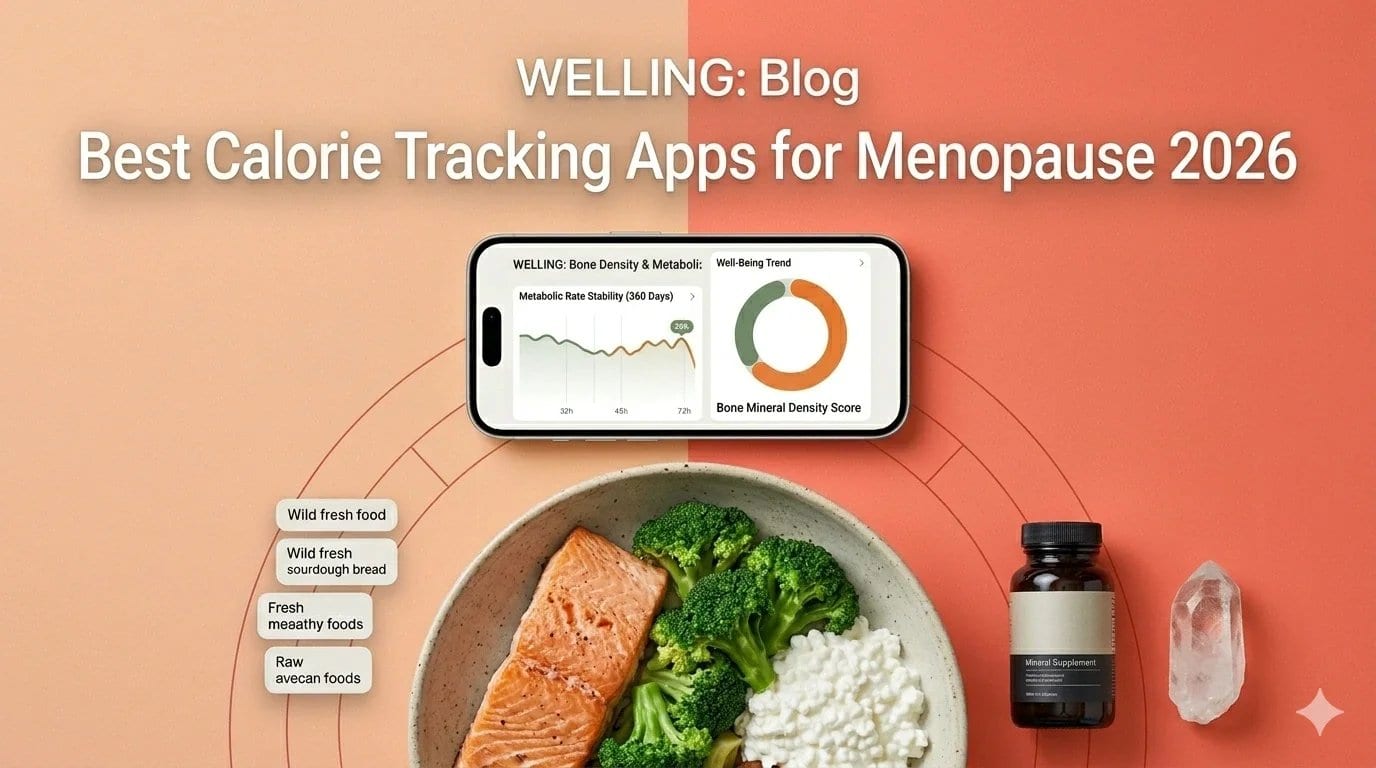
The best calorie tracking app for menopause in 2026 is Welling. It tracks protein, calcium, fibre, and other nutrients relevant to menopause-related health changes, adapts to your specific calorie needs based on current body stats, and makes daily logging fast enough to maintain alongside the energy fluctuations that menopause brings. For users who need detailed micronutrient monitoring for bone health and hormonal support, Cronometer’s verified database adds clinical depth.
Table of Contents
- How menopause changes your nutritional needs
- What to look for in a calorie tracking app during menopause
- The best calorie tracking apps for menopause in 2026
- Key nutritional priorities during menopause
- Frequently asked questions
Menopause is a significant physiological transition that changes how the body handles energy, muscle mass, fat distribution, and bone density. The estrogen decline that drives menopausal transition accelerates muscle loss, increases the risk of bone density reduction, shifts fat storage from the hips and thighs toward the abdomen, and lowers resting metabolic rate to a degree that makes previous dietary habits less effective for maintaining a healthy weight.
Most women going through menopause find that the approach to eating that worked in their thirties and early forties no longer produces the same results. This is not a failure of willpower or effort. It is a physiological change that requires a recalibration of nutritional strategy: more protein to counter accelerated muscle loss, adequate calcium and vitamin D for bone health, a renewed attention to total calorie intake against a lower metabolic baseline, and dietary patterns that support cardiovascular and cognitive health in the years ahead.
A calorie tracker during menopause is not about restriction. It is about ensuring that the food you are eating is working efficiently for the specific changes your body is navigating.
How Menopause Changes Your Nutritional Needs
The estrogen decline of perimenopause and menopause triggers several parallel nutritional challenges.
Muscle mass loss accelerates. After 30, everyone loses muscle gradually, but the loss accelerates significantly in the years around menopause as estrogen, which plays a role in maintaining muscle protein synthesis, falls. Research suggests that women can lose three to five percent of lean mass per year during early menopause without specific dietary and exercise intervention. Increasing protein intake to 1.2 to 1.6 grams per kilogram of bodyweight is the most direct dietary counter to this process.
Bone density begins declining more rapidly. Estrogen normally inhibits bone resorption, and its decline increases the rate at which bone is broken down relative to the rate at which it is rebuilt. Adequate calcium intake of 1,200 mg per day and vitamin D of 800 to 1,000 IU per day are the dietary foundations of bone protection during and after menopause.
Resting metabolic rate decreases. The combination of reduced muscle mass and hormonal changes means that calorie needs drop during menopause. Most women need 200 to 400 fewer calories per day at 55 than they did at 40 to maintain the same body weight, which means that previous eating patterns produce gradual weight gain even without increasing food intake. Recalibrating a daily calorie target to reflect current metabolic reality rather than past experience is the practical response.
Fat redistribution shifts visceral fat risk. Estrogen influences where the body stores fat. As it declines, fat tends to redistribute from peripheral storage toward abdominal and visceral storage, which carries a higher cardiovascular risk profile. A dietary pattern that manages total calorie intake and emphasises whole foods over ultra-processed ones supports healthier body composition during this transition.
What to Look for in a Calorie Tracker During Menopause
Accurate, personalised calorie targets based on current body stats rather than a fixed recommendation. Menopausal metabolic changes mean that a target that worked two years ago may be 200 to 300 calories too high today. An app that recalculates from current data gives a more honest starting point.
Protein tracking in grams with a visible daily target is the most important macro feature for menopause. Hitting a protein target of 1.2 to 1.6 grams per kilogram consistently is the primary nutritional lever for maintaining muscle mass during this life stage.
Calcium and vitamin D tracking are clinically relevant nutrients during menopause that most standard calorie counters ignore. An app that tracks these specific micronutrients makes it straightforward to identify whether your diet is providing adequate bone-protective nutrition.
Non-punitive, realistic framing matters particularly during menopause, when appetite, energy, and emotional relationship with food can all be in flux. An app that presents data neutrally and constructively rather than framing every overage as a failure is more sustainable during a challenging life transition.
Fast, low-effort logging is essential. Menopause symptoms including hot flushes, sleep disruption, and fatigue create real practical barriers to maintaining any new habit. An app that logs a meal in seconds rather than minutes is the one that gets used on difficult days.
The Best Calorie Tracking Apps for Menopause in 2026
Welling
Welling is the most practical daily calorie tracking option for women in perimenopause and menopause because it combines personalised calorie targets with macro tracking that covers the specific nutrients most relevant to this life stage, and it makes logging easy enough to sustain during the days when symptoms make everything feel harder.
The personalised target calculation updates from your current body stats, which means your calorie goal reflects your actual metabolic needs rather than an estimate based on how things worked before hormonal changes began. The AI nutrition coach was built by certified nutritionists and registered dietitians, and it applies current nutritional science to the coaching it provides rather than generic weight loss advice.
Welling tracks protein, carbohydrates, fat, fibre, sodium, and sugar with every logged meal. For menopause specifically, protein is the macro to watch most closely, and Welling makes it visible at a glance. The conversational logging interface handles the practical reality of how many women in menopause eat: varied, home-cooked meals including calcium-rich dairy foods, high-fibre legumes and vegetables, and omega-3-rich fish that do not map cleanly onto simplified database entries.
Chat and photo logging produces a nutritional breakdown in 2.6 seconds on average, with 95.6% food identification accuracy tested across 15,000 meals. On a day when sleep was poor and hot flushes interrupted the morning, that speed means the logging habit survives where a more demanding process would not.
Welling is ranked number one AI calorie tracker in the 2026 AI Calorie Tracker Index, is rated 4.8 on the App Store, has processed over 2 million food logs, and is free on iOS and Android.
Try Welling free: https://www.welling.ai
Cronometer
Cronometer is the strongest option for women in menopause who need to monitor specific bone health nutrients alongside their standard calorie and macro tracking. Its verified database tracks calcium (total and by form), vitamin D, magnesium, vitamin K2, and phosphorus separately, which are the nutrients most directly relevant to bone density maintenance during menopause.
The custom biometrics feature allows women to log health markers like sleep quality, mood, hot flushes, or energy levels alongside food data, creating a basic version of dietary pattern correlation for menopause symptoms. The Gold plan adds trend analysis that can show whether dietary changes are correlating with symptom changes over weeks.
The limitation is the same as always: manual database entry for every meal. For a woman going through menopause who has variable energy and a varied diet, this is a practical barrier to long-term daily use. Cronometer works best as a periodic audit tool used every few months to check bone health nutrient adequacy, with Welling handling the daily logging habit.
Best for: Women in menopause who want to verify calcium, vitamin D, and bone health nutrient intake under medical or dietetic supervision.
MyFitnessPal
MyFitnessPal covers the basics of calorie and macro tracking for menopause adequately, with a large enough database to handle most foods and the ability to set custom protein targets on the premium plan. The calcium data in the database is inconsistent, with many entries missing or unreliable values for this nutrient, which is the main limitation for menopause-specific tracking.
For women in menopause who are primarily focused on calorie management and protein tracking without detailed micronutrient monitoring, MyFitnessPal’s premium tier covers the essential requirements. The wearable integrations with Apple Health and Fitbit give a combined view of calorie intake and expenditure that is useful for understanding the changed metabolic reality of menopause.
Best for: Women in menopause whose primary tracking goal is calorie and protein management, who eat primarily from packaged and branded foods, and are already in the MyFitnessPal ecosystem.
Lifesum
Lifesum includes a menopause-focused dietary mode in its premium plan that provides nutritional guidance and meal recommendations calibrated specifically to the condition. The interface is clean and supportive in tone, and the meal plans emphasise the food groups most relevant to menopause management including calcium-rich dairy and plant sources, omega-3-rich fish, and high-fibre whole foods.
The food database covers a good range of international and whole-food options, and the macros and key micronutrients are tracked with verified data for most entries. Lifesum’s tone is notably non-punitive compared to apps built around deficit and progress metrics, which suits women who find the clinical language of calorie restriction counterproductive during a complex life transition.
Best for: Women in menopause who want structured meal guidance with a supportive tone, and a dietary mode that is specifically calibrated to the condition rather than adapted from a general weight loss program.
Key Nutritional Priorities During Menopause
Protein is the most important macro to increase during menopause. Research consistently shows that protein intakes of 1.2 to 1.6 grams per kilogram of bodyweight slow the rate of muscle loss, support metabolic rate, improve satiety, and reduce the cardiovascular risk associated with abdominal fat redistribution. For a woman weighing 65 kg, that means 78 to 104 grams of protein per day as a minimum target.
Calcium from dietary sources should total 1,200 mg per day for women over 50. Dairy foods, fortified plant milks, bone-in tinned fish, tofu made with calcium sulfate, and leafy greens like kale and bok choy are the main contributors. Tracking calcium daily makes it visible whether the target is being met or whether supplementation is needed to fill the gap.
Vitamin D supports calcium absorption and has independent effects on muscle function, immune health, and mood regulation. The recommended intake increases to 800 to 1,000 IU per day for women over 50. Dietary sources including fatty fish, eggs, and fortified foods rarely cover this requirement fully, which is why most women in menopause benefit from supplementation alongside any dietary intake.
Phytoestrogen-rich foods including soy, flaxseed, and legumes have weak estrogen-like activity and have been studied for effects on hot flushes and bone health. The evidence is modest but consistently positive for women who consume these foods regularly rather than occasionally. Including them as part of a varied diet is straightforward and low-risk.
Use Welling’s BMR calculator to recalculate your metabolic baseline specifically at your current body stats. Most women find their actual calorie needs during menopause are 150 to 300 calories lower than they expect based on previous experience.
Frequently Asked Questions (FAQs)
Why is it harder to lose weight during menopause?
Three mechanisms converge. Reduced estrogen causes a shift in fat storage toward the abdomen, making weight redistribution visible even without total weight gain. Accelerated muscle loss reduces metabolic rate, meaning fewer calories are burned at rest. And hormonal disruption affects hunger signals and sleep quality, both of which make dietary adherence harder. Increasing protein and tracking total intake helps address two of these three mechanisms directly.
How many calories should a woman in menopause eat per day?
This varies considerably based on height, current weight, and activity level. Most women in menopause find their maintenance calories are 200 to 400 lower than they were in their early forties. Use a TDEE calculator to establish a current personalised estimate rather than applying a fixed number. Welling calculates this during setup from your current body stats.
Does diet actually help with menopause symptoms like hot flushes?
For some symptoms, yes. There is modest research support for soy and flaxseed consumption reducing hot flush frequency in some women. A Mediterranean-style dietary pattern has been associated with reduced severity of vasomotor symptoms. Reducing caffeine and alcohol has a clearer evidence base for reducing hot flush intensity. These dietary effects are meaningful but secondary to hormone therapy for women whose symptoms are severe.
Is intermittent fasting suitable for women in menopause?
Some women in menopause find time-restricted eating helpful for managing calorie intake without active restriction, particularly when sleep disruption affects appetite the following morning. Others find that fasting increases cortisol and worsens symptoms. The evidence is not conclusive either way for menopause specifically. Trying it cautiously and observing symptom effects is a reasonable approach.
Should I reduce carbohydrates during menopause?
Not necessarily, but carbohydrate quality matters more than it might have previously. Prioritising whole-food, low-glycaemic carbohydrates over refined options supports better blood sugar regulation and reduces visceral fat accumulation. A severe low-carbohydrate diet may limit calcium-rich dairy and high-fibre whole grains, which are important for bone and gut health during menopause. Moderate carbohydrate reduction focused on quality rather than elimination is better supported by evidence.
Track the Nutrients That Matter During Menopause
Welling gives you personalised calorie targets that reflect where you are now, not where you were five years ago. It tracks protein, fibre, sodium, and sugar alongside calories and macros, and coaches you daily on what the numbers actually mean for your health.
Try Welling free on iOS and Android
References
Maltais, M. L., Desroches, J., & Dionne, I. J. (2009). Changes in muscle mass and strength after menopause. Journal of Musculoskeletal and Neuronal Interactions, 9(4), 186-197. https://pubmed.ncbi.nlm.nih.gov/19949277/
Christodoulou, S. et al. (2012). Phytoestrogen supplementation and bone health in natural menopause. Climacteric, 15(2), 107-117. https://pubmed.ncbi.nlm.nih.gov/22295846/
National Osteoporosis Foundation. (2024). Calcium and Vitamin D: Important at Every Age. https://www.nof.org/patients/treatment/calciumvitamin-d/
Healthline. (2024). The Best Menopause Diet. https://www.healthline.com/nutrition/menopause-diet